
植物研究 ›› 2026, Vol. 46 ›› Issue (4): 700-711.doi: 10.7525/j.issn.1673-5102.2026.04.011
刘俊龙1, 孙慧1, 吴中能1, 苗婷婷1, 宋楠楠1, 苏晓华2,3, 丁昌俊1,2,3,4( )
)
收稿日期:2026-02-05
出版日期:2026-07-20
发布日期:2026-07-22
通讯作者:
丁昌俊
E-mail:changjund@126.com
作者简介:刘俊龙(1981—),副研究员,主要从事森林培育研究。
基金资助:
Junlong LIU1, Hui SUN1, Zhongneng WU1, Tingting MIAO1, Nannan Song1, Xiaohua SU2,3, Changjun DING1,2,3,4()
Received:2026-02-05
Online:2026-07-20
Published:2026-07-22
Contact:
Changjun DING
E-mail:changjund@126.com
摘要:
为探究杨树对淹水胁迫的生理响应,本研究选取湘林90(Populus deltoides‘Xianglin 90’,编号XL90)、江淮1号杨(P. deltoides‘Jianghuai No.1’,编号江1)、皖林1号杨(P. deltoides‘Wanlin No.1’,编号皖1)、2025杨(P. deltoides‘Zhonghe 1’,编号2025)及巨霸杨(P. deltoides‘Nanyang 1’,编号巨霸)5个主栽杨树品种1年生苗木为材料,采用双因素(品种×淹水)完全随机设计,设置正常灌溉(CK)、浅度淹水(DSY)和深度淹水(GSY)3种处理,测定生长指标、叶绿素荧光参数及叶、茎、根器官的碳(C)、氮(N)、磷(P)含量及计算其化学计量比。结果表明:淹水胁迫显著降低各杨树品种的成活率,并抑制树高与地径增长。品种间耐淹性差异显著:XL90在GSY下成活率(67%)及生长表现相对较好;巨霸在DSY下成活率最高(83%),但对GSY敏感;江1、皖1和2025在2种淹水处理下生长均严重受抑,且DSY下因存活率较低,其生长指标均值可能存在个体偏差。叶绿素荧光分析显示,GSY处理显著降低各品种的实际光化学效率(ΦPSⅡ)和光化学淬灭系数(qP),而DSY处理的qP虽较CK有所降低,但差异不显著。淹水胁迫显著改变各器官C、N、P含量,表现为叶片C含量上升、N含量下降(除皖1外),茎与根的N含量上升;除江1外,根P含量均呈升高趋势。化学计量分析显示,多数品种叶片的C∶N(质量比)和N∶P(质量比)随淹水加剧显著变化,而C∶P(质量比)响应则表现出明显的品种特异性。综合各项指标,5个杨树品种的耐淹性排序为XL90>巨霸>2025>江1>皖1。本研究从光合生理与生态化学计量学角度揭示了杨树响应淹水胁迫的品种差异机制。
中图分类号:
刘俊龙, 孙慧, 吴中能, 苗婷婷, 宋楠楠, 苏晓华, 丁昌俊. 淹水胁迫对杨树幼苗叶绿素荧光及碳氮磷化学计量特征的影响[J]. 植物研究, 2026, 46(4): 700-711.
Junlong LIU, Hui SUN, Zhongneng WU, Tingting MIAO, Nannan Song, Xiaohua SU, Changjun DING. Effects of Waterlogging Stress on Chlorophyll Fluorescence and Stoichiometric Characteristics of Carbon, Nitrogen, and Phosphorus in Poplar Seedlings[J]. Bulletin of Botanical Research, 2026, 46(4): 700-711.
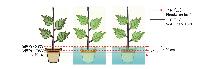
图1
淹水处理
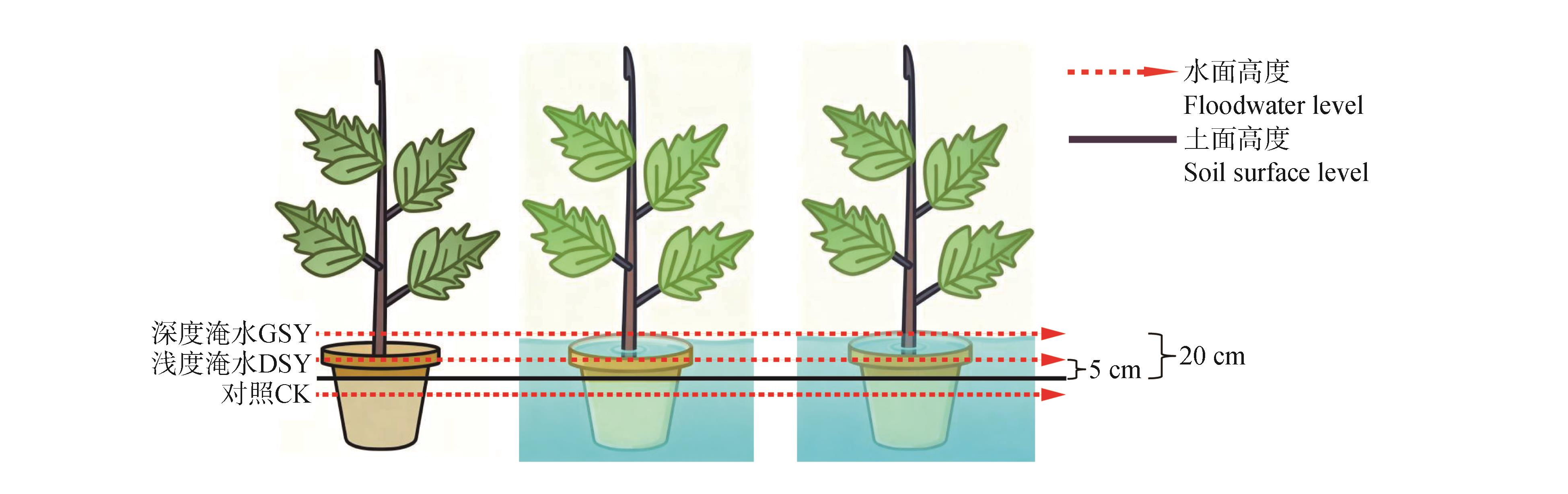

表1
不同淹水处理对杨树生长的影响
杨树品种 Poplar variety | 处理 Treatment | 树高相对增长率 Relative growth rate of tree height/% | 地径相对增长率 Relative growth rate of ground diameter/% | 成活率 Survival rate/% |
|---|---|---|---|---|
| XL90 | GSY | 32.02±5.06de | 24.19±3.88de | 67 |
| DSY | 19.88±7.05def | 13.21±6.66ef | 17 | |
| CK | 40.87±9.37cd | 41.21±18.12cd | 100 | |
| 江1 | GSY | 10.73±5.58ef | 3.17±5.72ef | 33 |
| DSY | 7.51±6.78f | 0.09±4.26f | 17 | |
| CK | 90.82±10.13a | 70.55±8.98ab | 100 | |
| 皖1 | GSY | 18.55±5.86def | 14.58±4.28ef | 17 |
| DSY | 10.46±4.05ef | 12.95±5.67ef | 33 | |
| CK | 81.50±14.81ab | 88.28±11.35a | 100 | |
| 2025 | GSY | 26.72±7.43def | 22.49±7.31def | 17 |
| DSY | 17.05±4.83def | 15.69±5.10ef | 33 | |
| CK | 75.40±14.05ab | 55.39±7.16bc | 100 | |
| 巨霸 | GSY | 18.85±5.54def | 14.40±6.55ef | 17 |
| DSY | 26.76±8.72def | 15.34±5.26ef | 83 | |
| CK | 60.99±11.00bc | 53.05±11.17bc | 100 |
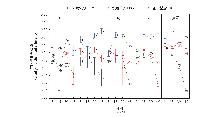
图2
淹水处理对杨树品种叶片实际光化学效率的影响同一时间点不同小写字母表示同一品种不同淹水处理间差异显著(P<0.05)。GSY.深度淹水;DSY.浅度淹水;CK.正常灌溉。
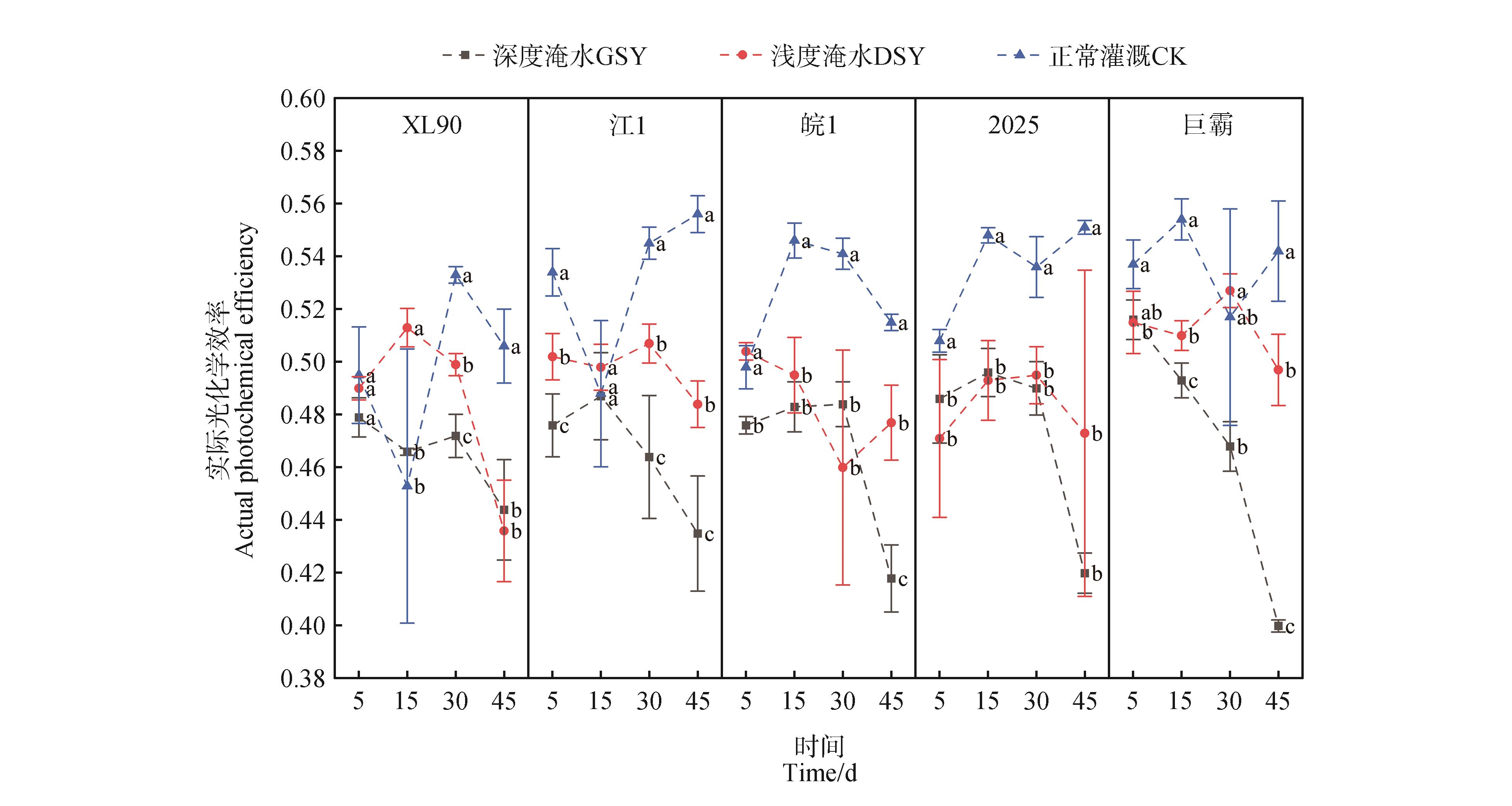
图3
淹水处理对杨树品种叶片光化学淬灭系数的影响同一时间点不同小写字母表示同一品种不同淹水处理间差异显著(P<0.05)。
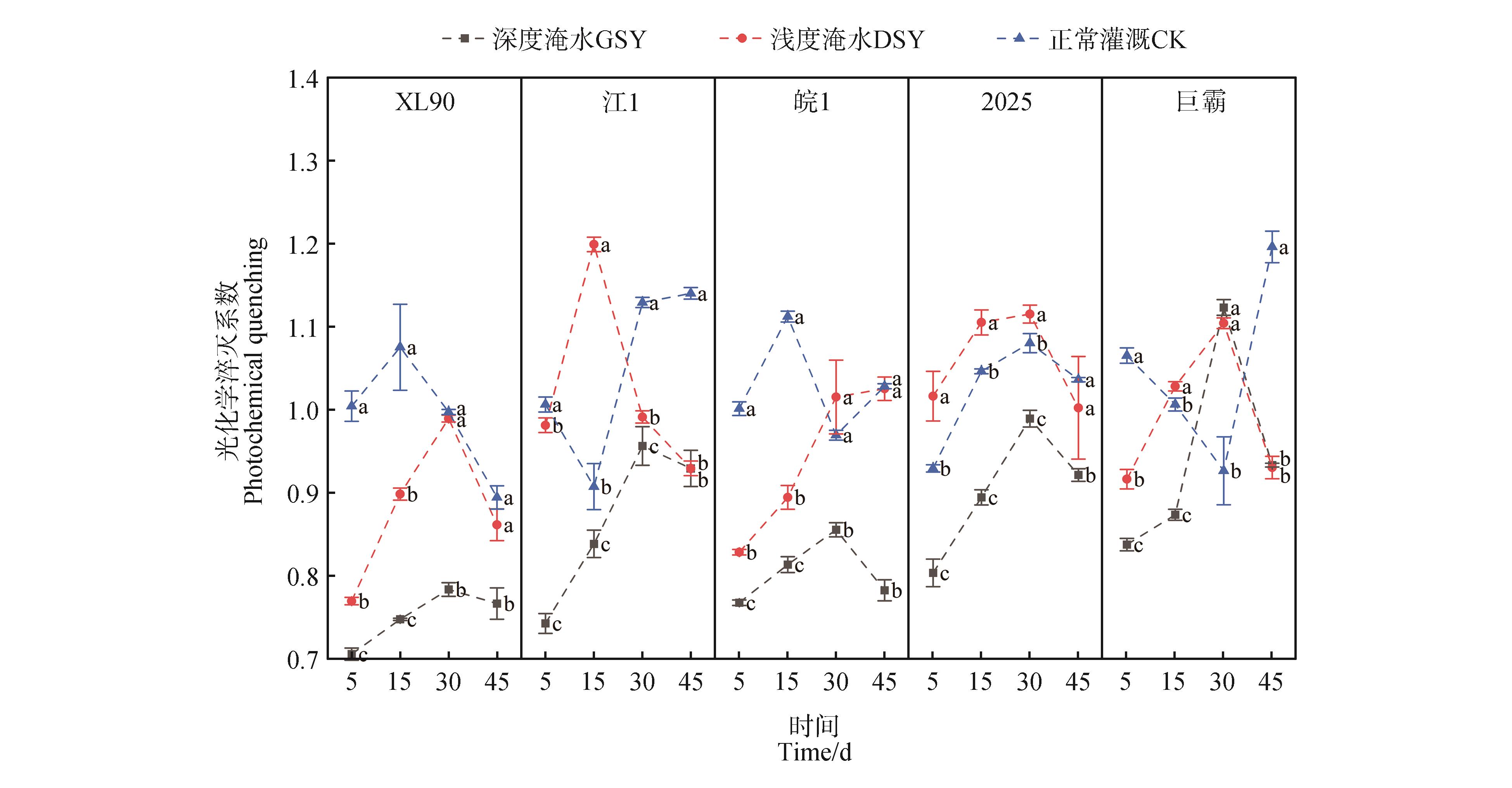
图4
淹水处理对杨树品种叶片非光化学淬灭系数的影响同一时间点不同小写字母表示同一品种不同淹水处理间差异显著(P<0.05)。
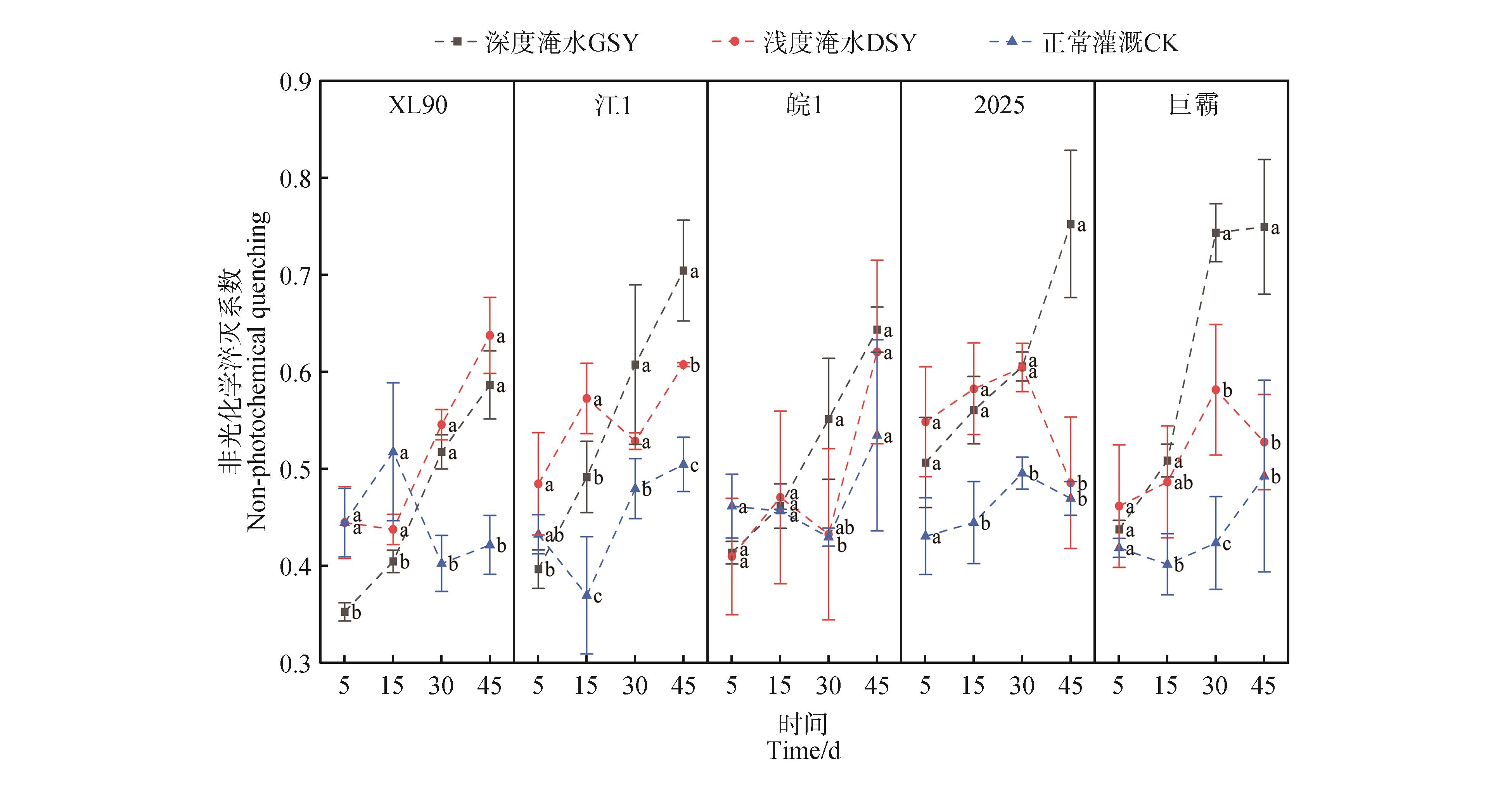
表2
淹水处理对杨树器官碳氮磷质量分数的影响 (mg·g-1)
品种 Variety | 处理 Treatment | 叶Leaf | 茎Stem | 根Root | ||||||
|---|---|---|---|---|---|---|---|---|---|---|
| ω(C) | ω(N) | ω(P) | ω(C) | ω(N) | ω(P) | ω(C) | ω(N) | ω(P) | ||
| XL90 | GSY | 427.67±5.36Ba | 21.87±0.32Cb | 1.75±0.02Cc | 419.00±10.41Aa | 8.29±0.73Bb | 1.32±0.16ABa | 431.00±2.65ABa | 6.58±0.20Aa | 1.15±0.02Aa |
| DSY | 430.33±2.19Aa | 30.80±0.30Aa | 2.68±0.01Aa | 428.33±2.96Ba | 11.60±0.12Aa | 1.51±0.03Ba | 436.33±6.36Aa | 5.83±0.18Ab | 0.88±0.03Ab | |
| CK | 405.67±2.85Bb | 32.37±1.32Aa | 2.11±0.02Ab | 426.33±2.19Aa | 9.52±0.06Ab | 1.61±0.01Ba | 436.00±2.65Aa | 5.91±0.09Ab | 0.94±0.01Ab | |
| 江1 | GSY | 442.33±1.86Aa | 26.07±0.09Bb | 2.02±0.01Bb | 464.67±48.67Aa | 9.15±0.35Ba | 1.42±0.03ABb | 419.67±0.88Cc | 5.16±0.08Ba | 0.87±0.01Db |
| DSY | 440.33±3.33Aa | 24.23±0.26Cc | 2.12±0.01Ca | 425.33±1.67Ba | 8.11±0.24Cb | 1.49±0.02Bb | 440.67±3.28Aa | 4.74±0.27Bab | 0.78±0.02Bc | |
| CK | 385.00±3.21Db | 27.30±0.21Ba | 1.95±0.01Bc | 428.33±0.33Aa | 8.60±0.25Bab | 1.67±0.03Aa | 429.67±1.45ABb | 4.48±0.05Bb | 0.92±0.00Ba | |
| 皖1 | GSY | 435.33±1.33ABa | 30.73±0.12Aa | 2.87±0.01Aa | 414.00±3.21Aa | 11.70±0.42Aa | 1.52±0.04Ab | 433.00±1.00Aab | 6.48±0.03Aa | 0.97±0.02Ba |
| DSY | 429.00±4.36Aa | 25.63±0.66Bb | 2.41±0.03Bb | 427.33±1.33Ba | 9.79±0.36Bb | 1.64±0.03Aa | 437.33±2.73Aa | 4.81±0.35Bb | 0.91±0.04Aab | |
| CK | 397.00±1.15BCb | 22.20±0.06Cc | 1.52±0.02Dc | 405.00±49.05Aa | 6.53±0.15CDc | 1.51±0.01Cb | 429.33±0.67Bb | 3.77±0.07CDc | 0.87±0.01Cb | |
| 2025 | GSY | 427.67±2.40Ba | 16.00±0.06Ec | 1.53±0.01Ec | 420.00±4.51Ab | 6.89±0.12Cb | 1.37±0.01ABa | 433.33±2.03Aa | 4.42±0.12Ca | 0.86±0.00Da |
| DSY | 430.00±4.16Aa | 22.80±0.12Db | 2.13±0.01Ca | 427.67±1.86Bb | 11.73±0.20Aa | 1.32±0.02Cb | 435.67±0.88Aa | 4.45±0.15Ba | 0.76±0.01Bb | |
| CK | 417.67±3.76Aa | 26.57±0.30Ba | 1.72±0.01Cb | 445.00±6.25Aa | 6.61±0.13Cb | 1.03±0.00Dc | 426.67±2.33Bb | 3.83±0.05Cb | 0.61±0.00Dc | |
| 巨霸 | GSY | 444.67±0.88Aa | 19.77±0.24Dc | 1.67±0.00Db | 426.00±1.15Aa | 6.17±0.19Ca | 1.21±0.01Bb | 422.33±5.36BCa | 4.52±0.24Ca | 0.92±0.02Ca |
| DSY | 434.00±3.06Ab | 21.70±0.15Db | 1.71±0.01Da | 438.33±2.40Aa | 6.66±0.21Da | 1.16±0.02Db | 433.67±0.33Aa | 4.04±0.15Bab | 0.89±0.01Aa | |
| CK | 390.67±3.33CDc | 22.77±0.44Ca | 1.38±0.00Ec | 417.67±18.32Aa | 6.11±0.04Da | 1.58±0.01Ba | 427.00±2.31Ba | 3.57±0.05Db | 0.90±0.00Ba | |
图5
淹水处理对杨树叶碳氮磷化学计量比的影响不同小写字母表示同一品种不同处理间差异显著(P<0.05);不同大写字母表示同一处理不同品种间差异显著(P<0.05)。
图6
淹水处理对杨树茎碳氮磷化学计量比的影响不同小写字母表示同一品种不同处理间差异显著(P<0.05);不同大写字母表示同一处理不同品种间差异显著(P<0.05)。
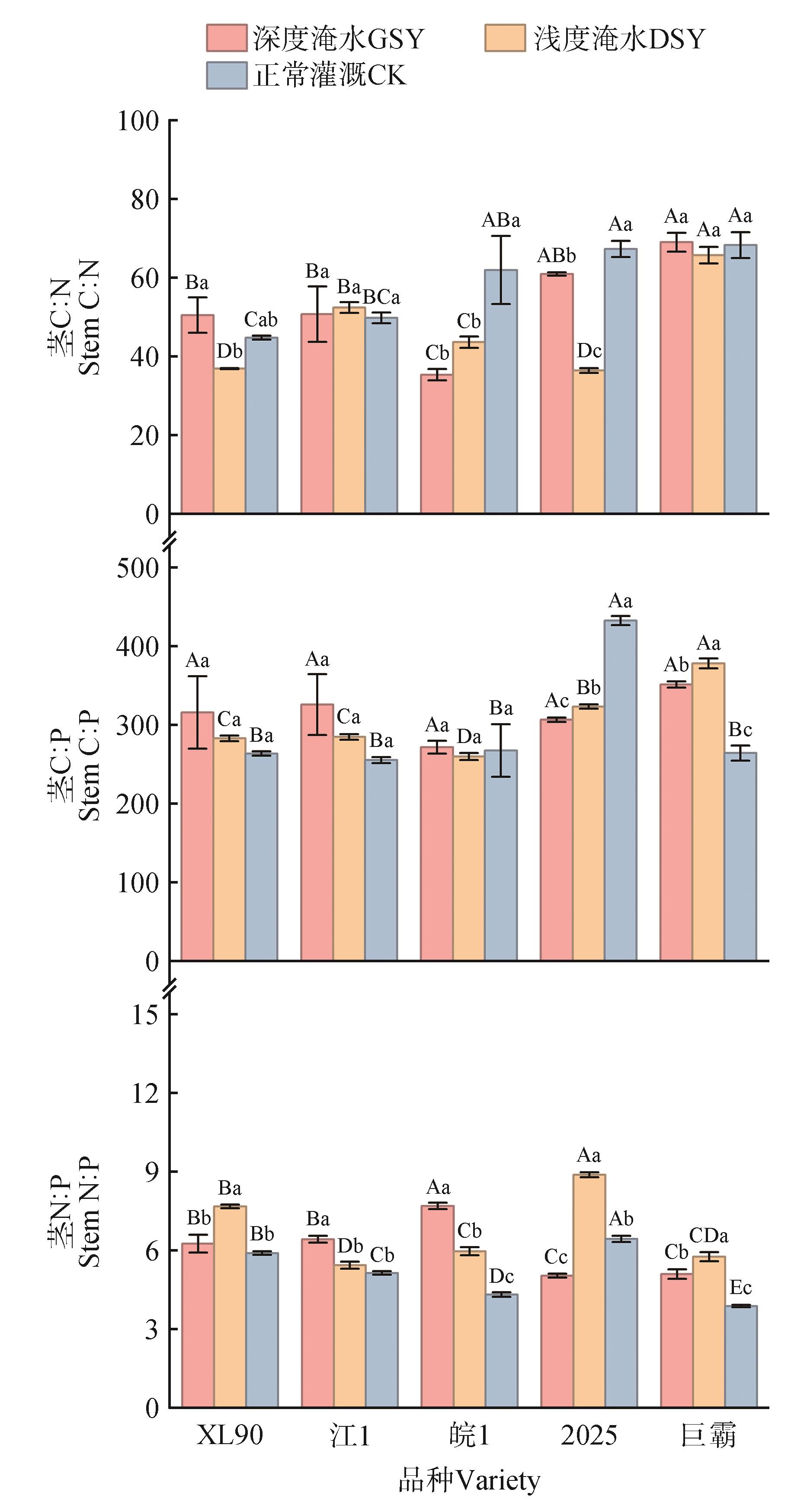
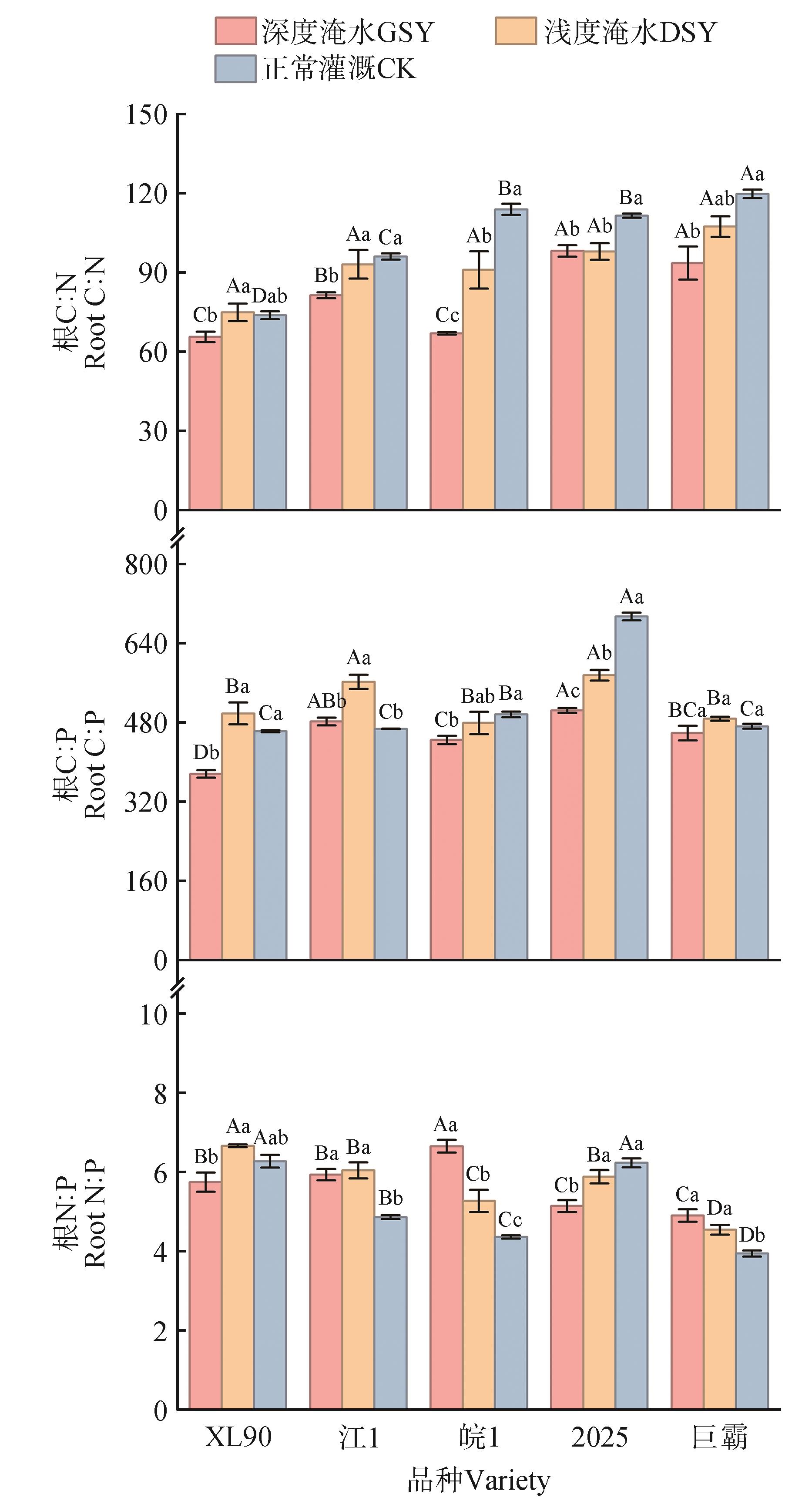
图7
淹水处理对杨树根系碳氮磷化学计量比的影响不同小写字母表示同一品种不同处理间差异显著(P<0.05);不同大写字母表示同一处理不同品种间差异显著(P<0.05)。
| [1] | Shi T T, Zhang X X, Hou Y K,et al.The super-pangenome of Populus unveils genomic facets for its adaptation and diversification in widespread forest trees[J].Molecular Plant,2024,17(5):725-746. |
| [2] | 彭镇华.滩地抑螺防病林的营造技术[J].湿地科学与管理,2006,2(1):20-23. |
| Peng Zhenhua.Techniques of afforestation in the beaches of Yangtze River for Snail(Oncomelania hupensis) control and schistosomiasis prevention[J].Wetland Science & Management,2006,2(1):20-23. | |
| [3] | Guo X Y, Huang Z Y, Xu A C,et al.A comparison of physiological,morphological and growth responses of 13 hybrid poplar clones to flooding[J].Forestry,2011,84(1):1-12. |
| [4] | 张婧,张伟溪,丁昌俊,等.五个杨树品种生长、光合生理及根尖离子流速特性比较分析[J].植物研究,2024,44(1):96-106. |
| Zhang Jing, Zhang Weixi, Ding Changjun,et al.Comparative analysis of growth,photosynthetic physiology and root tip ion flow characteristics of five poplar varieties[J].Bulletin of Botanical Research,2024,44(1):96-106. | |
| [5] | 杜克兵,许林,涂炳坤,等.淹水胁迫对2种杨树1年生苗叶片超微结构和光合特性的影响[J].林业科学,2010,46(6):58-64,183. |
| Du Kebing, Xu Lin, Tu Bingkun,et al.Influences of soil flooding on ultrastructure and photosynthetic capacity of leaves of one-year old seedlings of two poplar clones[J].Scientia Silvae Sinicae,2010,46(6):58-64,183. | |
| [6] | 杨杰,杜雅雯,李懿鑫,等.淹水对13种乔木柳插条表型和生理指标的影响[J].西北林学院学报,2022,37(3):95-104. |
| Yang Jie, Du Yawen, Li Yixin,et al.Effects of submergence stress on the phenotype and physiological indexes of the cuttings from 13 arbor willow varieties[J].Journal of Northwest Forestry University,2022,37(3):95-104. | |
| [7] | 徐锡增,唐罗忠,程淑婉.涝渍胁迫下杨树内源激素及其它生理反应[J].南京林业大学学报(自然科学版),1999,23(1):1-4. |
| Xu Xizeng, Tang Luozhong, Cheng Shuwan.A study on hormones and other physiological effects of poplar clones under flooding stress[J].Journal of Nanjing Forestry University(Natural Sciences Edition),1999,23(1):1-4. | |
| [8] | 赵小军,程方,张康,等.淹水处理下杨树不同无性系苗木根系形态变化[J].南京林业大学学报(自然科学版),2019,43(5):1-8. |
| Zhao Xiaojun, Cheng Fang, Zhang Kang,et al.Root morphology of different poplar clone stecklings under waterlogging and flooding treatment[J].Journal of Nanjing Forestry University(Natural Sciences Edition),2019,43(5):1-8. | |
| [9] | Xie X L, Shen J F.Waterlogging resistance evaluation index and photosynthesis characteristics selection:using machine learning methods to judge poplar’s waterlogging resistance[J].Mathematics,2021,9(13):1542. |
| [10] | Maxwell K, Johnson G N.Chlorophyll fluorescence:a practical guide[J].Journal of Experimental Botany,2000,51(345):659-668. |
| [11] | 高健,吴泽民,彭镇华.滩地杨树光合作用生理生态的研究[J].林业科学研究,2000,13(2):147-152. |
| Gao Jian, Wu Zemin, Peng Zhenhua.A study on the ecophysiological characteristic of photosynthesis for poplar tree on beach land along the Yangtze River[J].Forest Research,2000,13(2):147-152. | |
| [12] | 柴民伟,吴一凡,李瑞利,等.镉和微塑料及二者复合对秋茄生长及光合特征的影响[J].植物研究,2025,45(4):603-613. |
| Chai Minwei, Wu Yifan, Li Ruili,et al.The influence of cadmium,microplastics,and their combination on the growth and photosynthetic characteristics of Kandelia obovata [J].Bulletin of Botanical Research,2025,45(4):603-613. | |
| [13] | Chaves M M, Flexas J, Pinheiro C.Photosynthesis under drought and salt stress:regulation mechanisms from whole plant to cell[J].Annals of Botany,2009,103(4):551-560. |
| [14] | Hura T, Hura K, Grzesiak M,et al.Effect of long-term drought stress on leaf gas exchange and fluorescence parameters in C3 and C4 plants[J].Acta Physiologiae Plantarum,2007,29(2):103-113. |
| [15] | Zhao Y, Xiong L H, Yin J B,et al.Understanding the effects of flash drought on vegetation photosynthesis and potential drivers over China[J].Science of the Total Environment,2024,931:172926. |
| [16] | Feng X L, Liu R, Li C J,et al.Contrasting responses of two C4 desert shrubs to drought but consistent decoupling of photosynthesis and stomatal conductance at high temperature[J].Environmental and Experimental Botany,2023,209:105295. |
| [17] | Hamim.Photosynthesis of C3 and C4 species in response to increased CO2 concentration and drought stress[J].HAYATI Journal of Biosciences,2005,12(4):131-138. |
| [18] | 白晶晶,吴俊文,李吉跃,等.干旱胁迫对2种速生树种叶绿素荧光特性的影响[J].华南农业大学学报,2015,36(1):85-90. |
| Bai Jingjing, Wu Junwen, Li Jiyue,et al.Effects of drought stress on chlorophyll fluorescence parameters of two fast-growing tree species[J].Journal of South China Agricultural University,2015,36(1):85-90. | |
| [19] | Lehr P P, Erban A, Hartwig R P,et al.Grapevine and maize:two guard cell shaped strategies to cope with repeated drought stress[J].Plant Physiology and Biochemistry,2024,217:109262. |
| [20] | 杨勇,闫俊峰,杨伟民,等.羽衣甘蓝BoNAC02基因参与脱落酸和干旱胁迫响应的功能研究[J].北方园艺,2025(23):1-10. |
| Yang Yong, Yan Junfeng, Yang Weimin,et al.Functional study on the involvement of the BoNAC02 gene in abscisic acid and drought stress responses in kale[J].Northern Horticulture,2025(23):1-10. | |
| [21] | Gong X W, Hao G Y.The synergistic effect of hydraulic and thermal impairments accounts for the severe crown damage in Fraxinus mandshurica seedlings following the combined drought-heatwave stress[J].Science of the Total Environment,2023,856(1):159017. |
| [22] | Bréda N, Huc R, Granier A,et al.Temperate forest trees and stands under severe drought:a review of ecophysiological responses,adaptation processes and long-term consequences[J].Annals of Forest Science,2006,63(6):625-644. |
| [23] | Sudhir P, Murthy S D S.Effects of salt stress on basic processes of photosynthesis[J].Photosynthetica,2004,42(4):481-486. |
| [24] | Landi M, Guidi L.Effects of abiotic stress on photosystem Ⅱ proteins[J].Photosynthetica,2023,61(S1):148-156. |
| [25] | 邹吉祥,白鑫磊,高榕择,等.干热胁迫对杨树叶片气体交换和叶绿素荧光参数的影响[J].中南林业科技大学学报,2019,39(1):39-44. |
| Zou Jixiang, Bai Xinlei, Gao Rongze,et al.Effects of drought and heat stress on gas exchange and chlorophyll fluorescence parameters of poplar leaves[J].Journal of Central South University of Forestry & Technology,2019,39(1):39-44. | |
| [26] | 王海珍,韩路,徐雅丽,等.土壤水分梯度对灰胡杨光合作用与抗逆性的影响[J].生态学报,2017,37(2):432-442. |
| Wang Haizhen, Han Lu, Xu Yali,et al.Effects of soil water gradient on photosynthetic characteristics and stress resistance of Populus pruinosa in the Tarim Basin,China[J].Acta Ecologica Sinica,2017,37(2):432-442. | |
| [27] | Wang J, Wang Y L, Wang D Y,et al.Mitigative effect of 6-benzyladenine on photosynthetic capacity and leaf ultrastructure of maize seedlings under waterlogging stress[J].Photosynthetica,2022,60(3):389-399. |
| [28] | Ren B Z, Yu W Z, Liu P,et al.Responses of photosynthetic characteristics and leaf senescence in summer maize to simultaneous stresses of waterlogging and shading[J].The Crop Journal,2023,11(1):269-277. |
| [29] | 衣英华,樊大勇,谢宗强,等.模拟淹水对枫杨和栓皮栎气体交换、叶绿素荧光和水势的影响[J].植物生态学报,2006,30(6):960-968. |
| Yi Yinghua, Fan Dayong, Xie Zongqiang,et al.Effects of waterlogging on the gas exchange,chlorophyll fluorescence and water potential of Quercus variabilis and Pterocarya stenoptera [J].Chinese Journal of Plant Ecology,2006,30(6):960-968. | |
| [30] | Sharma S, Bhatt U, Sharma J,et al.Ultrastructure,adaptability,and alleviation mechanisms of photosynthetic apparatus in plants under waterlogging:a review[J].Photosynthetica,2022,60(3):430-444. |
| [31] | 郭欣欣,朱玉英,侯瑞贤,等.淹水胁迫对不结球白菜幼苗光合特性的影响[J].植物科学学报,2015,33(2):210-217. |
| Guo Xinxin, Zhu Yuying, Hou Ruixian,et al.Effects of waterlogging stress on photosynthetic characteristics of pak-choi[J].Plant Science Journal,2015,33(2):210-217. | |
| [32] | Ploschuk R A, Miralles D J, Colmer T D,et al.Waterlogging of winter crops at early and late stages:impacts on leaf physiology,growth and yield[J].Frontiers in Plant Science,2018,9:1863. |
| [33] | 潘瑞炽.植物生理学[M].7版.北京:高等教育出版社,2012. |
| Pan Ruichi.Plant physiology[M].7th ed.Beijing:Higher Education Press,2012. | |
| [34] | MARSCHNER H. Marschner’s mineral nutrition of higher plants[M].3rd ed.London: Academic Press, 2012. |
| [35] | 刘岑薇,郑向丽,王俊宏,等.陆生和水域生态系统植物的C、N、P生态化学计量特征研究综述[J].中国农学通报,2017,33(17):70-75. |
| Liu Cenwei, Zheng Xiangli, Wang Junhong,et al.Reviews on ecological stoichiometry characteristics of CNP in terrestrial and aquatic plants[J].Chinese Agricultural Science Bulletin,2017,33(17):70-75. | |
| [36] | Elser J J, Sterner R W, Gorokhova E,et al.Biological stoichiometry from genes to ecosystems[J].Ecology Letters,2000,3(6):540-550. |
| [37] | Minden V, Kleyer M.Internal and external regulation of plant organ stoichiometry[J].Plant Biology,2014,16(5):897-907. |
| [38] | 余涵,吴统贵,苗永朝,等.长期氮添加对水杉人工林根际和非根际土壤碳氮磷计量特征的影响[J].环境科学,2026,47(1):565-572. |
| Yu Han, Wu Tonggui, Miao Yongzhao,et al.Effects of long-term nitrogen addition on the carbon,nitrogen,and phosphorus stoichiometry in rhizosphere and bulk soils of Metasequoia glyptostroboides plantations[J].Environmental Science,2026,47(1):565-572. | |
| [39] | Bailey-Serres J, Voesenek L A C J.Flooding stress:acclimations and genetic diversity[J].Annual Review of Plant Biology,2008,59:313-339. |
| [40] | He W Q, Liu H Y, Qi Y,et al.Patterns in nonstructural carbohydrate contents at the tree organ level in response to drought duration[J].Global Change Biology,2020,26(6):3627-3638. |
| [41] | 孙慧,吴中能,刘俊龙,等.淹水胁迫对4个杨树品种幼苗生长及生理特性的影响[J].西部林业科学,2020,49(2):62-67. |
| Sun Hui, Wu Zhongneng, Liu Junlong,et al.Effects of water stress on growth and physiological properties of four poplar varieties[J].Journal of West China Forestry Science,2020,49(2):62-67. | |
| [42] | 李迎春,郭子武,杨清平,等.河竹叶片叶绿素荧光和能量耗散对持续淹水胁迫的响应[J].浙江农林大学学报,2017,34(5):878-886. |
| Li Yingchun, Guo Ziwu, Yang Qingping,et al.Chlorophyll fluorescence and excitation energy dissipation of pot-grown Phyllostachys rivalis leaves after long-term flooding[J].Journal of Zhejiang A&F University,2017,34(5):878-886. |
| [1] | 李沃森, 翟睿, 赵晴, 赵金凤, 孟德恺, 陈艳杰, 李爽, 周晨光. 杨树C2H2型锌指转录因子PtrZAT11在木材形成中的功能[J]. 植物研究, 2026, 46(4): 677-687. |
| [2] | 沈芳宇, 张宇, 张胤, 陈凡, 刘健, 代羽洁, 张雪驰, 张胜. 植物激素介导雌雄青杨对UV-B胁迫的生理响应[J]. 植物研究, 2026, 46(4): 642-654. |
| [3] | 张旭, 秦叶玲, 师若欣, 刘楠, 许志茹, 刘关君. 小黑杨WOX4a启动子克隆及表达活性分析[J]. 植物研究, 2026, 46(3): 449-457. |
| [4] | 王汉时, 李潇, 庞忠义, 彭彦辉, 王瑞雪, 张太进, 刘洋, 赵曦阳, 赵春莉, 蒋路平. 基于多性状综合评价的杨树优良无性系筛选[J]. 植物研究, 2026, 46(2): 378-392. |
| [5] | 张政, 张鹏. 黑龙江西部3种杨树生长及生理特征比较[J]. 植物研究, 2025, 45(5): 807-815. |
| [6] | 郭玉伟, 梁晶, 伍海兵, 周传杰, 孙琳琳, 王志保, 李晓茹, 陈祥凤, 李木兰. 鲁西黄泛平原不同林龄杨树人工林碳储量分布格局及影响因素分析[J]. 植物研究, 2025, 45(2): 241-253. |
| [7] | 李潇, 王汉时, 王宏星, 蒋路平, 庞忠义, 彭彦辉, 赵曦阳. 灌溉和施肥对‘新林1号’杨生长和光合生理特性的影响[J]. 植物研究, 2025, 45(1): 77-87. |
| [8] | 曹佳玉, 曹丽娜, 张俏艺, 张双, 胡志宝, 赵唐锐, 许志茹, 李春明, 全先奎, 刘关君. 小黑杨Rubisco小亚基基因启动子的克隆及表达活性分析[J]. 植物研究, 2024, 44(4): 625-633. |
| [9] | 张婧, 张伟溪, 丁昌俊, 苑正赛, 代丽蕊, 苏晓华, 沈应柏, 曲冠证. 五个杨树品种生长、光合生理及根尖离子流速特性比较分析[J]. 植物研究, 2024, 44(1): 96-106. |
| [10] | 金小玲, 吴慧敏, 杨潮锋, 张进, 卢孟柱, 曾为. 离子色谱HPAEC-PAD法测定杨树细胞壁非纤维素单糖组分[J]. 植物研究, 2023, 43(5): 787-793. |
| [11] | 陆庄跃, 杨振欣, 郑超凡, 罗茜, 蔡年辉, 许玉兰. NP配施对平茬后云南松苗木N、P、K化学计量比的影响[J]. 植物研究, 2023, 43(2): 218-230. |
| [12] | 胡文海, 肖宜安. 基于叶绿素荧光成像及荧光参数分布特征的叶片光合异质性定量分析[J]. 植物研究, 2022, 42(6): 1052-1061. |
| [13] | 杜习武, 秦俊, 叶康, 胡永红, 陶懿伟, 彭勇政, 沈雁翔, 梁言, 曾丽. 淹水胁迫对星花玉兰及其品种光合特性的影响[J]. 植物研究, 2022, 42(3): 483-491. |
| [14] | 胡文海, 肖宜安, 闫小红, 叶子飘, 曾建军, 李晓红. 越冬期红叶石楠和桂花防御低温强光伤害的光保护机制[J]. 植物研究, 2021, 41(6): 938-946. |
| [15] | 盖庆岩, 王紫莹, 付玉杰, 焦骄, 王慧梅, 鹿瑶, 刘婧, 富锦先, 徐晓杰, 姚兰. UV-B辐射对84K杨酚酸类化合物积累及其生理生化的影响[J]. 植物研究, 2021, 41(6): 878-887. |
| 阅读次数 | ||||||
|
全文 |
|
|||||
|
摘要 |
|
|||||
