
植物研究 ›› 2026, Vol. 46 ›› Issue (4): 712-727.doi: 10.7525/j.issn.1673-5102.2026.04.012
关沛泽1, 匡珮菁1, 魏裕庭1, 关梓涵1, 赵可2, 崔玉波1( )
)
收稿日期:2026-01-10
出版日期:2026-07-20
发布日期:2026-07-22
通讯作者:
崔玉波
E-mail:cyb@dlnu.edu.cn
作者简介:关沛泽 (2000年—),女,硕士研究生,主要从事滨海湿地植物修复研究。基金资助:
Peize GUAN1, Peijing KUANG1, Yuting WEI1, Zihan GUAN1, Ke ZHAO2, Yubo CUI1()
Received:2026-01-10
Online:2026-07-20
Published:2026-07-22
Contact:
Yubo CUI
E-mail:cyb@dlnu.edu.cn
摘要:
氟喹诺酮类抗生素(fluoroquinolone antibiotics,FQs)广泛存在于农田灌溉水、畜禽养殖废水及滨海湿地中,对植物生长与生态过程构成潜在胁迫。以氧氟沙星(ofloxacin,OFX)和恩诺沙星(enrofloxacin,ENR)为代表,通过生理生化指标测定与转录组分析,系统解析翅碱蓬(Suaeda salsa)在氟喹诺酮类抗生素胁迫下的生理响应特征及分子调控机制。结果表明:OFX与ENR均对翅碱蓬地上部和地下部造成显著氧化胁迫,其中ENR胁迫下膜脂过氧化程度更为严重,并伴随苯丙烷代谢及ABC转运体(ATP-binding cassette transporter)相关基因的显著差异表达;OFX胁迫则主要影响光系统结构与功能,通过WRKY转录因子家族(WRKY transcription factor family)和MAPK(mitogen-activated protein kinase)信号通路相关基因的调控增强抗氧化防御能力。2种抗生素处理均增强糖酵解-丙酮酸代谢途径,为抗胁迫反应提供能量与还原力支持。翅碱蓬在氟喹诺酮类抗生素胁迫下表现出由结构防御、代谢重编程与信号调控协同驱动的多层次适应性响应模式。
中图分类号:
关沛泽, 匡珮菁, 魏裕庭, 关梓涵, 赵可, 崔玉波. 氟喹诺酮类抗生素胁迫下翅碱蓬生理响应与分子调控特征[J]. 植物研究, 2026, 46(4): 712-727.
Peize GUAN, Peijing KUANG, Yuting WEI, Zihan GUAN, Ke ZHAO, Yubo CUI. Physiological Responses and Molecular Regulatory Characteristics of Suaeda salsa under Fluoroquinolone Antibiotic Stress[J]. Bulletin of Botanical Research, 2026, 46(4): 712-727.
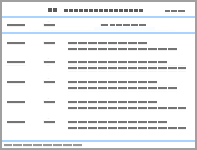
表1
液相色谱条件
时间 Time/min | 流动相A百分比 Percentage of mobile phase A/% | 流动相B百分比 Percentage of mobile phase B/% |
|---|---|---|
| (0~1.0] | 98 | 2 |
| (1.0~2.0] | 98→2 | 2→98 |
| (2.0~3.5] | 2 | 98 |
| (3.5~4.0] | 2→98 | 98→2 |
| (4.0~6.0] | 98 | 2 |
表2
质谱检测条件
化合物 Compound | 母离子 Precursor ion/(m/z) | 子离子 Product ion/(m/z) | 锥电压 Cone voltage/V | 碰撞能量 Collision energy/eV |
|---|---|---|---|---|
| OFX | 362.1 | 318.1 | 44 | 26 |
| ENR | 360.1 | 316.1 | 42 | 28 |
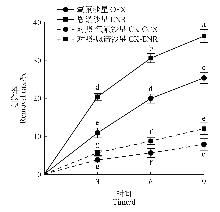
图1
氧氟沙星和恩诺沙星在不同试验体系下的去除率不同小写字母表示相同采样时间不同处理之间差异显著(P<0.05)。
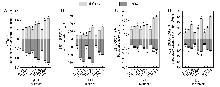
图2
氧氟沙星和恩诺沙星对翅碱蓬叶片和根系丙二醛浓度和抗氧化酶活性的影响不同小写字母表示不同处理之间差异显著(P<0.05)。
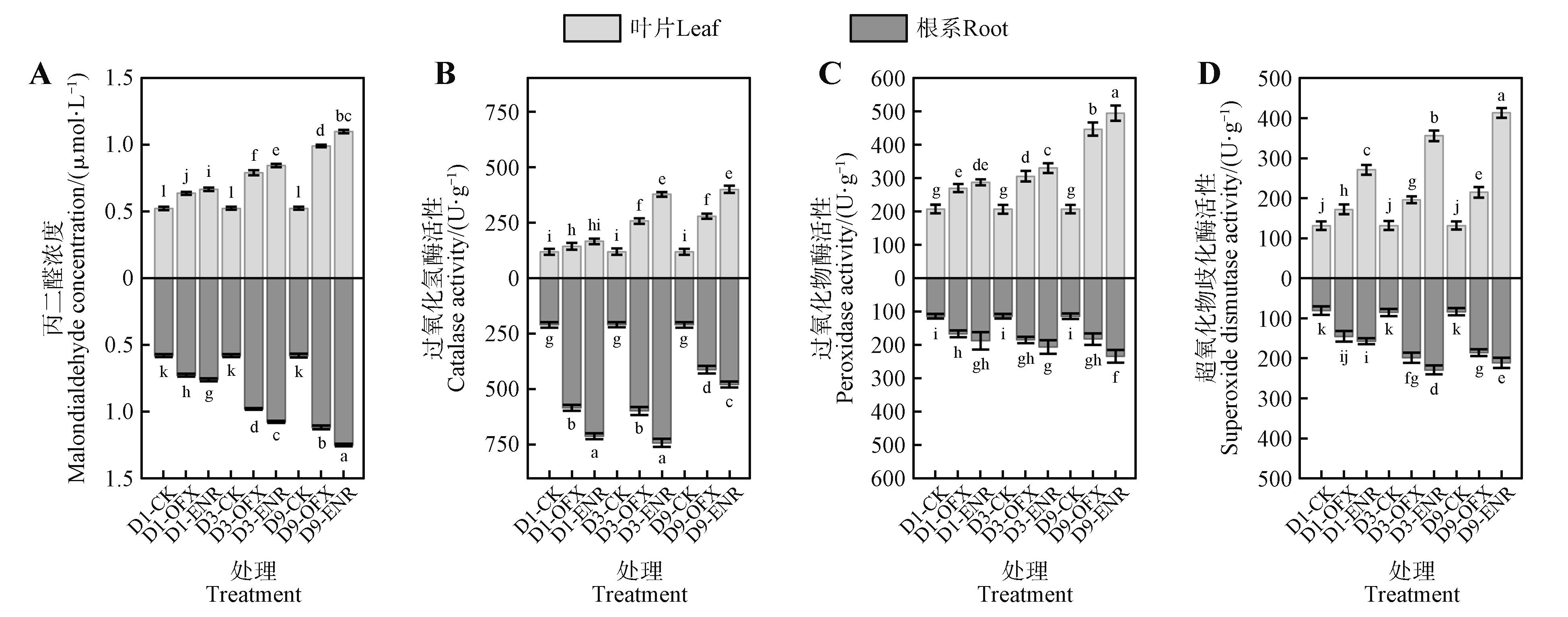
图3
翅碱蓬在氧氟沙星和恩诺沙星胁迫下差异表达基因的KEGG富集前20通路对比
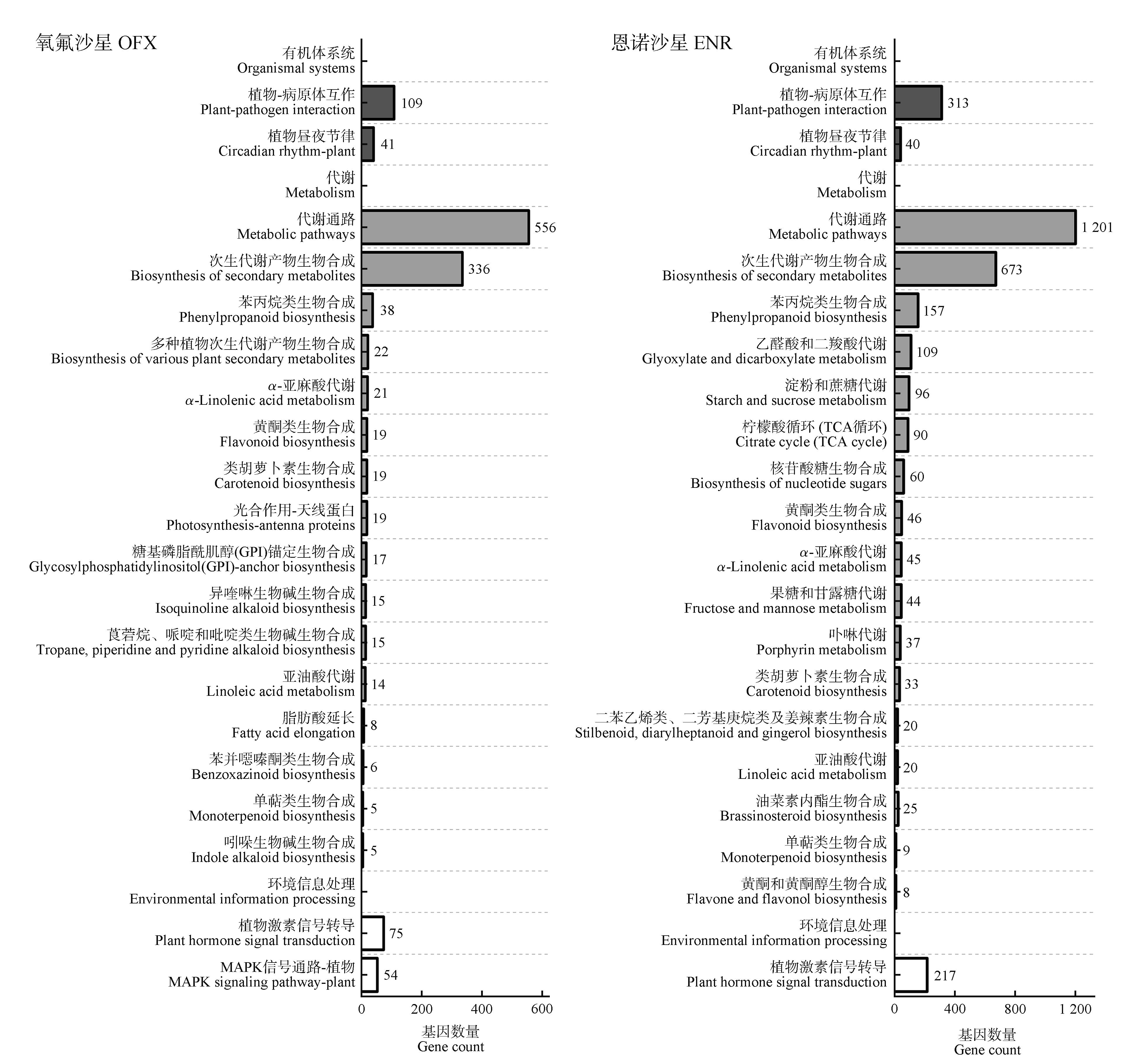
图4
翅碱蓬在氧氟沙星和恩诺沙星胁迫下差异表达基因的GO富集前20通路对比图
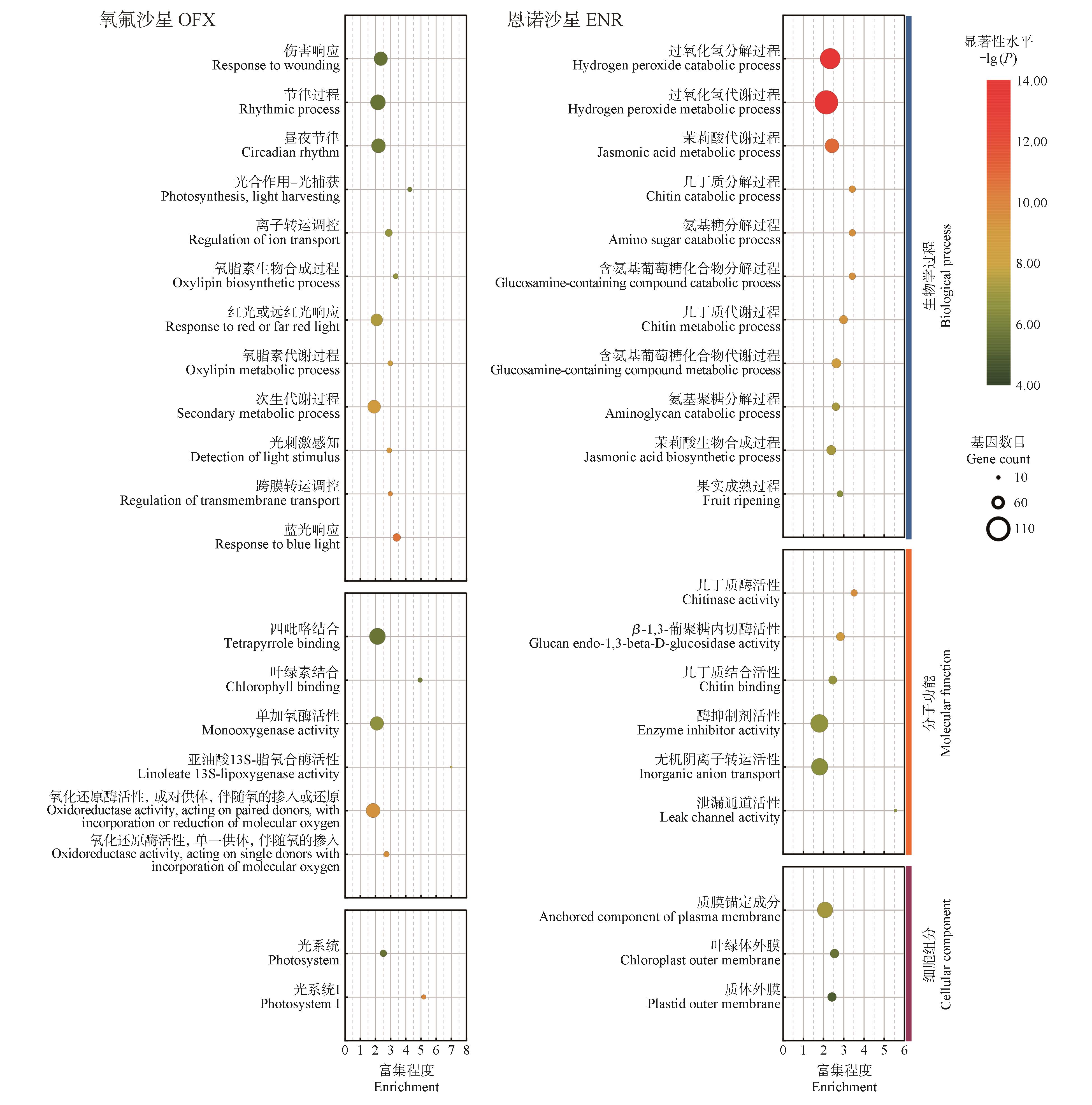
图5
翅碱蓬在氧氟沙星和恩诺沙星胁迫下差异基因富集通路的Venn分析
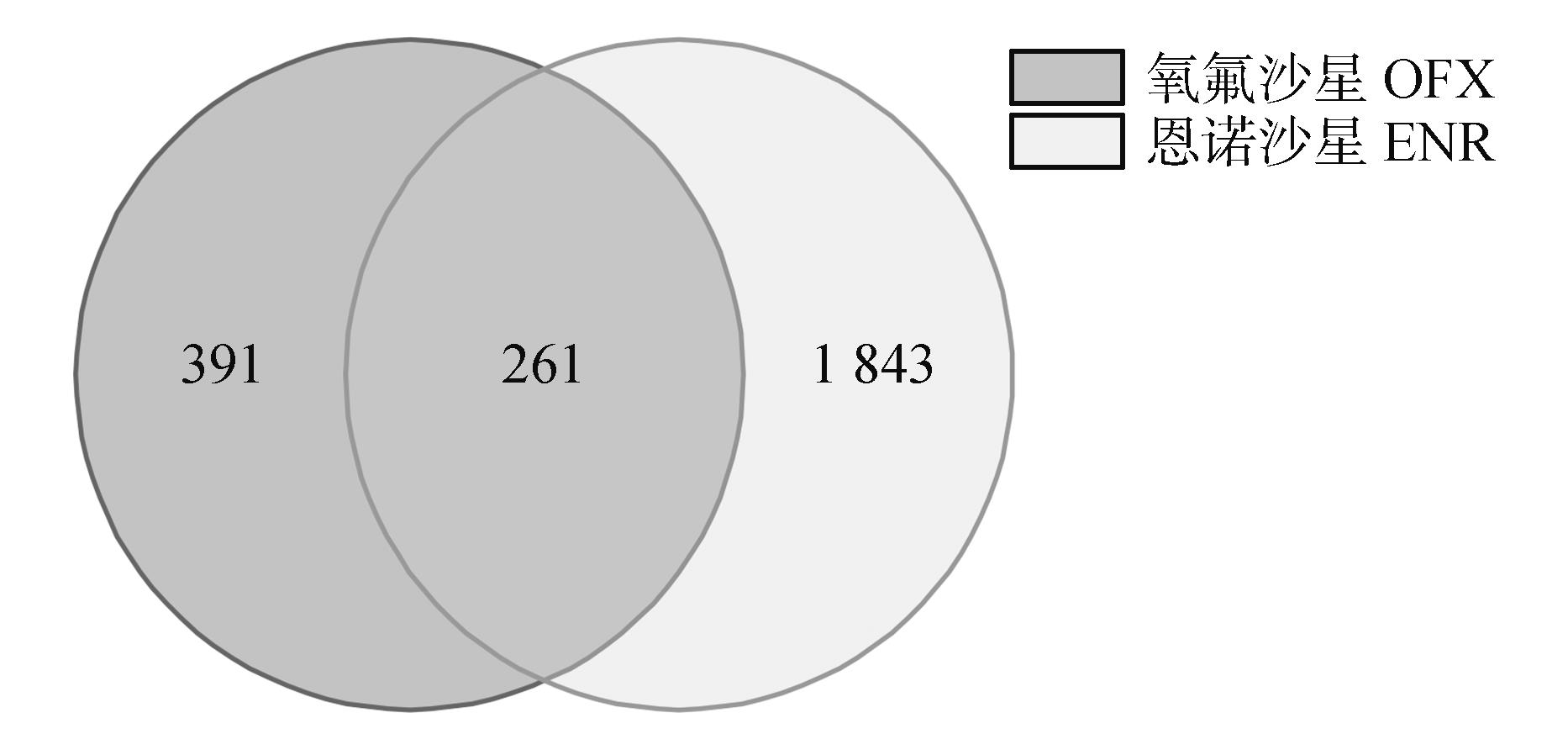
表3
翅碱蓬在氧氟沙星和恩诺沙星胁迫下的Hub基因及其关键通路归纳
分类 Category | 基因 Gene | 连接通路 Linked pathway | 功能/作用方向 Function/direction of effect |
|---|---|---|---|
| ENR | PAL | Phenylpropanoid biosynthesis | 木质素合成/防御反应 |
| ENR | 4CL | Phenylpropanoid biosynthesis | 细胞壁增强 |
| ENR | CYP450 | Sulfur metabolism / Secondary metabolism | 解毒与代谢调节 |
| ENR | ABC transporter | Transport / Detoxification | 外排抗生素 |
| ENR | CAD | Phenylpropanoid biosynthesis | 细胞壁加固/木质素合成 |
| OFX | LHCA1 | Photosystem I | 光捕获、光系统功能 |
| OFX | LHCB2 | Photosystem Ⅱ antenna proteins | 光能传递 |
| OFX | PsbO | Photosystem Ⅱ | 光系统稳定 |
| OFX | WRKY TF | MAPK signaling / Plant-pathogen interaction | 信号转导 |
| OFX | MAPK | MAPK signaling pathway | 逆境响应信号 |
| COMMON | SOD | Glutathione metabolism / ROS scavenging | 清除ROS |
| COMMON | CAT | Peroxisome / ROS scavenging | 分解H₂O₂ |
| COMMON | GST | Glutathione metabolism | 抗氧化与解毒 |
| COMMON | HSP | Protein processing in ER | 抗逆保护 |
| COMMON | ALDH | Pyruvate metabolism | 碳流分配与能量供给 |
图6
翅碱蓬在氧氟沙星和恩诺沙星胁迫下关键Hub基因的表达特征不同小写字母表示相同采样时间不同处理之间差异显著(P<0.05)。A. 氧氟沙星(OFX)胁迫下的关键Hub基因;B. 恩诺沙星(ENR)胁迫下的关键Hub基因;C. 氧氟沙星(OFX)和恩诺沙星(ENR)胁迫下关键Hub基因;LHCA1. 光系统Ⅰ捕光复合体蛋白A1基因相对表达量;LHCB2. 光系统Ⅱ捕光复合体蛋白B2基因相对表达量;PsbO. 光系统Ⅱ氧释放增强蛋白基因相对表达量;WRKY. WRKY转录因子家族基因相对表达量;MAPK. 丝裂原活化蛋白激酶家族基因相对表达量;PAL. 苯丙氨酸解氨酶基因相对表达量;4CL. 4-香豆酸辅酶A连接酶基因相对表达量;CYP450. 细胞色素P450家族基因相对表达量;ABC. ABC转运蛋白家族基因相对表达量;CAD. 肉桂醇脱氢酶基因相对表达量;SOD. 超氧化物歧化酶基因相对表达量;CAT. 过氧化氢酶基因相对表达量;GST. 谷胱甘肽S-转移酶家族基因相对表达量;HSP. 热激蛋白家族基因相对表达量;ALDH. 醛脱氢酶基因相对表达量。
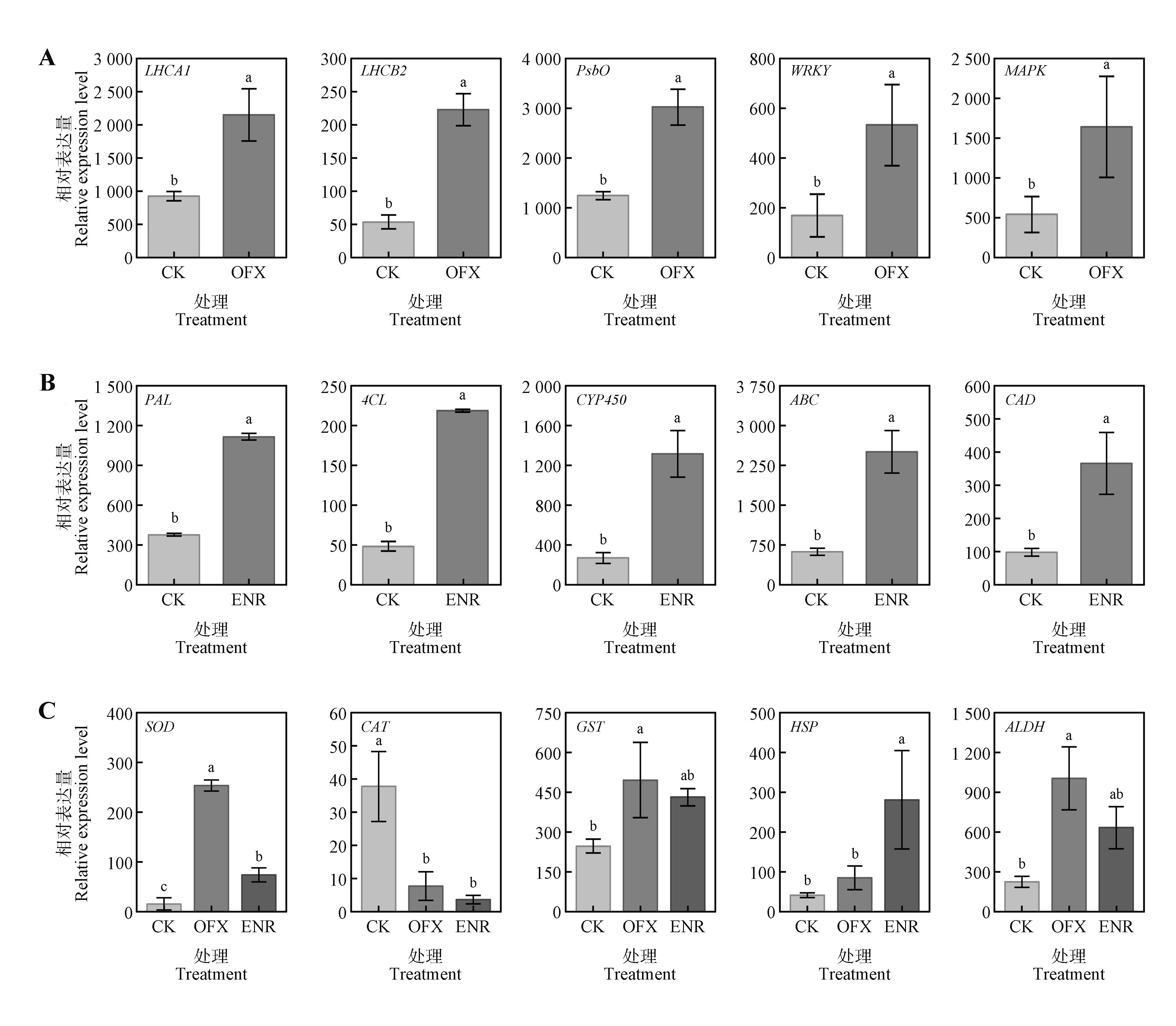
图7
恩诺沙星胁迫下翅碱蓬苯丙烷代谢基因表达量与抗氧化酶活性相关性*.在P<0.05水平上显著相关;**.在P<0.01水平上显著相关;(Z).Z-score标准化值。RE. 去除率;PAL. 苯丙氨酸解氨酶基因表达量;4CL. 4-香豆酸辅酶A连接酶基因表达量;CYP450. 细胞色素P450基因表达量;ABC . ABC转运蛋白基因表达量;CAD. 肉桂醇脱氢酶基因表达量;SOD. 超氧化物歧化酶基因表达量;CAT. 过氧化氢酶基因表达量;GST. 谷胱甘肽S-转移酶基因表达量;HSP. 热激蛋白基因表达量;ALDH. 醛脱氢酶基因表达量;SOD(Z). 超氧化物歧化酶活性;POD(Z). 过氧化物酶活性;CAT(Z). 过氧化氢酶活性;MDA(Z). 丙二醛浓度。
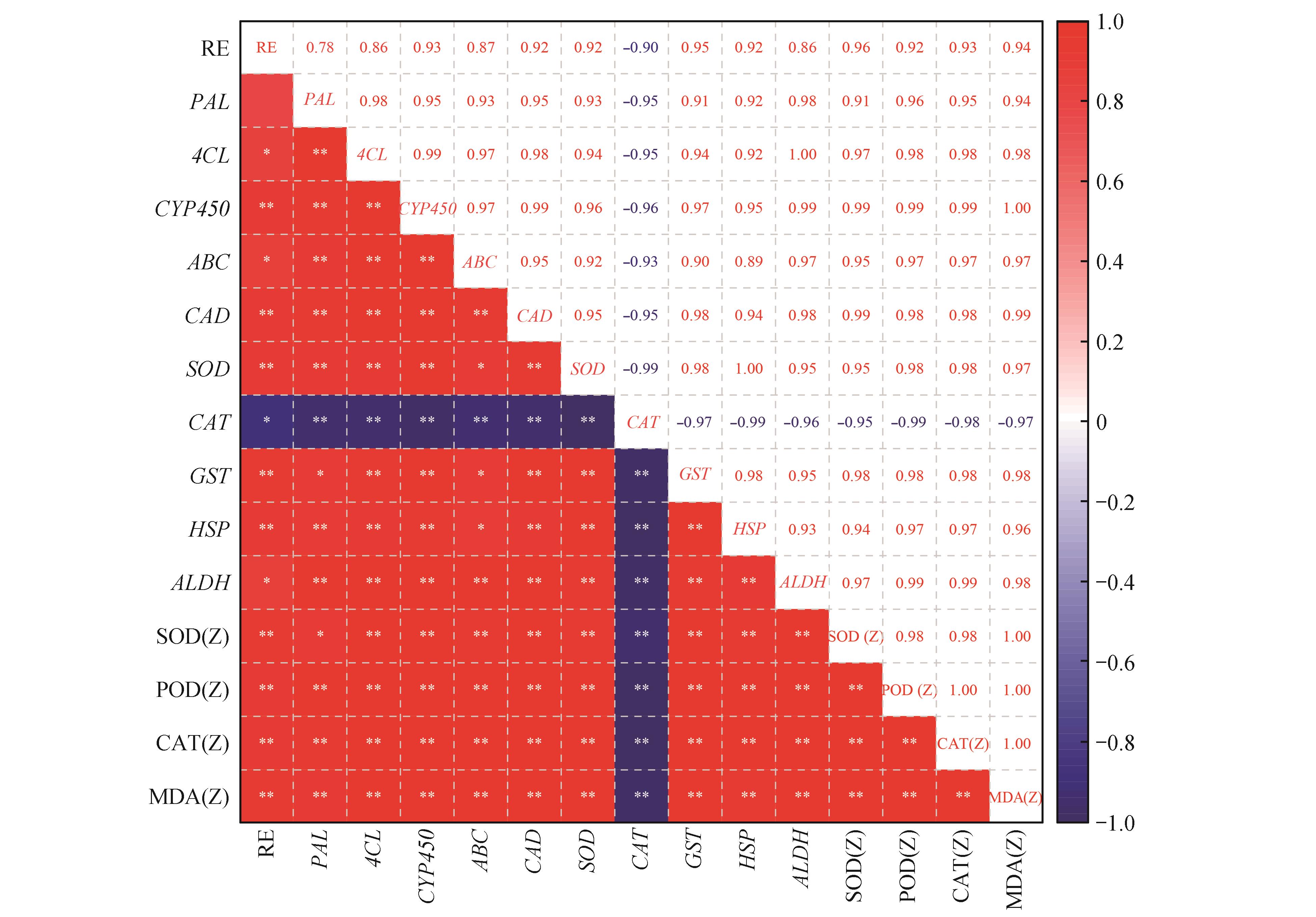
图8
氧氟沙星胁迫下翅碱蓬光系统基因表达量与抗氧化酶活性相关性*.在P<0.05水平上显著相关;**.在P<0.01水平上显著相关;(Z). Z-score标准化值。RE. 去除率;LHCA1. 光系统Ⅰ捕光复合体蛋白A1基因表达量;LHCB2. 光系统Ⅱ捕光复合体蛋白B2基因表达量;PsbO. 光系统Ⅱ氧释放增强蛋白基因表达量;WRKY TF. WRKY转录因子基因表达量;MAPK. 丝裂原活化蛋白激酶基因表达量;SOD. 超氧化物歧化酶基因表达量;CAT. 过氧化氢酶基因表达量;GST. 谷胱甘肽S-转移酶基因表达量;HSP. 热激蛋白基因表达量;ALDH. 醛脱氢酶基因表达量;SOD(Z). 超氧化物歧化酶活性;POD(Z). 过氧化物酶活性;CAT(Z). 过氧化氢酶活性;MDA(Z). 丙二醛浓度。
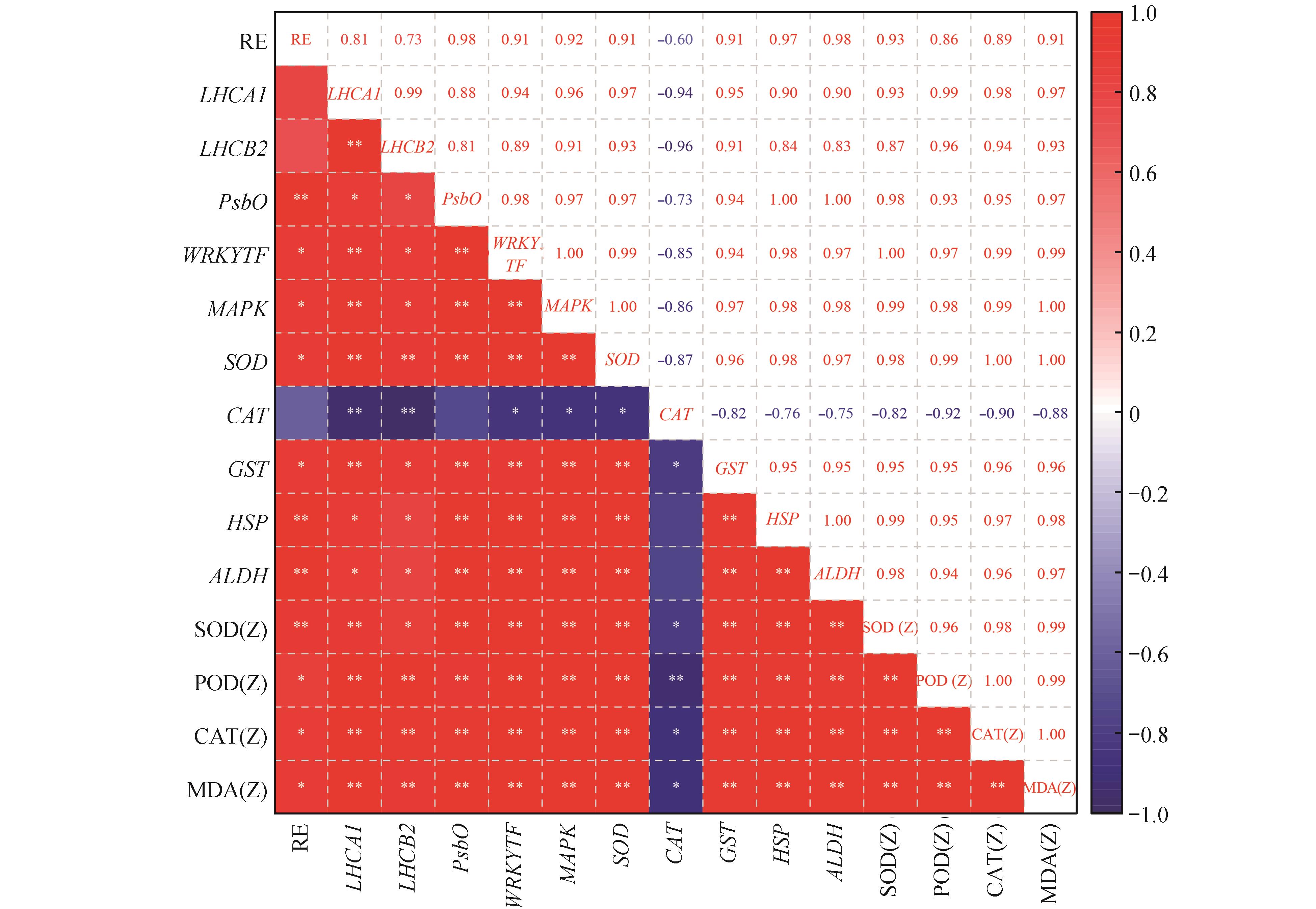
图9
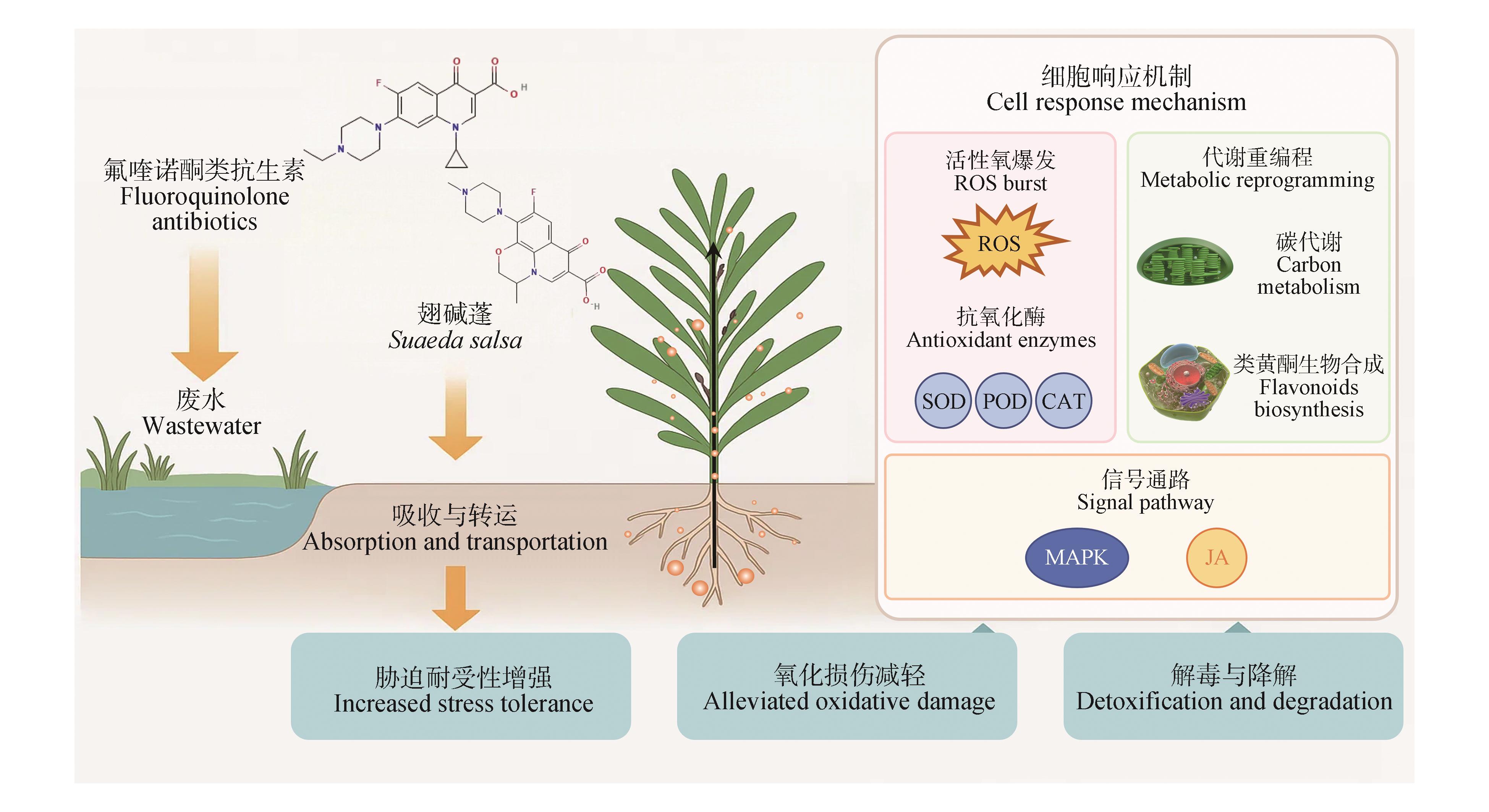
翅碱蓬应对氟喹诺酮胁迫的“三位一体”协同调控模型
| [1] | 付雨,剧泽佳,付耀萱,等.白洋淀优势水生植物中喹诺酮类抗生素的生物富集特征及其与环境因子相关性研究[J].环境科学学报,2021,41(9):3620-3630. |
| Fu Yu, Ju Zejia, Fu Yaoxuan,et al.The bioaccumulation of quinolones(QNs) in the dominant macrophytes and the correlation with environmental factors in Baiyangdian Lake[J].Acta Scientiae Circumstantiae,2021,41(9):3620-3630. | |
| [2] | 吴涵,赵健,张华民,等.黄河下游典型水体中医药类新污染物分布特征及生态风险评价[J].环境科学学报,2024,44(9):293-301. |
| Wu Han, Zhao Jian, Zhang Huamin,et al.Distribution characteristics and ecological risk assessment of emerging pharmaceutical contaminants in typical water bodies of the Lower Yellow River[J].Acta Scientiae Circumstantiae,2024,44(9):293-301. | |
| [3] | Wen L L, Dai J J, Ma J,et al.Comprehensive profiling of quinolone antibiotics in the Bohai Sea:occurrence,source apportionment,and environmental risks[J].Environmental Pollution,2025,387:127338. |
| [4] | Wen L L, Dai J J, Song J M,et al.Dual-source fingerprints and ecological risks of quinolone antibiotics in the Yellow Sea:implications for resistance and management[J].Environmental Chemistry and Ecotoxicology,2026,8:89-100. |
| [5] | 陈昳鸥,李玥,沈嘉怡,等.土霉素对油菜次生代谢及抗氧化作用的影响[J].生态毒理学报,2025,20(1):148-155. |
| Chen Yi’ou, Li Yue, Shen Jiayi,et al.Effects of oxytetracycline on secondary metabolism and antioxidant activity of rapeseed[J].Asian Journal of Ecotoxicology,2025,20(1):148-155. | |
| [6] | Chen L L, Xu Z L, He Y Q,et al.Multiomics analysis reveals key targeted metabolic pathways underlying the hormesis and detrimental effects of enrofloxacin on rice plants[J].Journal of Agricultural and Food Chemistry,2025,73(4):2678-2695. |
| [7] | Zhang Z H, Liu X N, Li N,et al.Effect of ofloxacin levels on growth,photosynthesis and chlorophyll fluorescence kinetics in tomato[J].Plant Physiology and Biochemistry,2023,194:374-382. |
| [8] | Jin J J, Xu L L, Zhang S Y,et al.Oxidative response of rice(Oryza sativa L.) seedlings to quinolone antibiotics and its correlation with phyllosphere microbes and antibiotic resistance genes[J].Science of the Total Environment,2023,867:161544. |
| [9] | Mu X Y, Zhang S H, Lu J H,et al.Fate and removal of fluoroquinolone antibiotics in mesocosmic wetlands:impact on wetland performance,resistance genes and microbial communities[J].Journal of Hazardous Materials,2024,470:133740. |
| [10] | 温丽联,宋金明,李学刚,等.氟喹诺酮类抗生素的环境污染及其对微生物介导氮循环的影响[J].应用生态学报,2023,34(11):3114-3126. |
| Wen Lilian, Song Jinming, Li Xuegang,et al.Environmental pollution of fluoroquinolones and its relationship with nitrogen cycling mediated by microorganisms[J].Chinese Journal of Applied Ecology,2023,34(11):3114-3126. | |
| [11] | Barroso G M, dos Santos E A, Pires F R,et al.Phytoremediation:a green and low-cost technology to remediate herbicides in the environment[J].Chemosphere,2023,334:138943. |
| [12] | 荣渝虹,张发明,杨娟,等.香根草对磺胺类抗生素污染水体的修复潜力研究[J].生态与农村环境学报,2022,38(6):795-801. |
| Rong Yuhong, Zhang Faming, Yang Juan,et al.Studies on phytoremediation potentials of Vetiveria zizanioides to sulfonamides polluted water[J].Journal of Ecology and Rural Environment,2022,38(6):795-801. | |
| [13] | Panja S, Sarkar D, Zhang Z M,et al.Removal of antibiotics and nutrients by vetiver grass(Chrysopogon zizanioides) from a plug flow reactor based constructed wetland model[J].Toxics,2021,9(4):84. |
| [14] | Huang W J, Kong R, Chen L J,et al.Physiological responses and antibiotic-degradation capacity of duckweed (Lemna aequinoctialis) exposed to streptomycin[J].Frontiers in Plant Science,2022,13:1065199. |
| [15] | Zhou T, An Q Y, Zhang L,et al.Phytoremediation for antibiotics removal from aqueous solutions:a meta-analysis[J].Environmental Research,2024,240:117516. |
| [16] | Li Q, Song J.Analysis of widely targeted metabolites of the euhalophyte Suaeda salsa under saline conditions provides new insights into salt tolerance and nutritional value in halophytic species[J].BMC Plant Biology,2019,19(1):388. |
| [17] | Shang C L, Wang L, Tian C Y,et al.Heavy metal tolerance and potential for remediation of heavy metal-contaminated saline soils for the euhalophyte Suaeda salsa [J].Plant Signaling & Behavior,2020,15(11):1805902. |
| [18] | Dong X, Liu Y, Ma X F,et al.Disclosing the effect of exogenous betaine on growth of Suaeda salsa(L.) Pall in the Liaohe coastal wetland,North China[J].Marine Pollution Bulletin,2024,198:115852. |
| [19] | Badawy S, Yang Y Q, Liu Y N,et al.Toxicity induced by ciprofloxacin and enrofloxacin:oxidative stress and metabolism[J].Critical Reviews in Toxicology,2021,51(9):754-787. |
| [20] | Wang H, Jin M K, Xu L L,et al.Effects of ketoprofen on rice seedlings:insights from photosynthesis,antioxidative stress,gene expression patterns,and integrated biomarker response analysis[J].Environmental Pollution,2020,263:114533. |
| [21] | Mihailova G, Kocheva K, Goltsev V,et al.Application of a diffusion model to measure ion leakage of resurrection plant leaves undergoing desiccation[J].Plant Physiology and Biochemistry,2018,125:185-192. |
| [22] | Farooq M A, Islam F, Ayyaz A,et al.Mitigation effects of exogenous melatonin-selenium nanoparticles on arsenic-induced stress in Brassica napus [J].Environmental Pollution,2022,292:118473. |
| [23] | Zhang P, Shen L Q, Chen J Y,et al.Comparative study of the toxicity mechanisms of quinolone antibiotics on soybean seedlings:insights from molecular docking and transcriptomic analysis[J].Science of the Total Environment,2023,896:165254. |
| [24] | Du J, Liu Q H, Pan Y,et al.The research status,potential hazards and toxicological mechanisms of fluoroquinolone antibiotics in the environment[J].Antibiotics,2023,12(6):1058. |
| [25] | Xiao W Y, Bian Z Y.Impact of molecular structure on the biological removal efficiency of fluoroquinolone antibiotics:an in-silico approach[J].Science of the Total Environment,2024,956:177178. |
| [26] | Zhang H H, Zeng N D, Feng Q R,et al.New mechanistic insights into PAHs transport across wheat root cell membrane:evidence for ABC transporter mediation[J].Science of the Total Environment,2023,859:160251. |
| [27] | Nybom I, Bucheli T D, Garland G.Antibiotics uptake from soil and translocation in the plants-meta-analysis[J].Chimia,2024,78(4):209-214. |
| [28] | Jin M K, Yang Y T, Zhao C X,et al.ROS as a key player in quinolone antibiotic stress on Arabidopsis thaliana:from the perspective of photosystem function,oxidative stress and phyllosphere microbiome[J].Science of the Total Environment,2022,848:157821. |
| [29] | Singh V, Pandey B, Suthar S.Phytotoxicity and degradation of antibiotic ofloxacin in duckweed(Spirodela polyrhiza) system[J].Ecotoxicology and Environmental Safety,2019,179:88-95. |
| [30] | Carballo M, Rodríguez A, de la Torre A.Phytotoxic effects of antibiotics on terrestrial crop plants and wild plants:a systematic review[J].Archives of Environmental Contamination and Toxicology,2022,82(1):48-61. |
| [31] | Chen X H, Song Y X, Ling C,et al.Fate of emerging antibiotics in soil-plant systems:a case on fluoroquinolones[J].Science of the Total Environment,2024,951:175487. |
| [32] | Wang M L, Wang Y D, Li X Z,et al.Integration of metabolomics and transcriptomics reveals the regulation mechanism of the phenylpropanoid biosynthesis pathway in insect resistance traits in Solanum habrochaites [J].Horticulture Research,2024,11(2):uhad277. |
| [33] | Liu X N, Lv Y, Gao S,et al.Ofloxacin induces etiolation in welsh onion leaves[J].Chemosphere,2021,267:128918. |
| [34] | Vicidomini C, Palumbo R, Moccia M,et al.Oxidative processes and xenobiotic metabolism in plants:mechanisms of defense and potential therapeutic implications[J].Journal of Xenobiotics,2024,14(4):1541-1569. |
| [35] | Xu Y, Fu X Y.Reprogramming of plant central metabolism in response to abiotic stresses:a metabolomics view[J].International Journal of Molecular Sciences,2022,23(10):5716. |
| [36] | Wang B, Xu H, Liu Y,et al.Unraveling phytoremediation mechanisms of the common reed(Phragmites australis) suspension cells towards ciprofloxacin:xenobiotic transformation and metabolic reprogramming[J].Water Research,2024,266:122347. |
| [37] | Javed T, Gao S J.WRKY transcription factors in plant defense[J].Trends in Genetics,2023,39(10):787-801. |
| [38] | Yoon J, Choi H, An G.Roles of lignin biosynthesis and regulatory genes in plant development[J].Journal of Integrative Plant Biology,2015,57(11):902-912. |
| [39] | Aristilde L, Melis A, Sposito G.Inhibition of photosynthesis by a fluoroquinolone antibiotic[J].Environmental Science & Technology,2010,44(4):1444-1450. |
| [40] | Riaz L, Mahmood T, Coyne M S,et al.Physiological and antioxidant response of wheat(Triticum aestivum) seedlings to fluoroquinolone antibiotics[J].Chemosphere,2017,177:250-257. |
| [41] | Wu X J, Chen X D, Zhang D Z,et al.Integrative multi-omics analysis reveals the underlying toxicological mechanisms of enrofloxacin on the growth of wheat seedling roots[J].Journal of Hazardous Materials,2024,477:135303. |
| [42] | Savchenko T, Tikhonov K.Oxidative stress-induced alteration of plant central metabolism[J].Life,2021,11(4): 304. |
| [43] | Bao L F, Wang W Y, Li M Y,et al.Reactive oxygen species-post translational modifications-central carbon metabolism regulatory loop:coordination of redox homeostasis and carbon flux allocation in plants under abiotic stress[J].Frontiers in Plant Science,2025,16:1637328. |
| [44] | Liu Y K, He C Z.A review of redox signaling and the control of MAP kinase pathway in plants[J].Redox Biology,2017,11:192-204. |
| [45] | Ninkuu V, Aluko O O, Yan J P,et al.Phenylpropanoids metabolism:recent insight into stress tolerance and plant development cues[J].Frontiers in Plant Science,2025,16:1571825. |
| [46] | Bose Mazumdar A, Chattopadhyay S.Glutathione pathways and gene networks:central players in crop adaptation to environmental stresses[J].Plant Growth Regulation,2025,105(6):1927-1948. |
| [47] | Li Z H, Chen J, Xu L L,et al.Quinolone antibiotics inhibit the rice photosynthesis by targeting photosystem II center protein:generational differences and mechanistic insights[J].Environmental Science & Technology,2024,58(26):11280-11291. |
| [48] | Remy E, Duque P.Beyond cellular detoxification:a plethora of physiological roles for MDR transporter homologs in plants[J].Frontiers in Physiology,2014,5:201. |
| [1] | 康超, 杨秋雨, 段朦, 李亚飞, 王万喜, 吴强盛. 香樟对温度胁迫的响应机制及调控策略研究进展[J]. 植物研究, 2026, 46(4): 584-598. |
| [2] | 朱畇昊, 张梦佳, 董诚明. 外源MeJA对高温胁迫下半夏抗氧化系统和胁迫基因的影响[J]. 植物研究, 2021, 41(1): 67-73. |
| [3] | 张强1,2;郭传友1;张兴旺1;白坤栋2*;蒋得斌3. 基于光合作用和抗氧化机制的南方铁杉和褐叶青冈越冬策略研究[J]. 植物研究, 2015, 35(2): 200-207. |
| [4] | 汪庆兵;陈光才*;房娟;楼崇;张建锋. 速生柳树苗对土壤铅的耐性、积累与分配特性研究[J]. 植物研究, 2014, 34(5): 626-633. |
| [5] | 陈辉;施国新*;徐勤松;王红霞;杨海燕;潘秋红. Cr6+对菹草叶绿素荧光参数、抗氧化系统和超微结构的胁迫影响[J]. 植物研究, 2009, 29(5): 559-564. |
| [6] | 陈军文;曹坤芳. 三叶橡胶光合作用能力和抗氧化系统以及单萜类物质对茉莉酸的响应[J]. 植物研究, 2008, 28(1): 47-53. |
| [7] | 周泉澄, 陈国祥, 陈利, 王建安, 张成军, 吕川根. 高产杂交稻两优培九旱育秧苗期抗氧化系统活性的研究[J]. 植物研究, 2005, 25(1): 80-85. |
| 阅读次数 | ||||||
|
全文 |
|
|||||
|
摘要 |
|
|||||
