
植物研究 ›› 2026, Vol. 46 ›› Issue (4): 740-750.doi: 10.7525/j.issn.1673-5102.2026.04.014
薛聪慧1, 牛丽丽2, 宋治华1, 董碧莹1, 杨清1, 付玉杰1, 孟冬1( )
)
收稿日期:2026-04-07
出版日期:2026-07-20
发布日期:2026-07-22
通讯作者:
孟冬
E-mail:mengdongjlf@163.com
作者简介:第一联系人:同等贡献作者。基金资助:
Conghui XUE1, Lili NIU2, Zhihua SONG1, Biying DONG1, Qing YANG1, Yujie FU1, Dong MENG1()
Received:2026-04-07
Online:2026-07-20
Published:2026-07-22
Contact:
Dong MENG
E-mail:mengdongjlf@163.com
摘要:
植物在病原菌胁迫下通常积累多种次生代谢产物,这些代谢物与植物抗逆性密切相关。其中,绿原酸(chlorogenic acid,CGA)可以通过调控次生代谢增强植物抗病性,但相关机制仍缺乏系统研究。为进一步解析其机制,本研究对外源绿原酸处理的黄芩(Scutellaria baicalensis)进行病原菌侵染,测定叶片叶绿素、丙二醛含量及侵染面积和黄酮类物质含量等相关指标,并进行转录组测序分析及酶基因顺式作用元件分析。结果表明:绿原酸显著提高黄芩对叶斑病的抗病性,并影响黄酮类化合物柚皮素和芹菜素的积累。与对照相比,绿原酸处理组黄芩叶片病斑面积较小,叶绿素含量较高,丙二醛含量较低。对绿原酸处理后的样品进行转录组测序分析,共鉴定出563个差异表达基因,主要富集在苯丙烷生物合成、淀粉和蔗糖代谢、亚麻酸代谢、半乳糖代谢、类黄酮生物合成等代谢途径中;其中SbPAL、SbC4H、Sb4CL1、Sb4CL2、SbFNS、SbHCT1、SbHCT2等黄酮合成关键酶基因表达显著上调;顺式作用元件分析表明,这些基因启动子区域富含bHLH、MYB、GRF等转录因子结合位点。综上,本研究表明:外源绿原酸可能通过促进类黄酮生物合成途径关键基因表达,提高黄芩中类黄酮化合物积累,从而增强其对叶斑病的抗病性。
中图分类号:
薛聪慧, 牛丽丽, 宋治华, 董碧莹, 杨清, 付玉杰, 孟冬. 外源绿原酸通过调控类黄酮代谢增强林下黄芩对叶斑病抗病性[J]. 植物研究, 2026, 46(4): 740-750.
Conghui XUE, Lili NIU, Zhihua SONG, Biying DONG, Qing YANG, Yujie FU, Dong MENG. Exogenous Chlorogenic Acid Enhances Leaf Spot Disease Resistance in Understory Scutellaria baicalensis by Regulating Flavonoid Metabolism[J]. Bulletin of Botanical Research, 2026, 46(4): 740-750.
图1
复合种植后黄芩的代谢组分析A.有机酸类差异表达代谢物热图,HQ表示黄芩单独种植,HQF表示黄芩和元宝枫复合种植;B.含量富集倍数前5名的有机酸类。
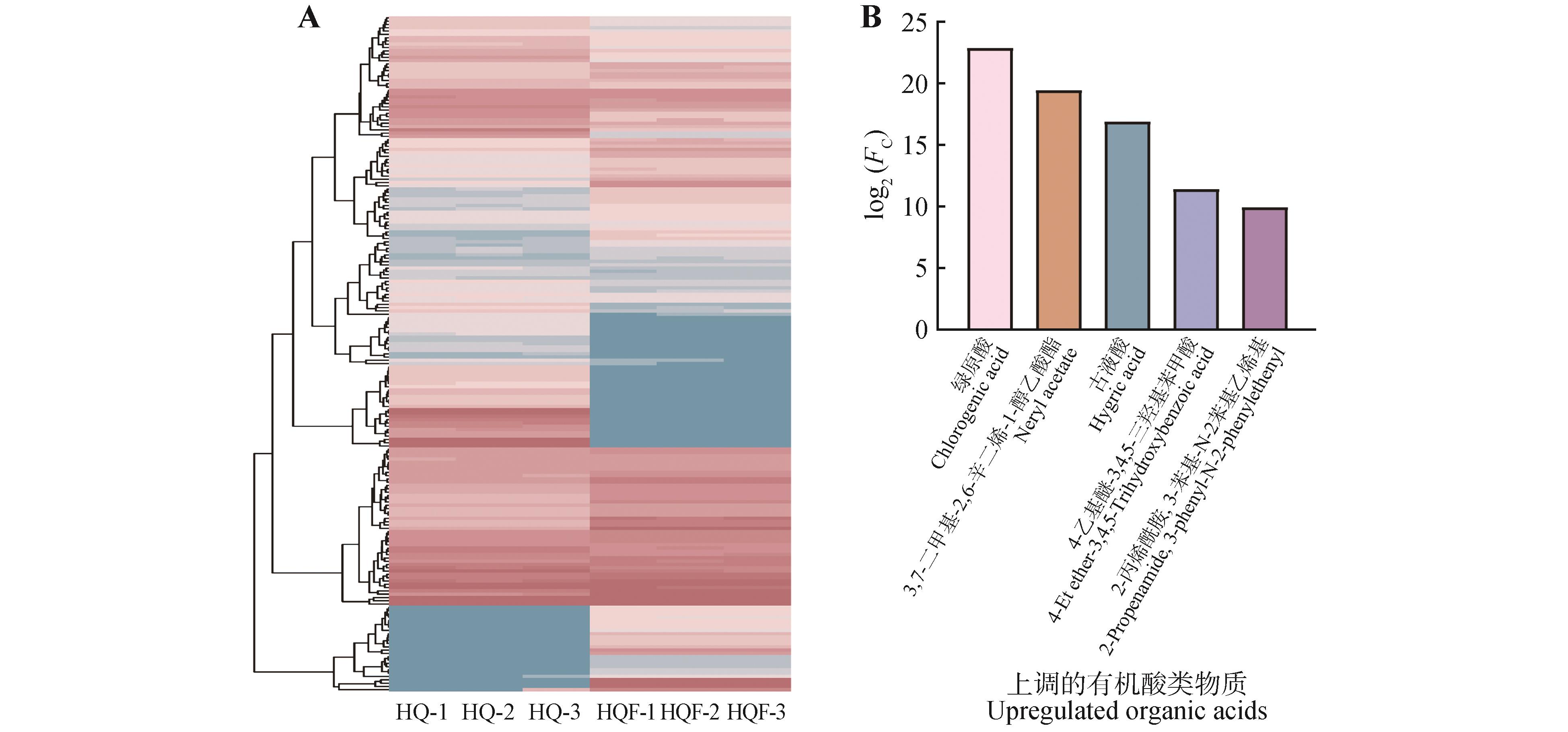
图2
绿原酸处理后黄芩叶片对链格孢菌的抗性分析A.接菌后,绿原酸处理组和对照组的叶片侵染表型;B.绿原酸处理组和对照组接菌后的侵染面积百分比;C~D.绿原酸处理组和对照组接菌后叶绿素质量分数和丙二醛质量摩尔浓度变化。*表示处理组与对照组间显著差异,*. P<0.05,***. P<0.001;n.s.表示无显著差异。
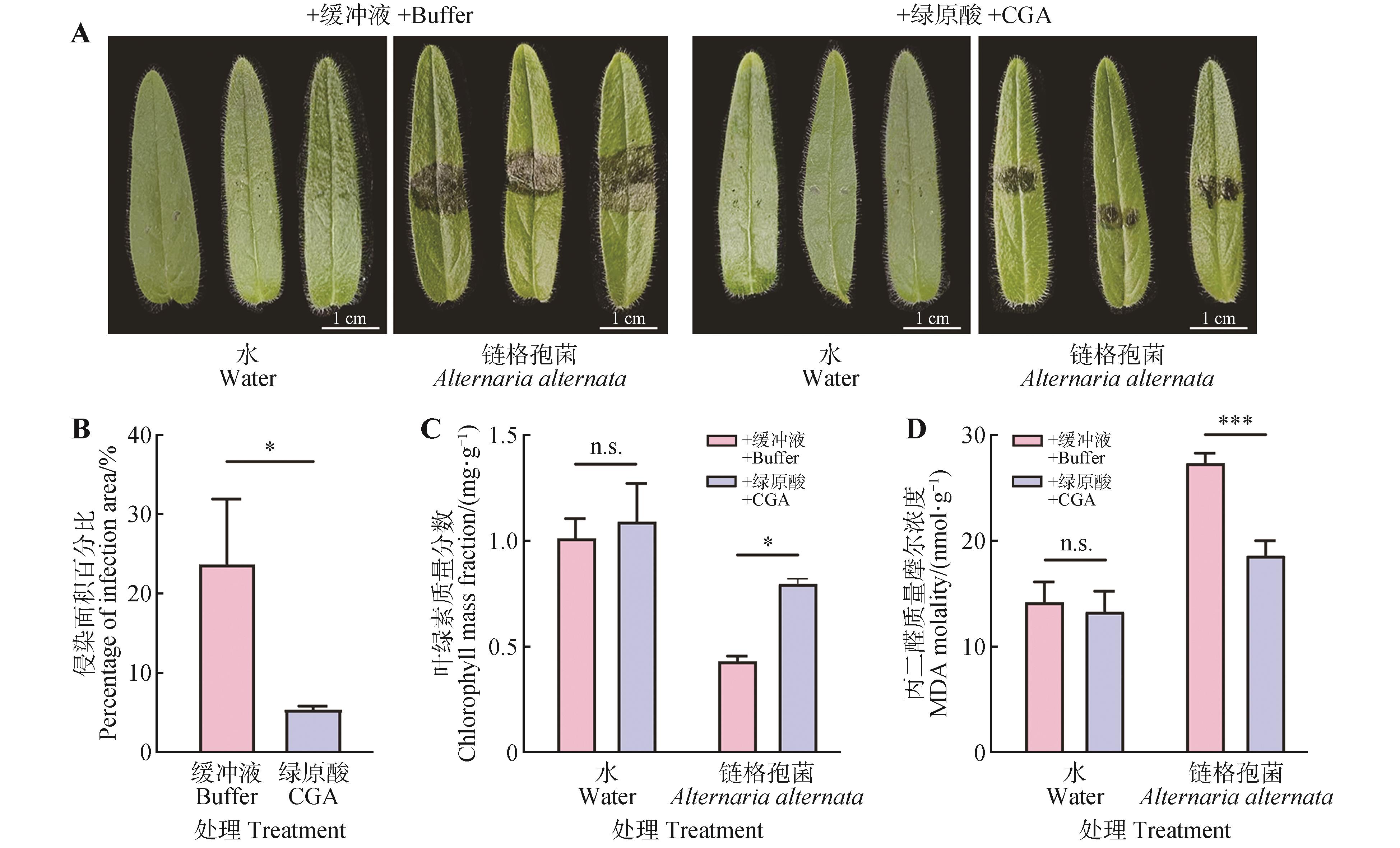
图3
绿原酸处理下的转录组分析A.所有差异表达基因热图,CK为缓冲液处理组,GG为绿原酸处理组;B.所有差异表达基因火山图;C.差异表达基因KEGG富集途径分析。
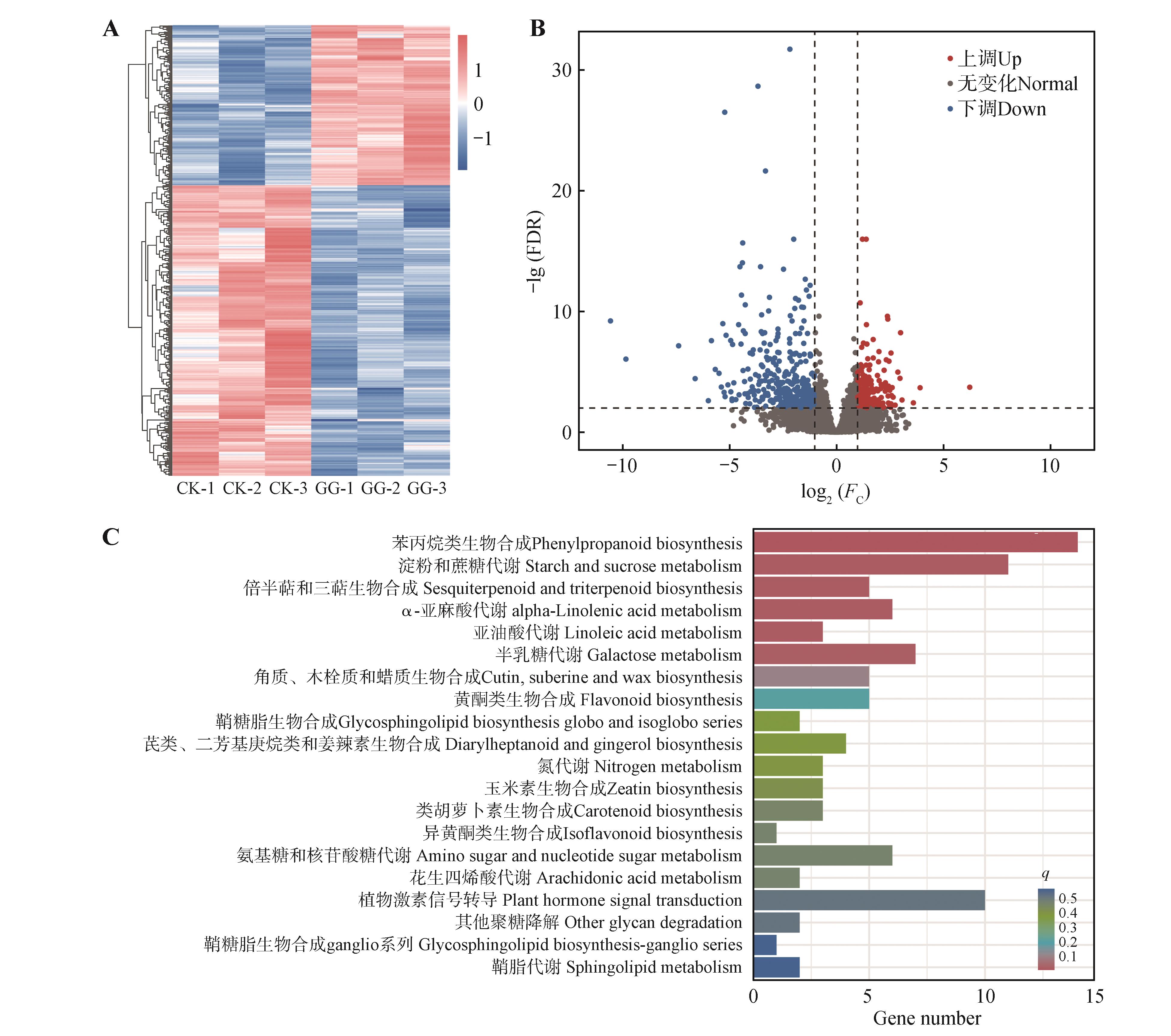
图4
绿原酸处理后黄芩叶片中4种黄酮类化合物质量分数的变化n.s.表示差异不显著;*表示P<0.05。
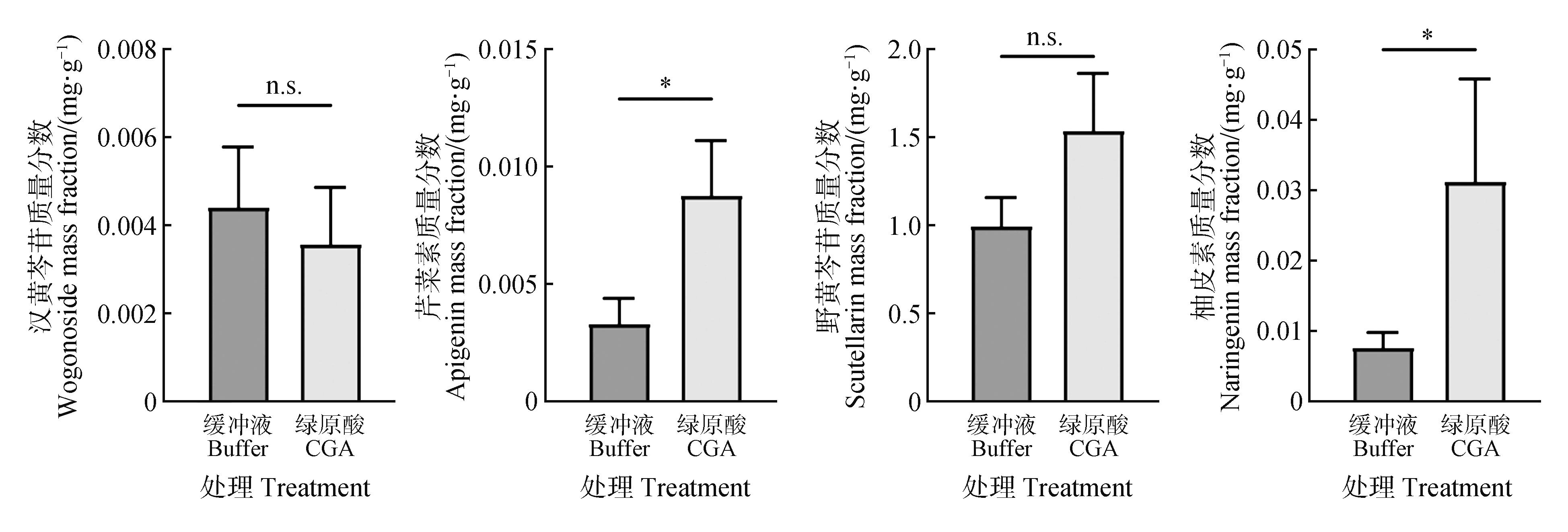
图5
类黄酮生物合成途径表达上调酶基因鉴定结果A.苯丙烷生物合成途径、类黄酮生物合成途径、异黄酮生物合成途径相关酶基因热图; B.黄芩中主要黄酮类物质合成通路。
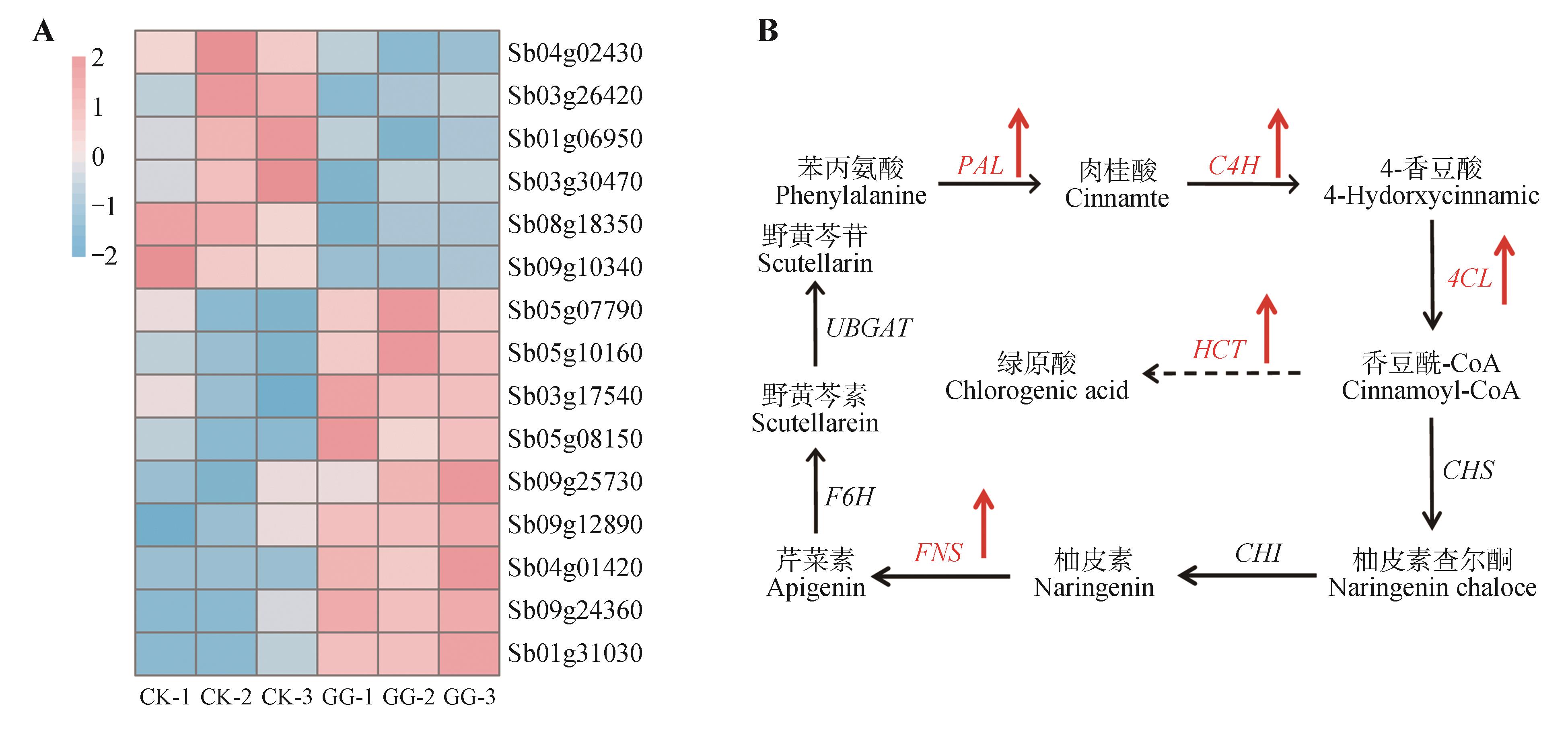
图6
黄芩叶片中关键黄酮生物合成酶基因表达量变化n.s.表示差异不显著;*表示P<0.05。
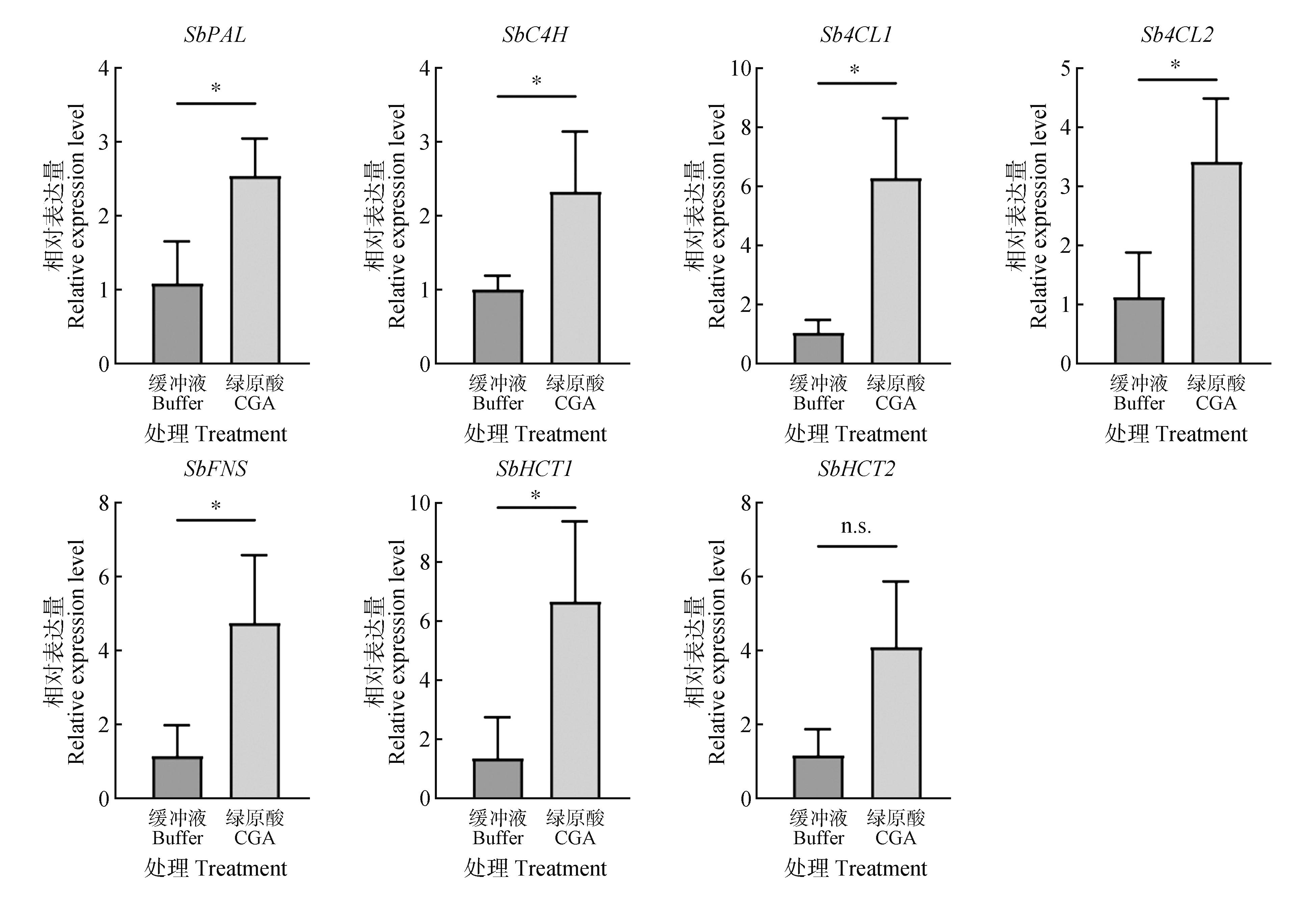
图7
酶基因的顺式作用元件分析与转录因子预测
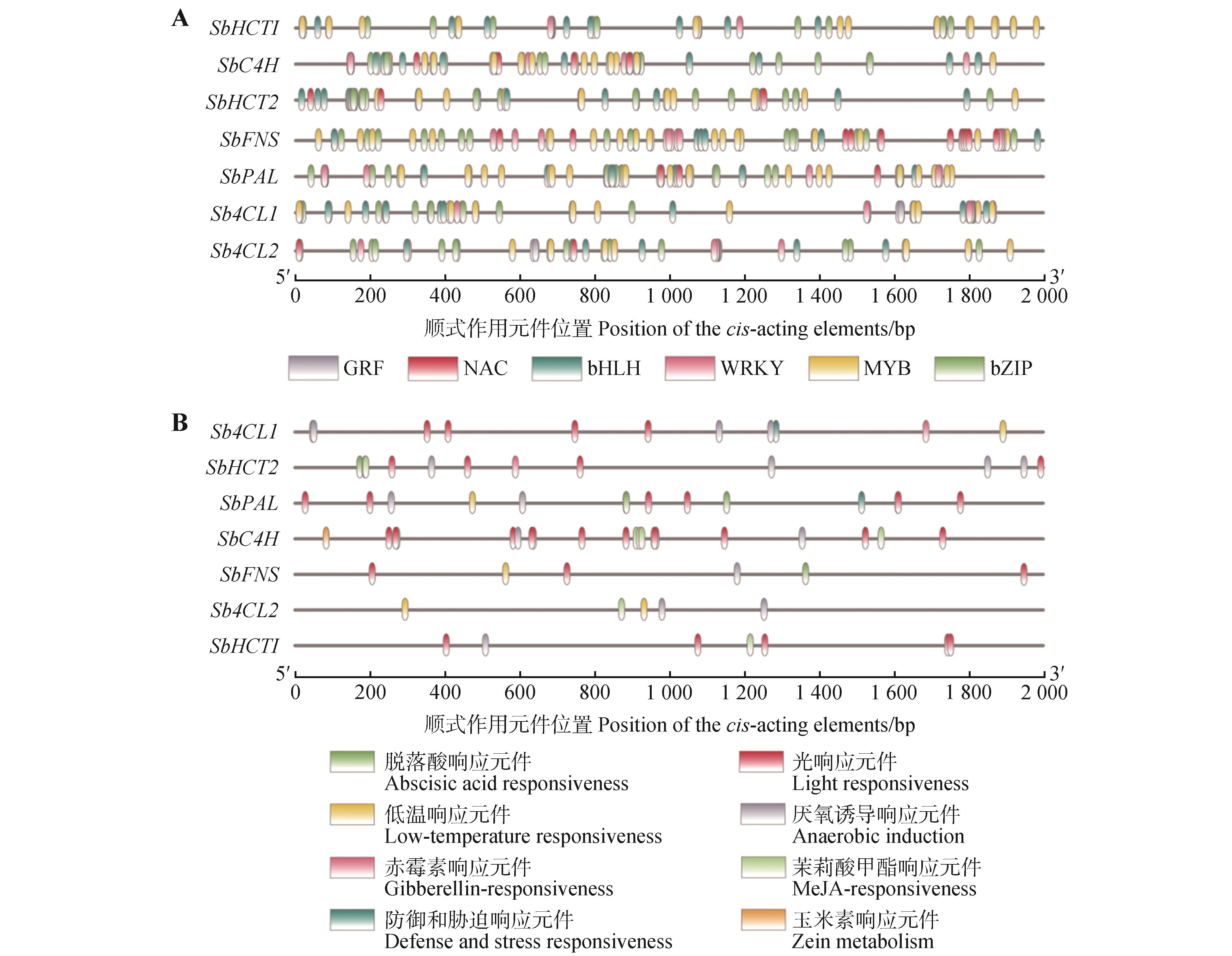
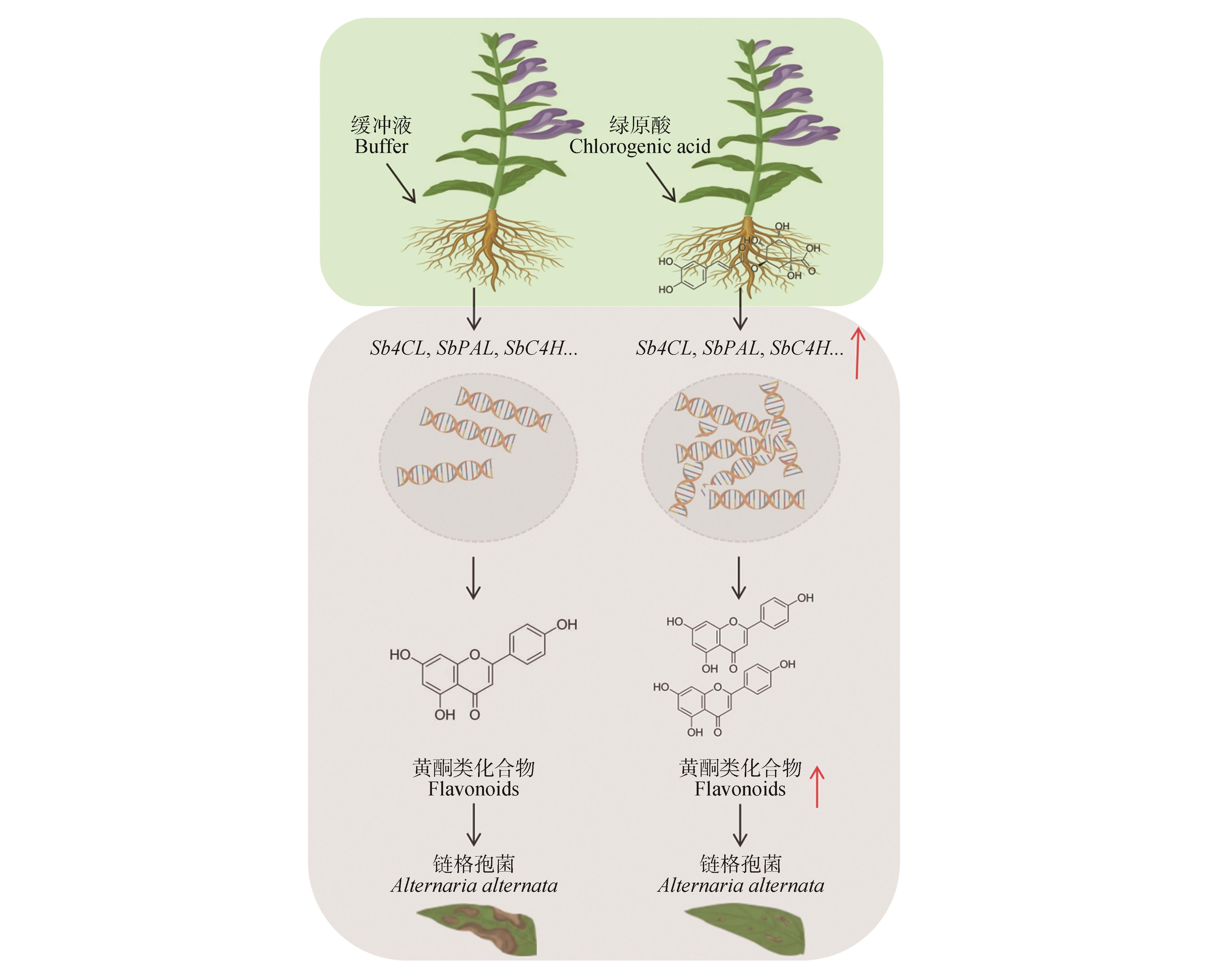
图8
绿原酸通过促进黄酮生物合成增强黄芩抵御链格孢菌病害模式图
| [1] | Wang Z L, Wang S, Kuang Y,et al.A comprehensive review on phytochemistry,pharmacology,and flavonoid biosynthesis of Scutellaria baicalensis [J].Pharmaceutical Biology,2018,56(1):465-484. |
| [2] | 郑敏敏,柳洁,赵清.药用植物黄芩的生物学研究进展及展望[J].生物技术通报,2023,39(2):10-23. |
| Zheng Minmin, Liu Jie, Zhao Qing.Research progress and prospects of biological studies on the medicinal plant Scutellaria baicalensis [J].Biotechnology Bulletin,2023,39(2):10-23. | |
| [3] | Xie Y F, Sun G T, Tao Y,et al.Current advances on the therapeutic potential of scutellarin:an updated review[J].Natural Products and Bioprospecting,2024,14(1):20. |
| [4] | 蒋晶晶,赵娇娇,陈爱昌,等.黄芩叶斑病病原菌鉴定和药剂室内毒力测定[J].核农学报,2022,36(11):2166-2174. |
| Jiang Jingjing, Zhao Jiaojiao, Chen Aichang,et al.Pathogens identification and fungicides toxicity assessment for Scutellaria baicalensis leaf spot disease[J].Journal of Nuclear Agricultural Sciences,2022,36(11):2166-2174. | |
| [5] | 蒋晶晶,陈爱昌,米永伟,等.黄芩病害绿色综合防治技术规程[J].寒旱农业科学,2026,5(2):194-196. |
| Jiang Jingjing, Chen Aichang, Mi Yongwei,et al.Technical specification for green,comprehensive prevention and control of diseases in Scutellaria baicalensis [J].Journal of Cold-Arid Agricultural Sciences,2026,5(2):194-196. | |
| [6] | Yang Q, Song Z H, Dong B Y,et al.Hyperoside regulates its own biosynthesis via MYB30 in promoting reproductive development and seed set in okra[J].Plant Physiology,2021,185(3):951-968. |
| [7] | Ma D W, Reichelt M, Yoshida K,et al.Two R2R3-MYB proteins are broad repressors of flavonoid and phenylpropanoid metabolism in poplar[J].The Plant Journal,2018,96(5):949-965. |
| [8] | Dixon R A, Pasinetti G M.Flavonoids and isoflavonoids:from plant biology to agriculture and neuroscience[J].Plant Physiology,2010,154(2):453-457. |
| [9] | Martens S, Mithöfer A.Flavones and flavone synthases[J].Phytochemistry,2005,66(20):2399-2407. |
| [10] | Wang Z B, Yu Q B, Shen W X,et al.Functional study of CHS gene family members in Citrus revealed a novel CHS gene affecting the production of flavonoids[J].BMC Plant Biology,2018,18:189. |
| [11] | Jian Y, Li Y N, Liu H R,et al.SlBES1-mediated brassinosteroid signaling suppresses flavonoid biosynthesis in tomato fruit[J].Plant Communications,2025,6(11):101523. |
| [12] | Wang F B, Ren G L, Li F S,et al.A chalcone synthase gene AeCHS from Abelmoschus esculentus regulates flavonoid accumulation and abiotic stress tolerance in transgenic Arabidopsis [J].Acta Physiologiae Plantarum,2018,40(5):97. |
| [13] | Liu Y H, Li Y M, Liu Z,et al.Integrated transcriptomic and metabolomic analysis revealed altitude-related regulatory mechanisms on flavonoid accumulation in potato tubers[J].Food Research International,2023,170:112997. |
| [14] | Clifford M, Jaganath I B, Ludwig I A,et al.Chlorogenic acids and the acyl-quinic acids:discovery,biosynthesis,bioavailability and bioactivity[J].Natural Product Reports,2017,34(12):1391-1421. |
| [15] | Yuan Q, Liu C, Zhang Z A,et al.Pharmacological advances of the chlorogenic acids family:current insights and future research directions[J].Frontiers in Pharmacology,2025,16:1613048. |
| [16] | He Y X, Mao S M, Zhao Y Y,et al.Research advances in the synthesis,metabolism,and function of chlorogenic acid[J].Foods,2025,14(11):1914. |
| [17] | Zhang M, Xiao Q Q, Li Y L,et al.Exploration of exogenous chlorogenic acid as a potential plant stimulant:enhancing physiochemical properties in Lonicera japonica [J].Physiology and Molecular Biology of Plants,2024,30(3):453-466. |
| [18] | Xie Y Y, Wang W Y, Wang C K,et al.MdMYB93 activates MdHCT6 expression via transcriptional regulation to enhance chlorogenic acid biosynthesis in apple[J].Horticultural Plant Journal,2025,11(5):1830-1846. |
| [19] | Jiao W X, Li X X, Wang X M,et al.Chlorogenic acid induces resistance against Penicillium expansum in peach fruit by activating the salicylic acid signaling pathway[J].Food Chemistry,2018,260:274-282. |
| [20] | 代阳,杨清,牛丽丽,等.黄精和黄芩不同种植模式的根系分泌物对土壤微生物的影响[J].东北林业大学学报,2025,53(11):103-113. |
| Dai Yang, Yang Qing, Niu Lili,et al.The effect of root exudates from Polygonatum sibiricum and Scutellaria baicalensis under different planting modes on soil microorganisms[J].Journal of Northeast Forestry University,2025,53(11):103-113. | |
| [21] | Chen C, Zhang K X, Khurshid M,et al.MYB transcription repressors regulate plant secondary metabolism[J].Critical Reviews in Plant Sciences,2019,38(3):159-170. |
| [22] | Pan L Y, Zhou J, Sun Y,et al.Comparative transcriptome and metabolome analyses of cherry leaves spot disease caused by Alternaria alternata [J].Frontiers in Plant Science,2023,14:1129515. |
| [23] | Yang W L, Li N, Fan Y X,et al.Transcriptome analysis reveals abscisic acid enhancing drought resistance by regulating genes related to flavonoid metabolism in pigeon pea[J].Environmental and Experimental Botany,2021,191:104627. |
| [24] | 李艳梅,姜丽娜,孙向阳,等.外源绿原酸对番茄幼苗低温耐性的生理调控效应[J].植物营养与肥料学报,2024,30(2):315-330. |
| Li Yanmei, Jiang Lina, Sun Xiangyang,et al.Physiological regulation of exogenous chlorogenic acid on chilling tolerance of tomato seedlings[J].Journal of Plant Nutrition and Fertilizers,2024,30(2):315-330. | |
| [25] | Jibran R, Hill S J, Lampugnani E R,et al.The auronidin flavonoid pigments of the liverwort Marchantia polymorpha form polymers that modify cell wall properties[J].The Plant Journal,2024,120(3):1159-1175. |
| [26] | Su D, Wu M B, Wang H,et al.Bi-functional transcription factor SlbHLH95 regulates fruits flavonoid metabolism and grey mould resistance in tomato[J].Plant Biotechnology Journal,2025,23(6):2083-2094. |
| [27] | Bao H H, Yuan L, Luo Y C,et al.The transcription factor WRKY41-FLAVONOID 3′-HYDROXYLASE module fine-tunes flavonoid metabolism and cold tolerance in potato[J].Plant Physiology,2025,197(3):kiaf070. |
| [28] | Yang C Y, Zhang P P, Jiang P B,et al. GmMYB4 positively regulates isoflavone biosynthesis via the GmMAPK6-GmMYB4-MBW module in soybean[J].Plant Biotechnology Journal,2026,24(3):1482-1499. |
| [1] | 张静静, 骆海霞, 洪艳苹, 赵世成. 发根农杆菌介导龙葵遗传转化体系优化[J]. 植物研究, 2026, 46(1): 111-119. |
| [2] | 周加本, 热增才旦, 热毛先, 利毛才让. 高速逆流色谱结合半制备液相色谱制备甘青青兰中3种活性成分[J]. 植物研究, 2022, 42(2): 252-258. |
| [3] | 王胜芳, 韩淑兰, 党士坤, 王慧梅. AgNO3逆转的黄芩组培玻璃化苗的活性成分含量及其生物活性研究[J]. 植物研究, 2020, 40(3): 401-406. |
| [4] | 吴建慧, 范卫芳, 牛喆, 张静, 高鹏飞, 李文. 外源茉莉酸甲酯对干旱胁迫下狭叶黄芩光合和生理特性的影响[J]. 植物研究, 2020, 40(3): 360-367. |
| [5] | 张静, 牛喆, 范卫芳, 高鹏飞, 吴建慧. 狭叶黄芩组织培养再生体系的建立[J]. 植物研究, 2020, 40(1): 50-57. |
| [6] | 苏虎, 朱友林, 李蓉, 吴超, 张芸. 黄芩ICS基因部分编码序列的克隆及其对水杨酸含量影响的研究[J]. 植物研究, 2016, 36(3): 421-426. |
| [7] | 韩淑兰;王慧梅*;张丹. 降低黄芩再生苗玻璃化率及其生根的研究[J]. 植物研究, 2016, 36(1): 90-96. |
| [8] | 高银祥1,2;祖元刚1;杨逢建1;于雪莹1;姚丽萍1*. 向日葵植株中次生代谢产物分布及积累规律研究[J]. 植物研究, 2014, 34(6): 782-786. |
| [9] | 蒋华军;林勇;常秋;王英姿;黄志强;刘仲华*. 中药香薷不同部位总黄酮及3种主要黄酮成分含量分析[J]. 植物研究, 2013, 33(2): 252-256. |
| [10] | 苏虎;徐茂军;江湖;李玉萍. bax基因调控下黄芩细胞凋亡的初步研究[J]. 植物研究, 2013, 33(1): 109-113. |
| [11] | 文苗苗;李桂双;张龙进;郑鹏;白成科;*. 黄芩种质资源ISSR遗传多样性的分析及评价[J]. 植物研究, 2012, 32(1): 32-37. |
| [12] | 刘开全;邓洪平*. 重庆特有濒危植物缙云黄芩的繁育系统研究[J]. 植物研究, 2011, 31(4): 403-407. |
| [13] | 李建辉;金则新*;李钧敏. 长叶榧黄酮类化合物含量及成分分析[J]. 植物研究, 2007, 27(1): 50-54. |
| [14] | 闫桂琴, 孙建华, 魏凯雁, 李永玲, 张连水. 稀有濒危植物翅果油树种群黄酮类化合物多样性研究[J]. 植物研究, 2003, 23(4): 443-448. |
| [15] | 赵昕, 袁晓颖, 付玉杰, 张莹. 高效液相色谱法测定豚草茎中绿原酸含量的研究[J]. 植物研究, 2003, 23(2): 185-188. |
| 阅读次数 | ||||||
|
全文 |
|
|||||
|
摘要 |
|
|||||
