
Bulletin of Botanical Research ›› 2026, Vol. 46 ›› Issue (4): 764-776.doi: 10.7525/j.issn.1673-5102.2026.04.016
• Original Paper • Previous Articles
Wenjun LI, Sha LUO, Qianqian SHI( )
)
Received:2026-02-01
Online:2026-07-20
Published:2026-07-22
Contact:
Qianqian SHI
E-mail:shiqianqian2005@163.com
CLC Number:
Wenjun LI, Sha LUO, Qianqian SHI. Epidermal Cell Changes and Anthocyanin Accumulation Patterns during Paeonia rockii Blotch Formation[J]. Bulletin of Botanical Research, 2026, 46(4): 764-776.
Fig.1
Petals of 10 Paeonia rockii cultivars at S1-S7 stages
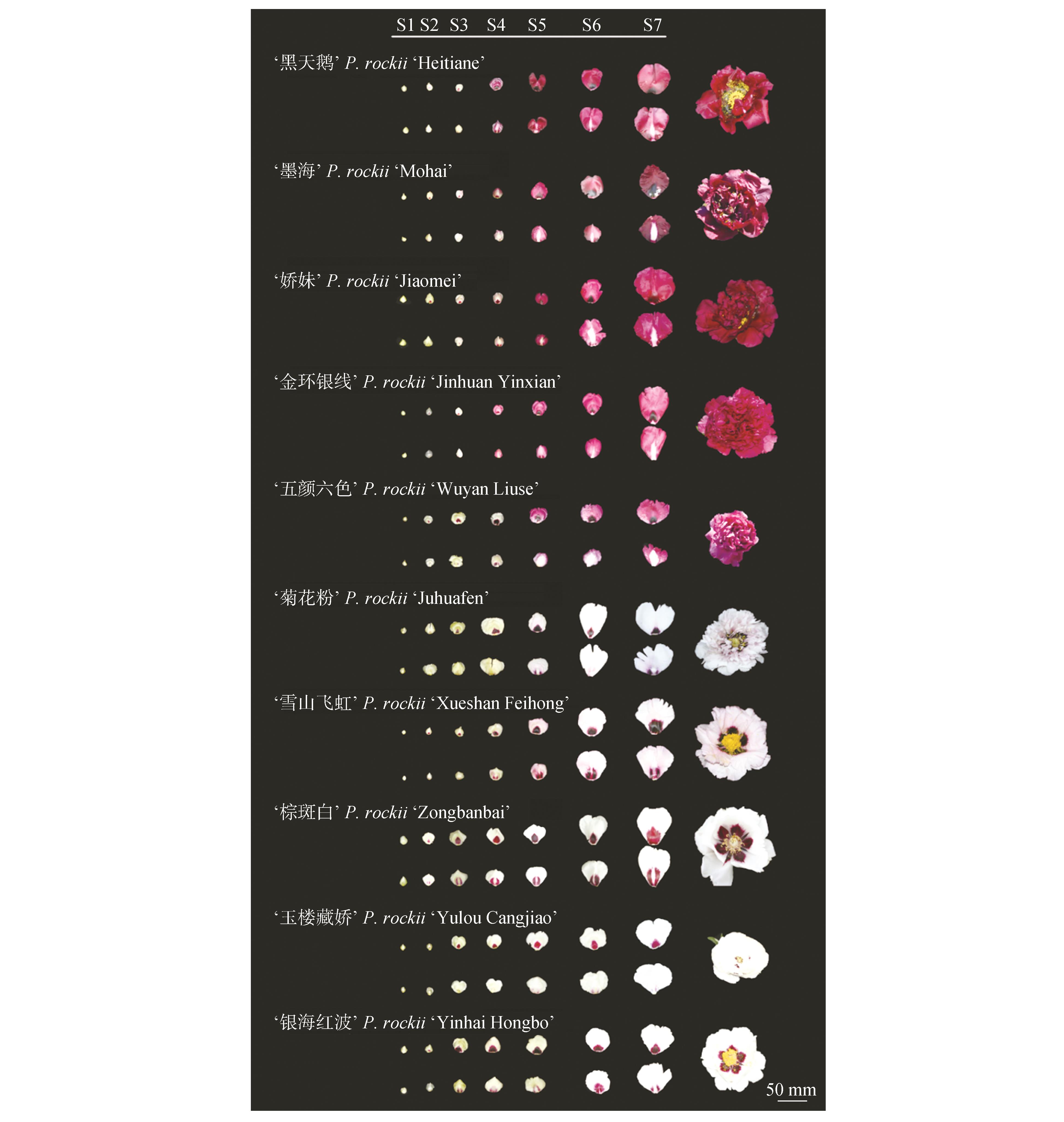

Table 1
The stage division of Paeonia rockii 's blotch formation process
时期 Stage | 描述 Description | 对应牡丹物候期 Phenological period |
|---|---|---|
| S1 | 无色斑 | 立蕾期、小风铃前期 |
| S2 | 色斑逐渐显露,未形成完整轮廓 | 小风铃期、大风铃期 |
| S3 | 色斑轮廓初步形成,花色初显或将显未显 | 大风铃后期、圆桃前期 |
| S4 | 色斑增大加深,花色逐渐显露 | 圆桃期 |
| S5 | 色斑继续扩增,花色基本形成 | 圆桃后期、平桃期 |
| S6 | 色斑、花色已形成,面积仍有变化 | 破绽透色期、初开期 |
| S7 | 花开放 | 盛开期 |
Fig.2
Formation process of Paeonia rockii ‘Yinhai Hongbo’ blotch at stages S2-S3A-F. The spot expansion process on the petal of ‘Yinhai Hongbo’; G-K. The asymmetric expansion of spot clusters on the left and right sides of the petal.
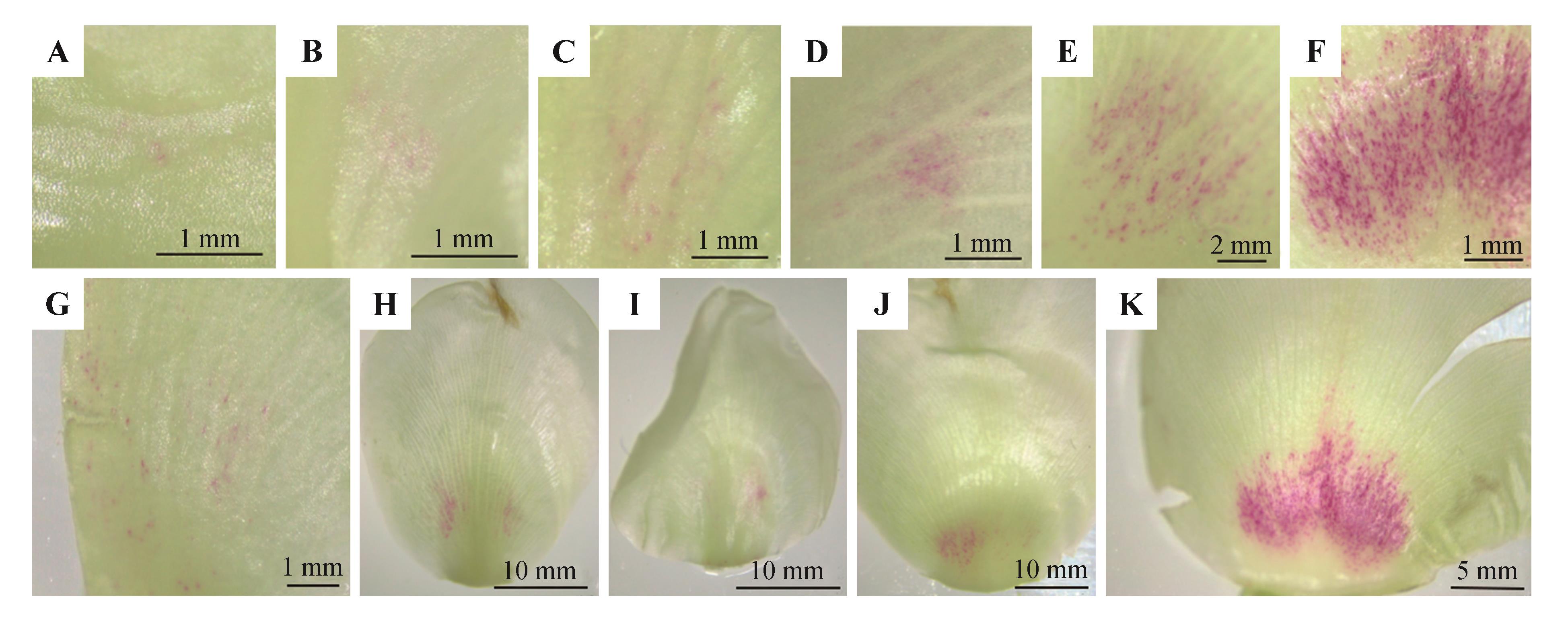
Fig.3
Transverse and longitudinal views of Paeonia rockii cultivar blotches at stage S6A.‘Yinhai Hongbo’ transverse section in blotch area; B.‘Juhuafen’ longitudinal section in blotch area; C.‘Wuyan Liuse’ transverse section in blotch area; D.‘Yulou Cangjiao’ longitudinal section in blotch area; E.‘Juhuafen’ blotched cells; F.‘Juhuafen’ blotched cells; G.‘Xueshan Feihong’ blotched cells.
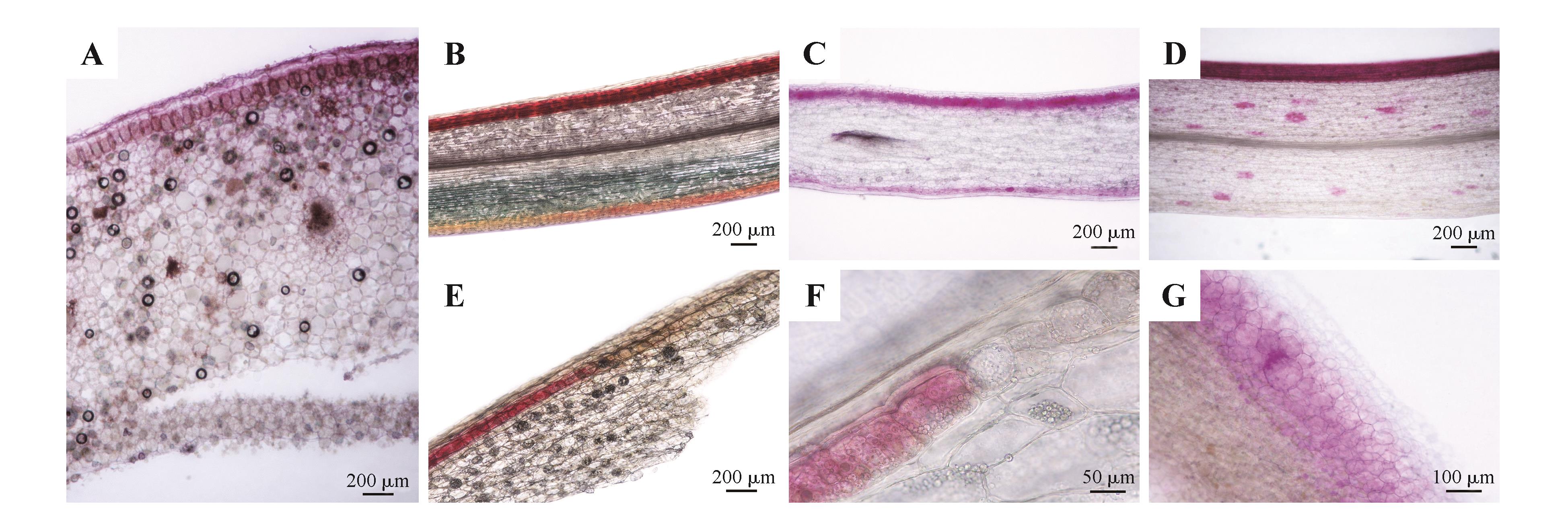
Fig.4
Anatomical structure of the upper epidermis in the blotched area of ten Paeonia rockii cultivars at stages S1-S7
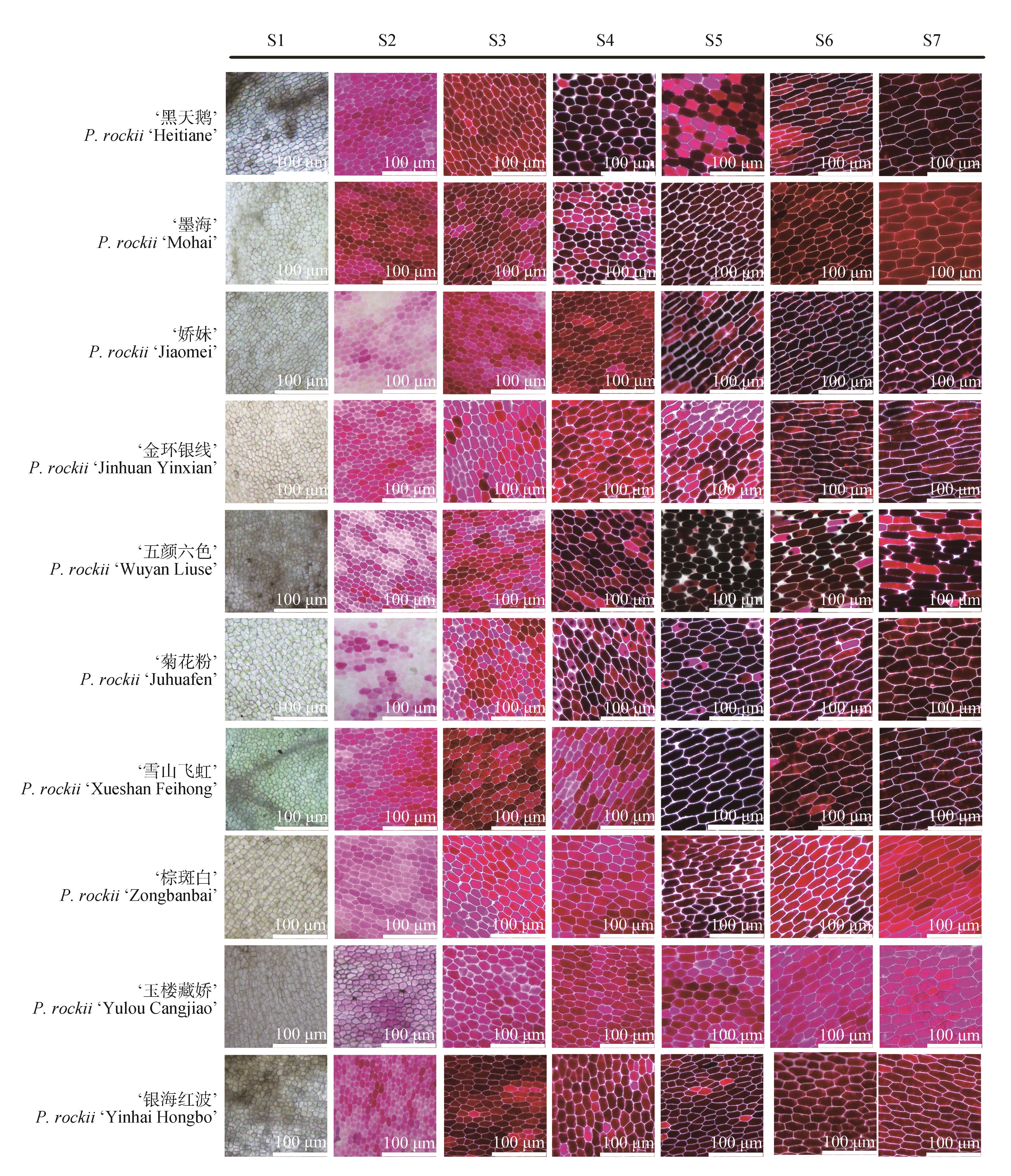
Fig.5
Central pigment cells and pigment cell clusters of Paeonia rockiiA. ‘Yinhai Hongbo’ pigment cells; B. ‘Juhuafen’ pigment cells; C. ‘Yinhai Hongbo’ pigment cells; D.‘Wuyan Liuse’ pigment cells at the base of the blotch; E.‘Zongbanbai’ pigment cells at the top of the blotch; F.‘Mohai’ pigment cells at the base of the blotch; G.‘Xueshan Feihong’ pigment cells at the top of the blotch. A-C. Early stage of S2; D and E. Later stage of S2; F and G. S6 stage. The markings in the figures were: 1. Single pigment cell; 2. Unformed pigment cell mass; 3. Pigment cell mass; 4. Pigment cell clusters join into sheets.
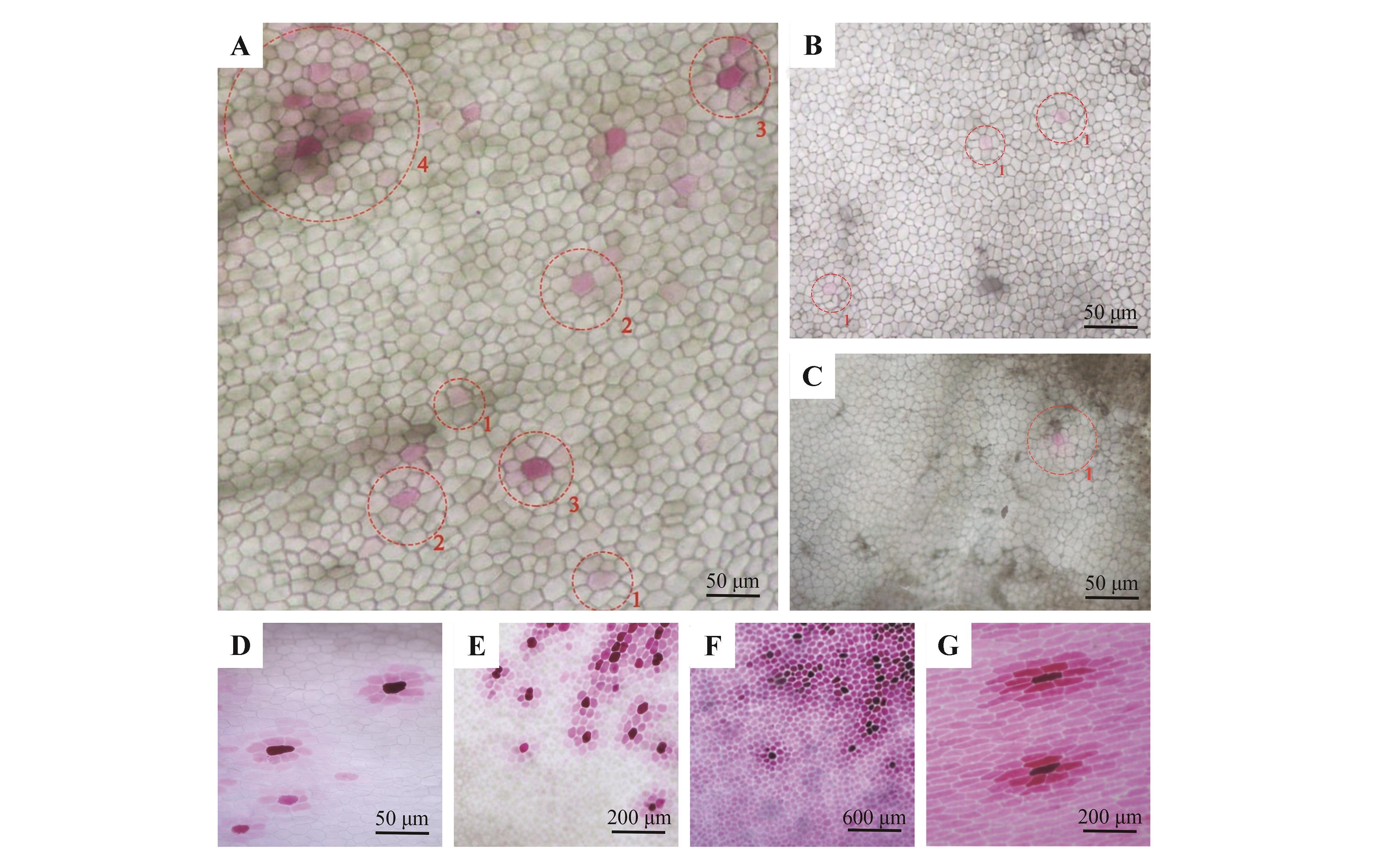
Fig.6
Patchwork of the upper epidermis from the base to the apex of the Paeonia rockii cultivar blotch at stage S6A.‘Wuyan Liuse’; B.‘Yinhai Hongbo’; C.‘Zongbanbai’. The left end was the base of the blotch, and the right end was the top of the blotch.
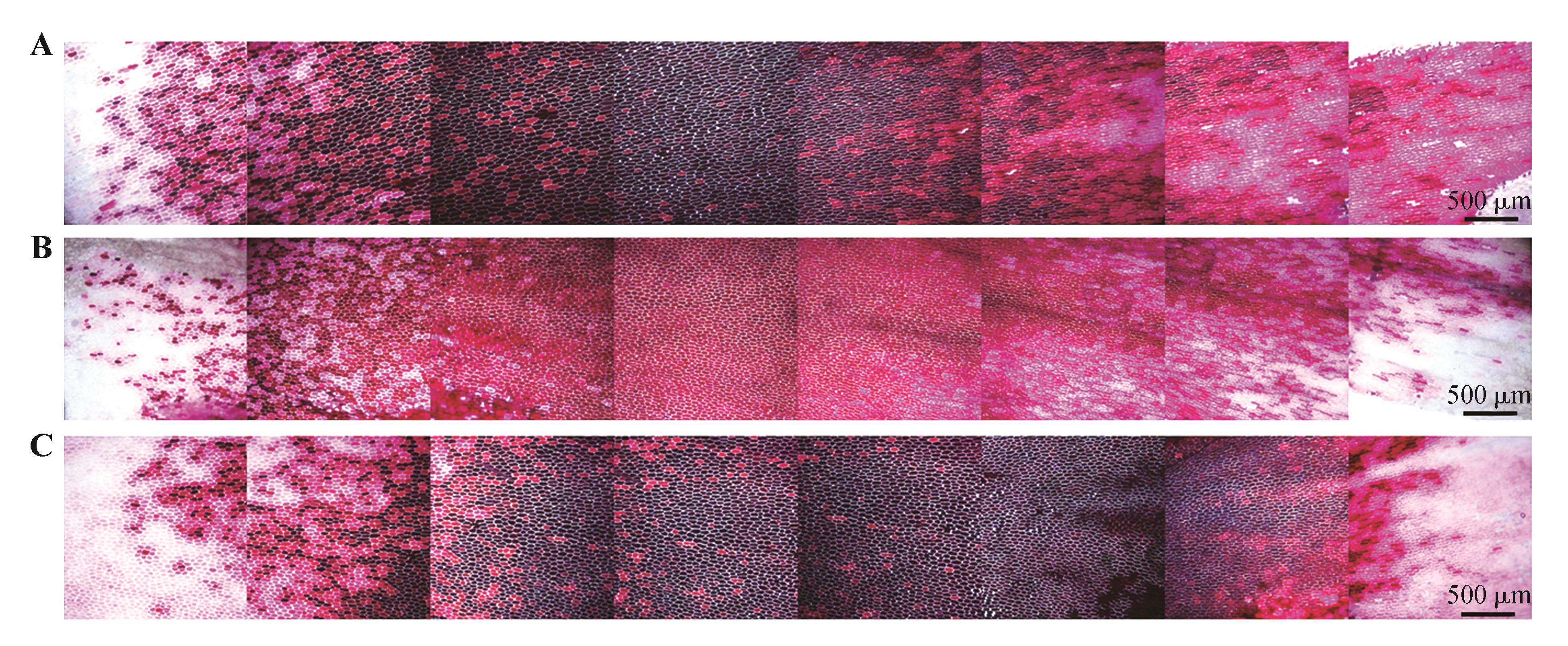
Fig.7
Changes in blotch cell number,blotch area, and blotch-to-petal ratio of Paeonia rockii cultivars during stages S1-S7
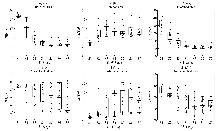
Fig.8
Boxplot of CIE values during blotch formation in Paeonia rockii cultivarsThe horizontal line within the box represented the median, and the square symbol represented the mean.
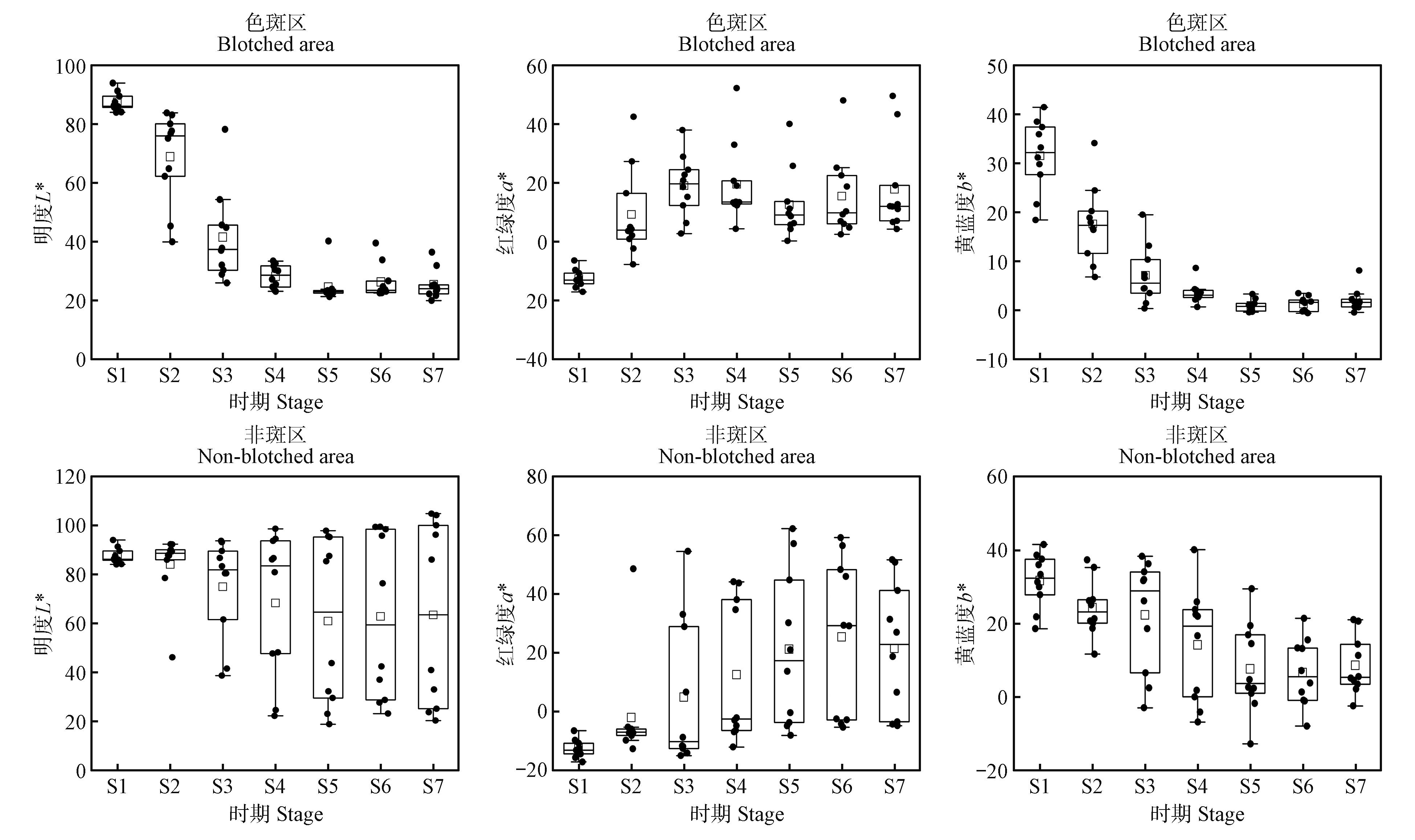
Fig.9
Anthocyanin mass fraction in the blotched and non-blotched petal areas of Paeonia rockii cultivars during blotch formationB. Blotched area; N. Non-blotched area.
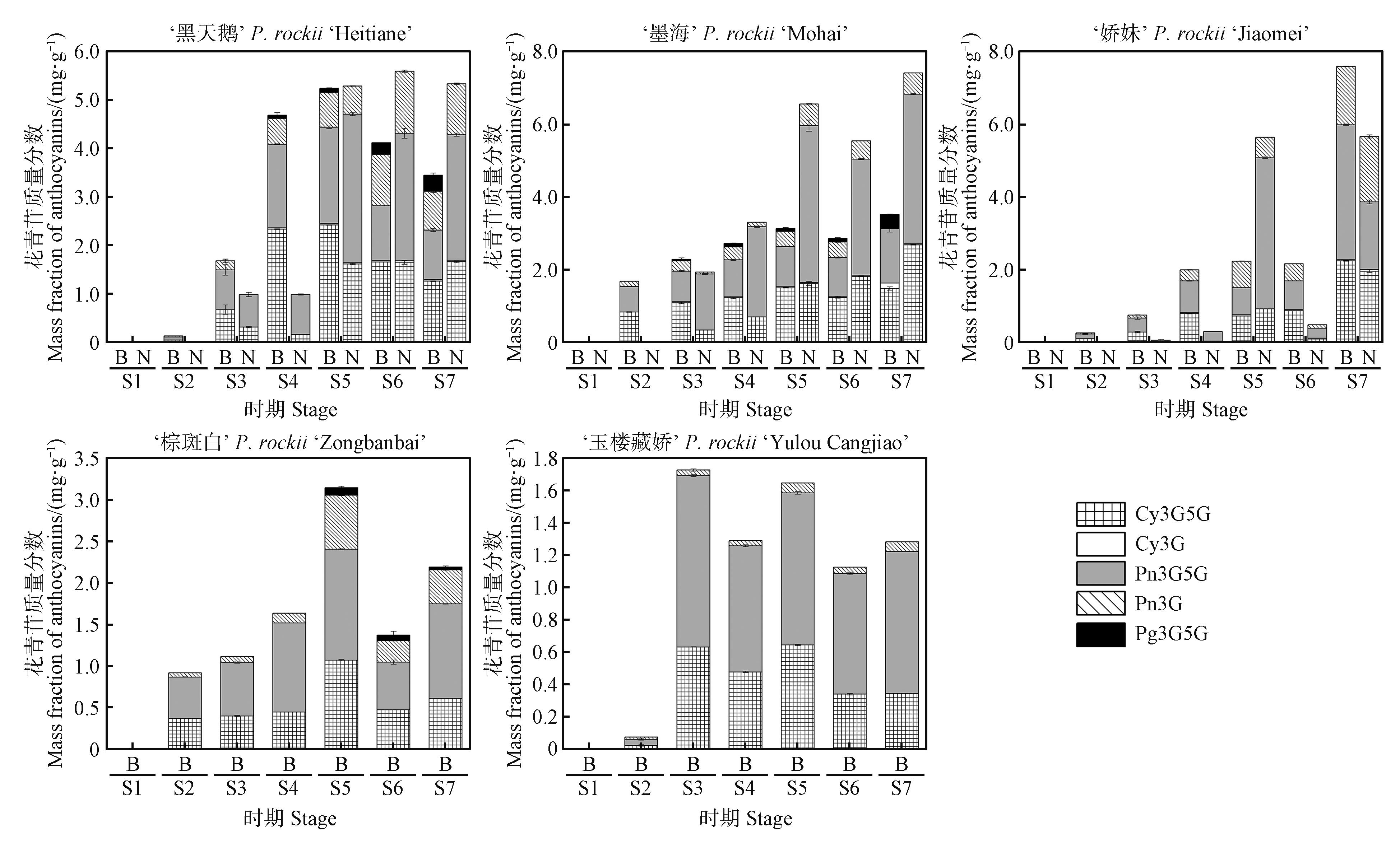
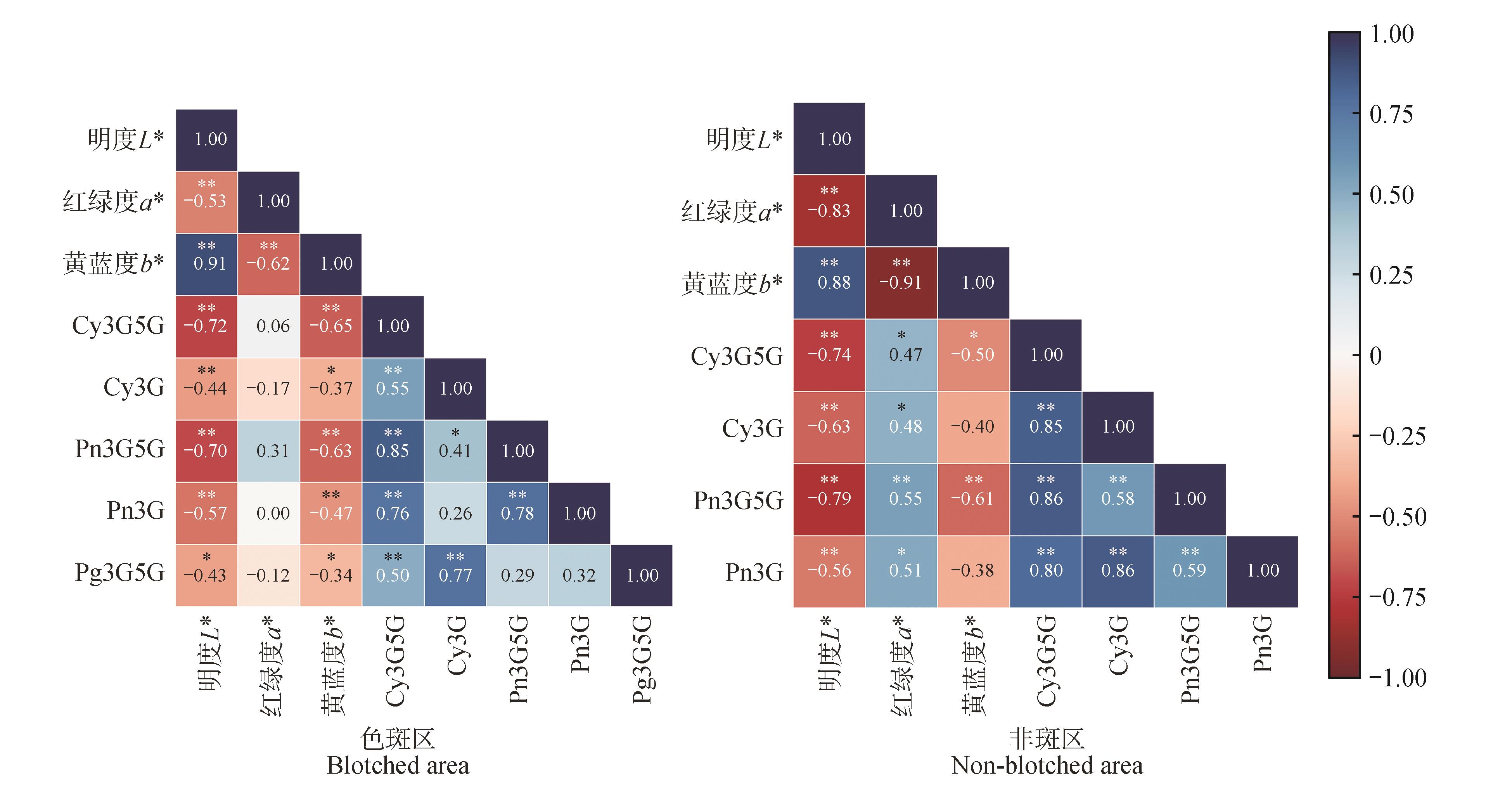
Fig.10
Correlation analysis between color parameters and anthocyanin contents in the blotched and non-blotched petal areas of Paeonia rockii cultivars
| [1] | 程金水.园林植物遗传育种学[M].北京:中国林业出版社,2000:81-82. |
| Cheng Jinshui.Genetics and breeding of garden plants[M].Beijing:China Forestry Publishing House,2000:81-82. | |
| [2] | Fairnie A L M, Yeo M T S, Gatti S,et al.Eco-Evo-Devo of petal pigmentation patterning[J].Essays in Biochemistry,2022,66(6):753-768. |
| [3] | Zhang Y Z, Cheng Y W, Ya H Y,et al.Transcriptome sequencing of purple petal spot region in tree peony reveals differentially expressed anthocyanin structural genes[J].Frontiers in Plant Science,2015,6:964. |
| [4] | 成仿云.中国紫斑牡丹[M].北京:中国林业出版社,2005:88. |
| Cheng Fangyun.Chinese flare Mudan[M].Beijing:China Forestry Publishing House,2005:88. | |
| [5] | Wang L S, Hashimoto F, Shiraishi A,et al.Phenetics in tree peony species from China by flower pigment cluster analysis[J].Journal of Plant Research,2001,114(3):213-221. |
| [6] | Wang L S, Hashimoto F, Shiraishi A,et al.Chemical taxonomy of the Xibei tree peony from China by floral pigmentation[J].Journal of Plant Research,2004,117(1):47-55. |
| [7] | Zhang J J, Wang L S, Shu Q Y,et al.Comparison of anthocyanins in non-blotches and blotches of the petals of Xibei tree peony[J].Scientia Horticulturae,2007,114(2):104-111. |
| [8] | Shi Q Q, Yuan M, Wang S,et al.PrMYB5 activates anthocyanin biosynthetic PrDFR to promote the distinct pigmentation pattern in the petal of Paeonia rockii [J].Frontiers in Plant Science,2022,13:955590. |
| [9] | Shi Q Q, Li L, Zhang X X,et al.Biochemical and comparative transcriptomic analyses identify candidate genes related to variegation formation in Paeonia rockii [J].Molecules,2017,22(8):1364. |
| [10] | Qi Y Y, Lou Q, Li H B,et al.Anatomical and biochemical studies of bicolored flower development in Muscari latifolium [J].Protoplasma,2013,250(6):1273-1281. |
| [11] | Schindelin J, Arganda-Carreras I, Frise E,et al.Fiji:an open-source platform for biological-image analysis[J].Nature Methods,2012,9(7):676-682. |
| [12] | Zhang J, Wang L S, Gao J M,et al.Determination of anthocyanins and exploration of relationship between their composition and petal coloration in crape myrtle (Lagerstroemia hybrid)[J].Journal of Integrative Plant Biology,2008,50(5):581-588. |
| [13] | Hanbury A, Serra J.Mathematical morphology in the cielab space[J].Image Analysis & Stereology,2002,21(3):201. |
| [14] | Luo X N, Sun D Y, Wang S,et al.Integrating full-length transcriptomics and metabolomics reveals the regulatory mechanisms underlying yellow pigmentation in tree peony (Paeonia suffruticosa Andr.) flowers[J].Horticulture Research,2021,8:235. |
| [15] | Suzuki K, Suzuki T, Nakatsuka T,et al.RNA-seq-based evaluation of bicolor tepal pigmentation in Asiatic hybrid lilies (Lilium spp.)[J].BMC Genomics,2016,17(1):611. |
| [16] | Wang Z, Li X, Chen M M,et al.Molecular and metabolic insights into anthocyanin biosynthesis for spot formation on Lilium leichtlinii var.maximowiczii flower petals[J].International Journal of Molecular Sciences,2023,24(3):1844. |
| [17] | Xu L F, Yang P P, Feng Y Y,et al.Spatiotemporal transcriptome analysis provides insights into bicolor tepal development in Lilium “tiny padhye”[J].Frontiers in Plant Science,2017,8:398. |
| [18] | Zhu J, Wang Y Z, Wang Q Y,et al.The combination of DNA methylation and positive regulation of anthocyanin biosynthesis by MYB and bHLH transcription factors contributes to the petal blotch formation in Xibei tree peony[J].Horticulture Research,2023,10(7):uhad100. |
| [19] | Wilts B D, Rudall P J, Moyroud E,et al.Ultrastructure and optics of the prism-like petal epidermal cells of Eschscholzia californica (California poppy)[J].New Phytologist,2018,219(3):1124-1133. |
| [20] | 林登贵,曾丽,裴峰,等.万寿菊营养器官及舌状花解剖结构的研究[J].上海交通大学学报(农业科学版),2015,33(4):59-64. |
| Lin Denggui, Zeng Li, Pei Feng,et al.Anatomical structures of vegetative organs and ray floret in Tagetes erecta L.[J].Journal of Shanghai Jiao Tong University(Agricultural Science),2015,33(4):59-64. | |
| [21] | 殷涵泰,尹俊梅,廖易,等.基于秋石斛花朵颜色、色素分布及表皮细胞形态的表型分类[J].园艺学报,2021,48(10):1907-1920. |
| Yin Hantai, Yin Junmei, Liao Yi,et al.Phenotype classification based on flower color,pigment distribution and epidermal cell shape of Dendrobium hybrids[J].Acta Horticulturae Sinica,2021,48(10):1907-1920. | |
| [22] | Luan Y T, Tang Y H, Wang X,et al.Tree peony R2R3-MYB transcription factor PsMYB30 promotes petal blotch formation by activating the transcription of the anthocyanin synthase gene[J].Plant and Cell Physiology,2022,63(8):1101-1116. |
| [23] | Kicheva A, Briscoe J.Developmental pattern formation in phases[J].Trends in Cell Biology,2015,25(10):579-591. |
| [24] | Davies K M, Albert N W, Schwinn K E.From landing lights to mimicry:the molecular regulation of flower colouration and mechanisms for pigmentation patterning[J].Functional Plant Biology,2012,39(8):619-638. |
| [25] | Li Y, Kong F, Liu Z A,et al.PhUGT78A22, a novel glycosyltransferase in Paeonia ‘He Xie’, can catalyze the transfer of glucose to glucosylated anthocyanins during petal blotch formation[J].BMC Plant Biology,2022,22:405. |
| [1] | Xinyi HU, Liming XU, Botao QIN, Yidong AN, Guofeng JIANG. Distinct Water Supply and Consumption Characteristics in Leaves between Nymphaeaceae and Terrestrial Herbs [J]. Bulletin of Botanical Research, 2025, 45(5): 675-685. |
| [2] | Nan LI, Xiaoxia TIAN, Peichun MAO, Mingli ZHENG, LIN MENG, Lan YUN. Phenotype and Pigment Analysis of Flower Organs of Iris lactea var. chinensis [J]. Bulletin of Botanical Research, 2024, 44(1): 51-61. |
| [3] | Zhezhe LI, Yidan ZHANG, Bo WANG, Zhenghao WANG, Lu WANG, Beibei CHENG. Changes and Influencing Factors of Anthocyanins in Hibiscus syriacus During Flowering [J]. Bulletin of Botanical Research, 2023, 43(4): 550-561. |
| [4] | TANG Nan, LI Miao-Miao, TANG Dao-Cheng. Characteristics of Leaf Epidermis of Meconopsis integrifolia under Different Altitudes in the Qinghai-Tibet Plateau [J]. Bulletin of Botanical Research, 2019, 39(2): 161-168. |
| [5] | YU Ting-Ting, NI Xiu-Zhen, GAO Li-Hong, HAN Guo-Jun, ZHU Chang-Fu, SHENG Yan-Min. Advances in Study of Dihydroflavonol 4-Reductase(DFR) Genes of Higher Plants [J]. Bulletin of Botanical Research, 2018, 38(4): 632-640. |
| [6] | XU Meng-Ke, LI Dan, MENG Lai-Sheng, JIANG Ji-Hong. Arabidopsis thaliana Transcription Factor Ethylene-insensitive3(EIN3) Inhibits the Synthesis of Anthocyanins [J]. Bulletin of Botanical Research, 2018, 38(1): 148-154. |
| [7] | LIANG Wen-Bin;ZHAO Li-Juan;LI Jia-Xiang*;XIAO Jian. Leaf Comparative Anatomy of Styrax(Styracaceae) in Hunan [J]. Bulletin of Botanical Research, 2014, 34(2): 148-158. |
| [8] | ZHANG Man-Man;NUERMAIMAITI·Mo Ming;WANG Hong*;BUZUORIGULI·Ka Di Er;JIANG Yan-Cheng. Leaf Epidermal Cell Micromorphology of Sect.Conostylae(Wolf) Yü et Li of Potentilla L. [J]. Bulletin of Botanical Research, 2013, 33(1): 7-17. |
| [9] | SHI Shao-Chuan;GAO Yi-Ke*;ZHANG Xiu-Hai;SUN Jia-Qi;ZHAO Ling-Li;WANG Ye. Progress on Plant Genes Involved in Biosynthetic Pathway of Anthocyanins [J]. Bulletin of Botanical Research, 2011, 31(5): 633-640. |
| Viewed | ||||||
|
Full text |
|
|||||
|
Abstract |
|
|||||
