
Bulletin of Botanical Research ›› 2026, Vol. 46 ›› Issue (4): 666-676.doi: 10.7525/j.issn.1673-5102.2026.04.008
• Original Paper • Previous Articles Next Articles
Yongqi HU1,2, Rui ZHANG1,2, Yisen ZHANG1,2, Yuepeng SONG1,2( )
)
Received:2026-05-01
Online:2026-07-20
Published:2026-07-22
Contact:
Yuepeng SONG
E-mail:Yuepengsong@bjfu.edu.cn
CLC Number:
Yongqi HU, Rui ZHANG, Yisen ZHANG, Yuepeng SONG. PagTIP1;3 Regulates Photosynthetic Physiological Characteristics of 84K Poplar in Response to Salt Stress[J]. Bulletin of Botanical Research, 2026, 46(4): 666-676.

Table 1
Primers sequence
引物名称 Primer name | 上游引物(5′→3′) Upstream primer(5′→3′) | 下游引物(5′→3′) Downstream primer(5′→3′) |
|---|---|---|
| PagTIP1;3-KO | ACAGCAACAACAGAGCTCCTC | CGAAGGTCACAGCCGGATTC |
| PagLHCB7-qPCR | TCTTTCTTGCAGCGACCGAT | GGGTCAATGGACAGACCCAG |
| PagGAPCP-2-qPCR | TCTTGTTGAAGCTTCCCGCT | CCTGCTGGAATTGAAGTGCC |
| PagPSY-qPCR | TCTCGGATGTCATAGCAGGA | ATTGCCCAGACAGCTCTTCG |
| PagRCA-qPCR | GACAATGTTCCCGAGGACGA | GCTCAAAAGTTGGGGGTCCT |
| Actin | ACACGGGGAGGTAGTGACAA | CCTCCAATGGATCCTCGTTA |

Fig.1
Identification of positive KO-PagTIP1;3 plantsA.Gene structure of PagTIP1;3 and sgRNA target sites(a,b); gray boxes indicated 5′ untranslated region(UTR) and 3′UTR; black boxes indicated exons; black horizontal lines indicated introns; lowercase letters indicated sgRNA target sites(a,b); B.Base mutations at the target sites; red letters indicated base insertions; - indicated base deletions; WT.Wild-type line; KO.Gene knockout line.
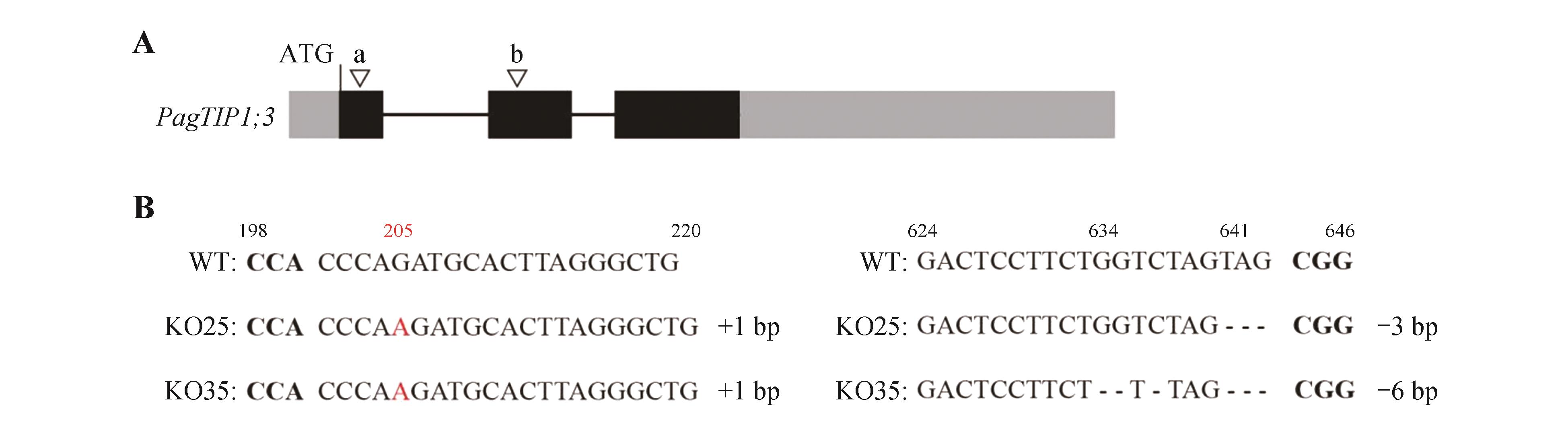
Fig.2
Phenotypes and physiological indicators of WT and KO lines under normal conditions and salt stressA.Phenotypes of wild type(WT) and knockout lines(KO) under normal conditions(CK) and NaCl stress on the 7th day;B-G.Plant height, net photosynthetic rate,non-photochemical quenching coefficient,relative chlorophyll content,maximum photochemical efficiency,and electron transport rate of wild-type and knockout lines under normal conditions and salt stress;data in the figures were presented as “mean±standard deviation”;*. P<0.05,**.P<0.01,***.P<0.001,****.P<0.000 1,ns. P>0.05.
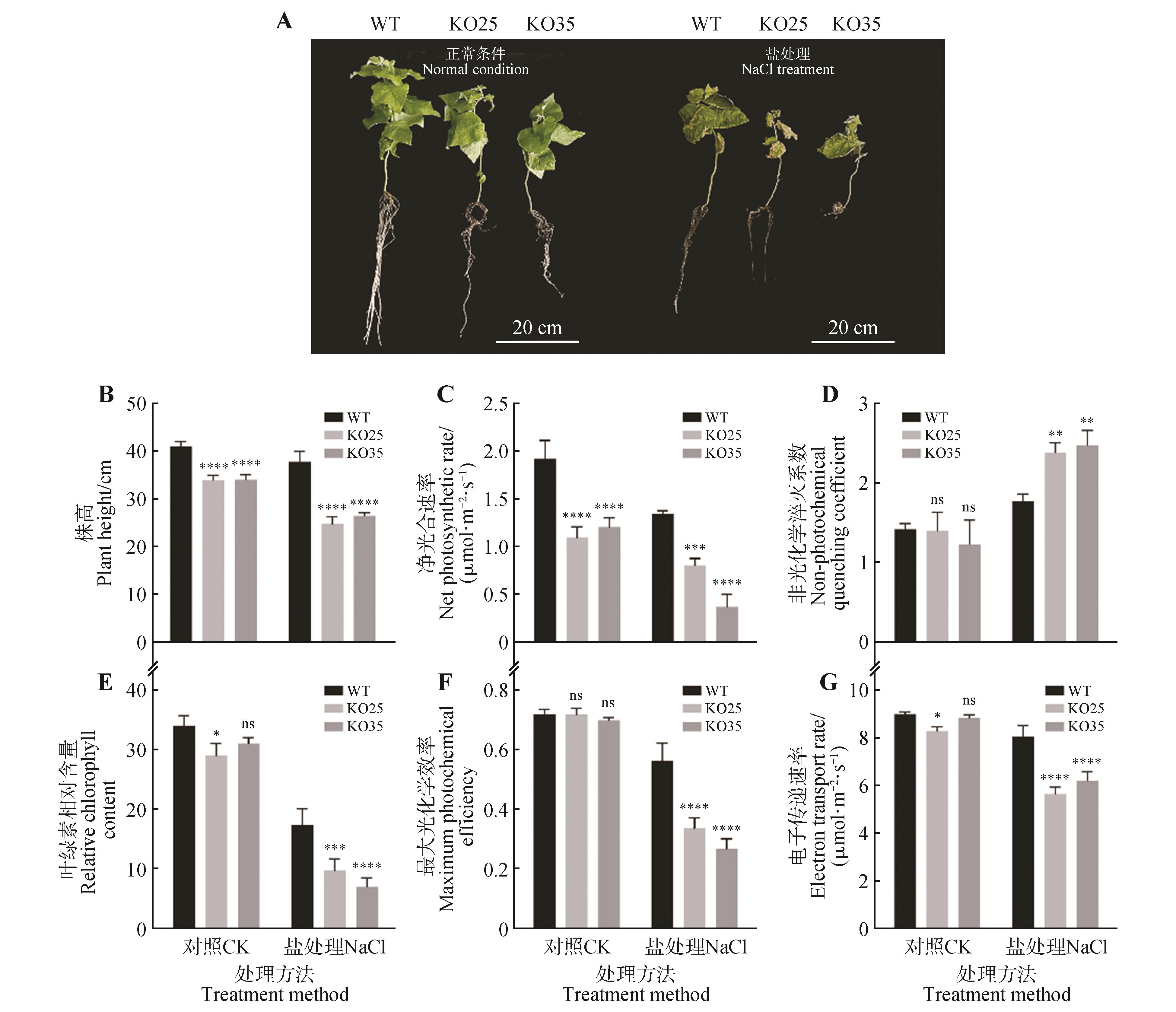
Table 2
Distribution of DEGs between KO and WT plants under salt stress
差异表达基因组分 DEGs | 差异表达基因数量 Number of DEGs | ||
|---|---|---|---|
根 Root | 茎 Stem | 叶 Leaf | |
| 上调Up-regulated | 1 611 | 430 | 27 |
| 下调Down-regulated | 2 321 | 350 | 2 |
| 总数Total number | 3 932 | 780 | 29 |
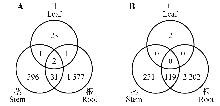
Fig.3
Shared and unique distributions of up-regulated and down-regulated genes in different tissues under salt stressA.Up-regulated DEGs; B.Down-regulated DEGs.
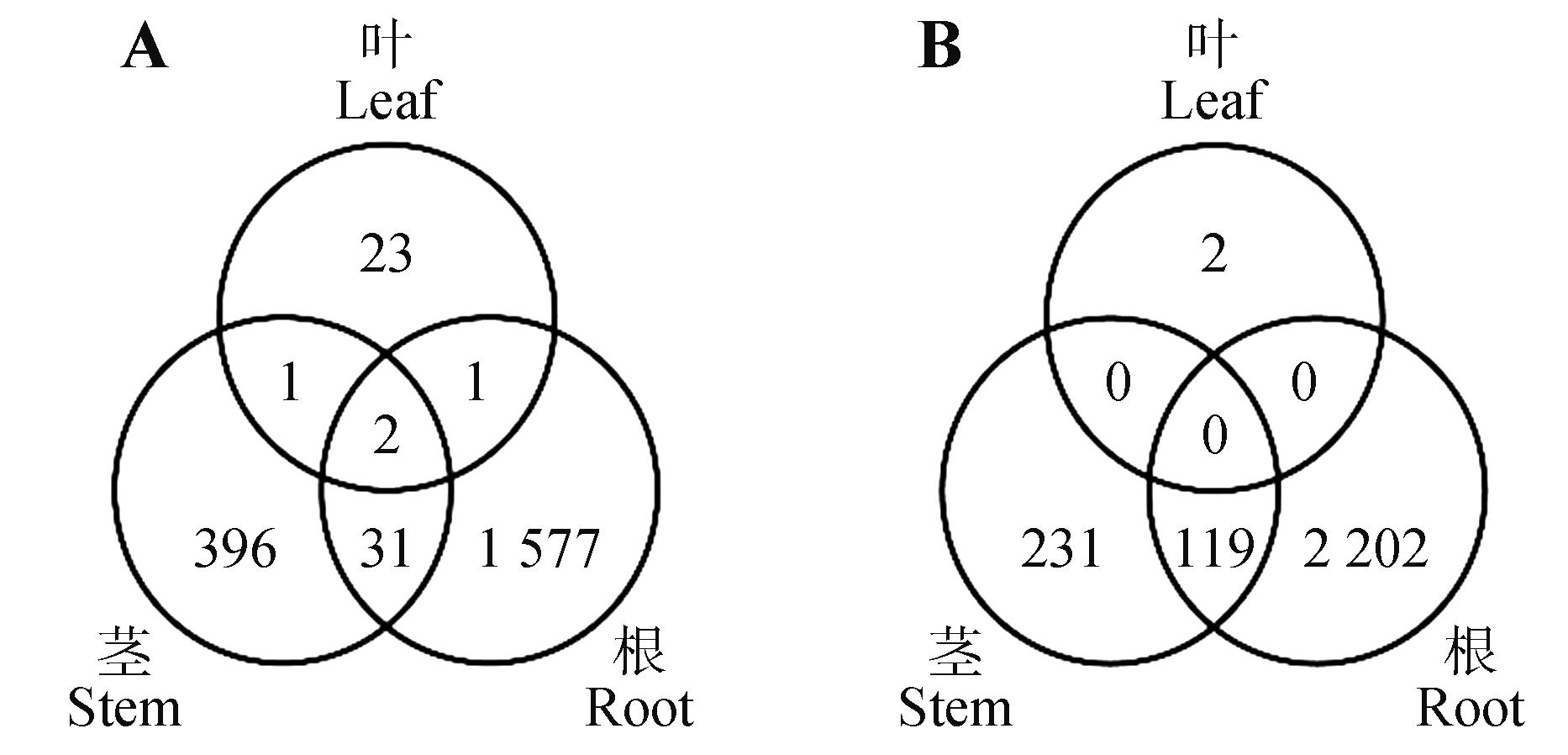
Table 3
GO enrichment analysis of up-regulated differentially expressed genes between knockout line and wild type under salt stress
GO编号 GO ID | GO注释 GO description | 基因数量 Gene number | P |
|---|---|---|---|
| GO:0003700 | 序列特异性DNA结合转录因子活性 Transcription factor activity,sequence-specific DNA binding | 32 | 8.92×10⁻⁹ |
| GO:0006355 | DNA模板化转录调控 Regulation of transcription,DNA - templated | 45 | 6.75×10⁻⁷ |
| GO:0016491 | 氧化还原酶活性 Oxidoreductase activity | 28 | 3.14×10⁻⁶ |
| GO:0055114 | 氧化还原过程 Oxidation-reduction process | 51 | 1.89×10⁻⁵ |
| GO:0005975 | 碳水化合物代谢过程 Carbohydrate metabolic process | 36 | 4.27×10⁻⁵ |
| GO:0019752 | 羧酸代谢过程 Carboxylic acid metabolic process | 29 | 7.53×10⁻⁵ |
| GO:0055085 | 跨膜转运 Transmembrane transport | 38 | 9.16×10⁻⁵ |
| GO:0043169 | 阳离子结合 Cation binding | 41 | 1.24×10⁻⁴ |
| GO:0016209 | 抗氧化活性 Antioxidant activity | 18 | 2.68×10⁻⁴ |
| GO:0006412 | 翻译 Translation | 25 | 3.95×10⁻⁴ |
Table 4
GO enrichment analysis of down-regulated differentially expressed genes between knockout line and wild type under salt stress
GO编号 GO ID | GO注释 GO description | 基因数量 Gene number | P |
|---|---|---|---|
| GO:0001071 | 核酸结合转录因子活性 Nucleic acid binding transcription factor activity | 43 | 7.84×10⁻⁸ |
| GO:0006355 | DNA模板化转录调控 Regulation of transcription,DNA-templated | 62 | 5.77×10⁻⁵ |
| GO:0003700 | 序列特异性DNA结合转录因子活性 Transcription factor activity,sequence-specific DNA binding | 43 | 7.84×10⁻⁸ |
| GO:0004722 | 蛋白丝氨酸/苏氨酸磷酸酶活性 Protein serine/threonine phosphatase activity | 14 | 5.23×10⁻⁶ |
| GO:0006470 | 蛋白质去磷酸化 Protein dephosphorylation | 15 | 2.74×10⁻⁵ |
| GO:0005984 | 二糖代谢过程 Disaccharide metabolic process | 10 | 6.35×10⁻⁷ |
| GO:0016052 | 碳水化合物分解代谢过程 Carbohydrate catabolic process | 11 | 2.39×10⁻⁵ |
| GO:0009311 | 寡糖代谢过程 Oligosaccharide metabolic process | 10 | 3.25×10⁻⁶ |
| GO:0044723 | 单生物体碳水化合物代谢过程 Single-organism carbohydrate metabolic process | 23 | 1.08×10⁻⁵ |
| GO:2000112 | 细胞大分子生物合成过程调控 Regulation of cellular macromolecule biosynthetic process | 62 | 7.83×10⁻⁵ |

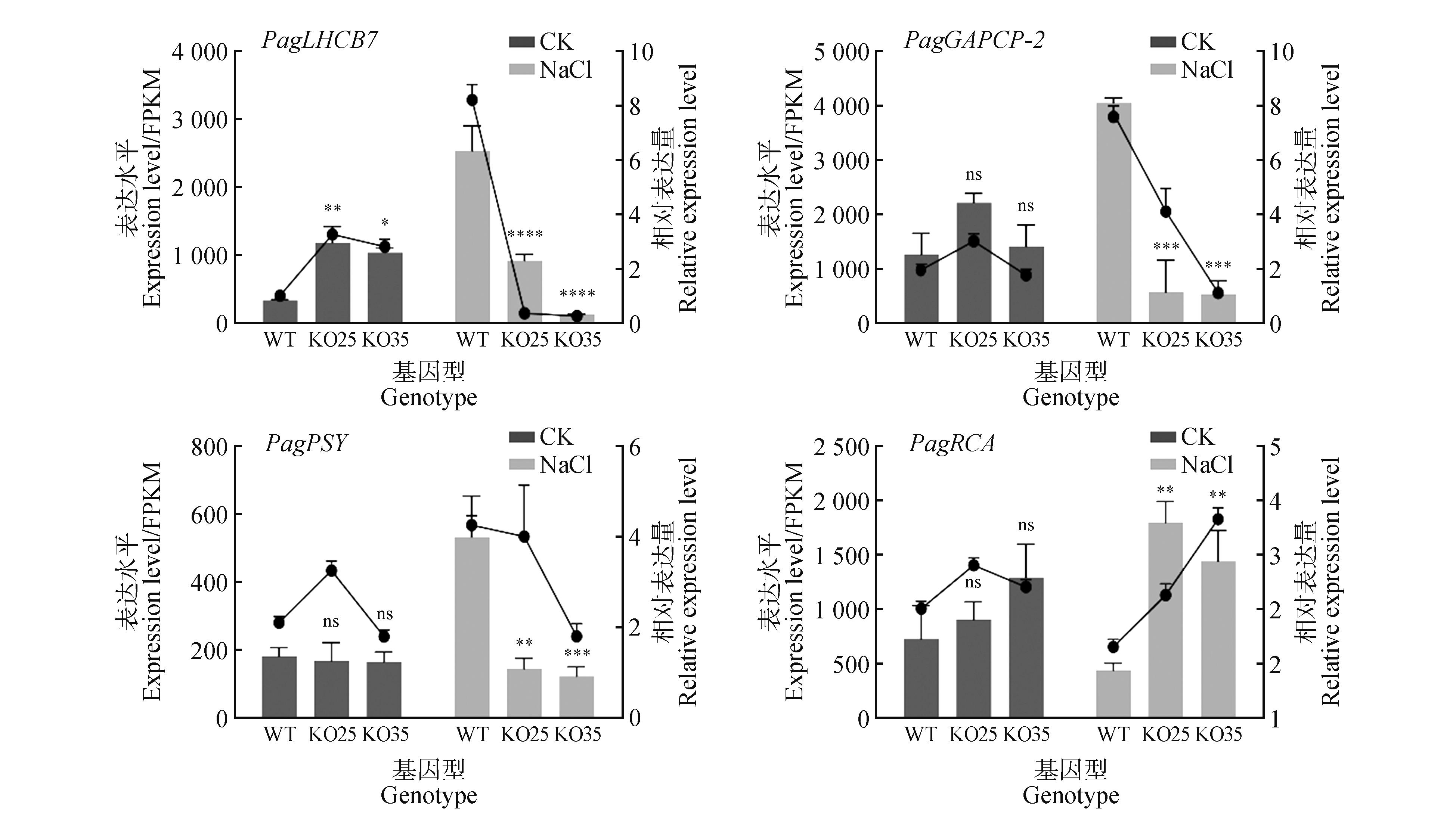
Fig.4
Analysis of expression trends and relative expression levels of photosynthesis-related genes under normal conditions and salt stressThe bar chart represented the expression levels(FPKM)obtained from transcriptome analysis;the line chart represented the relative expression levels determined by qRT-PCR. The samples were all derived from the same lines collected at the same time.
| [1] | Zhang H M, Zhu J H, Gong Z Z,et al.Abiotic stress responses in plants[J].Nature Reviews Genetics,2022,23(2):104-119. |
| [2] | 罗子敬,孙宇涵,卢楠,等.杨树耐盐机制及转基因研究进展[J].核农学报,2017,31(3):482-492. |
| Luo Zijing, Sun Yuhan, Lu Nan,et al.Research advances on salt-tolerance mechanism and genetic transformation of poplar[J].Journal of Nuclear Agricultural Sciences,2017,31(3):482-492. | |
| [3] | 肖雯丽,王含瑞,王梦亮,等.盐碱胁迫下植物响应机制的研究进展[J].中国农学通报,2024,40(33):78-85. |
| Xiao Wenli, Wang Hanrui, Wang Mengliang,et al.Mechanisms of plant response to saline-alkali stress:a review[J].Chinese Agricultural Science Bulletin,2024,40(33):78-85. | |
| [4] | Yan G, Shi Y J, Chen F F,et al.Physiological and metabolic responses of Leymus chinensis seedlings to alkali stress[J].Plants,2022,11(11):1494. |
| [5] | Jungklang J, Usui K, Matsumoto H.Differences in physiological responses to NaCl between salt-tolerant Sesbania rostrata Brem.& Oberm.and non-tolerant Phaseolus vulgaris L.[J].Weed Biology and Management,2003,3(1):21-27. |
| [6] | Kalaji H M, Jajoo A, Oukarroum A,et al.Chlorophyll a fluorescence as a tool to monitor physiological status of plants under abiotic stress conditions[J].Acta Physiologiae Plantarum,2016,38(4):102. |
| [7] | Ahmed S, Kouser S, Asgher M,et al.Plant aquaporins:a frontward to make crop plants drought resistant[J].Physiologia Plantarum,2021,172(2):1089-1105. |
| [8] | Alam M M, Rafi A, Rahman M A,et al.Aquaporins as natural stress integrator:coordinating transport,signals,and tolerance mechanisms in plants[J].Plant,Cell & Environment,2026,49(4):2311-2325. |
| [9] | Liu L H, Ludewig U, Gassert B,et al.Urea transport by nitrogen-regulated tonoplast intrinsic proteins in Arabidopsis [J].Plant Physiology,2003,133(3):1220-1228. |
| [10] | Maurel C, Verdoucq L, Luu D T,et al.Plant aquaporins:membrane channels with multiple integrated functions[J].Annual Review of Plant Biology,2008,59:595-624. |
| [11] | Saha B, Patnaik A, Yadav N,et al.Mungbean tonoplastic intrinsic protein gene (VrTIP1;1) regulates drought and salinity responses in Arabidopsis [J].Discover Plants,2026,3(1):32. |
| [12] | Jia Y Q, Li H, Zhao H M.Characterisation of tonoplast intrinsic proteins in birch:BpTIP1;3 confers drought tolerance by regulating the scavenging of reactive oxygen species[J].International Journal of Biological Macromolecules,2025,327:147276. |
| [13] | 李远航,贺康宁,张潭,等.盐胁迫对黑果枸杞光合生理指标的影响[J].中国水土保持科学,2019,17(1):82-88. |
| Li Yuanhang, He Kangning, Zhang Tan,et al.Effects of salt stress on the photosynthetic and physiological indexes of Lycium ruthenicum [J].Science of Soil and Water Conservation,2019,17(1):82-88. | |
| [14] | Zheng F X, Xu Z T, Deng X J,et al.Comprehensive identification of aquaporins under salt stress,and functional characterization of DoTIP1-1 in Dendrobium officinale [J].Plant Physiology and Biochemistry,2026,231:110952. |
| [15] | Liao Y, Smyth G K, Shi W.FeatureCounts:an efficient general purpose program for assigning sequence reads to genomic features[J].Bioinformatics,2014,30(7):923-930. |
| [16] | Love M I, Huber W, Anders S.Moderated estimation of fold change and dispersion for RNA-seq data with DESeq2[J].Genome Biology,2014,15(12):550. |
| [17] | He W, Liu M Y, Qin X Y,et al.Genome-wide identification and expression analysis of the aquaporin gene family in Lycium barbarum during fruit ripening and seedling response to heat stress[J].Current Issues in Molecular Biology,2022,44(12):5933-5948. |
| [18] | Feng Z J, Liu N, Zhang G W,et al.Investigation of the AQP family in soybean and the promoter activity of TIP2;6 in heat stress and hormone responses[J].International Journal of Molecular Sciences,2019,20(2):262. |
| [19] | Zeng R, Zhang X Y, Song G S,et al.Genetic variation in the aquaporin tonoplast intrinsic protein 4;3 modulates maize cold tolerance[J].Plant Biotechnology Journal,2024,22(11):3037-3050. |
| [20] | 王博之,赵琼.植物内膜系统中的水通道蛋白研究进展[J].生物学教学,2023,48(5):2-5. |
| Wang Bozhi, Zhao Qiong.Progress in research on aquaporic proteins in the piano endomembrane system[J].Biology Teaching,2023,48(5):2-5. | |
| [21] | Sun Q, Liu X, Kitagawa Y,et al.Plant aquaporins:their roles beyond water transport[J].The Crop Journal,2024,12(3):641-655. |
| [22] | Chaumont F, Tyerman S D.Aquaporins:highly regulated channels controlling plant water relations[J].Plant Physiology,2014,164(4):1600-1618. |
| [23] | Sudhakaran S, Thakral V, Padalkar G,et al.Significance of solute specificity,expression,and gating mechanism of tonoplast intrinsic protein during development and stress response in plants[J].Physiologia Plantarum,2021,172(1):258-274. |
| [24] | Xu Y, Hu W, Liu J H,et al.A banana aquaporin gene,MaPIP1;1,is involved in tolerance to drought and salt stresses[J].BMC Plant Biology,2014,14(1):59. |
| [25] | Li O Q, Zou M, Hou X F,et al.BnaGRP3 mediates salt tolerance via Na+/K+ homeostasis and BnaPIPs interactions in Brassica napus [J/OL].Journal of Advanced Research,2026-01-06.. |
| [26] | Kim J H, Kim J H, Park G B,et al.Rice E3 ligase OsRFPH2-16 acts as a negative regulator to mediate the degradation of OsPIP1;1 under salt stress[J].The Plant Journal,2025,124(1):e70491. |
| [27] | Zhu C L, Lin Z M, Yang K B,et al.A bamboo ‘PeSAPK4-PeMYB99-PeTIP4-3’ regulatory model involved in water transport[J].New Phytologist,2024,243(1):195-212. |
| [28] | Umate P.Genome-wide analysis of the family of light-harvesting chlorophyll a/b-binding proteins in Arabidopsis and rice[J].Plant Signaling & Behavior,2010,5(12):1537-1542. |
| [29] | 刘梅朔,王传宽,全先奎.兴安落叶松叶光合与氮代谢对环境变化响应的转录组分析[J].应用生态学报,2022,33(4):957-962. |
| Liu Meishuo, Wang Chuankuan, Quan Xiankui.Transcriptome analysis on responses of leaf photosynthesis and nitrogen metabolism of Larix gmelinii to environmental change[J].Chinese Journal of Applied Ecology,2022,33(4):957-962. | |
| [30] | Peterson R B, Schultes N P.Light-harvesting complex B7 shifts the irradiance response of photosynthetic light-harvesting regulation in leaves of Arabidopsis thaliana [J].Journal of Plant Physiology,2014,171(3/4):311-318. |
| [31] | Sun T H, Hazra A, Lui A,et al.GLKs directly regulate carotenoid biosynthesis via interacting with GBFs in plants[J].New Phytologist,2025,246(2):645-665. |
| [32] | Navarro-Carcelen J, Rodriguez-Concepcion M.Experimental validation of computationally predicted phytoene synthase isoforms encoded by the Arabidopsis thaliana PSY gene[J].Plant Cell Reports,2025,44(4):93. |
| [33] | 季静,曹海燕,王罡,等.过表达枸杞LmPSY基因提高洋桔梗抗逆性的研究[J].天津大学学报,2015,48(3):262-268. |
| Ji Jing, Cao Haiyan, Wang Gang,et al.Overexpression of Lycium chinense miller phytoene sythase (LmPSY) gene to enhance the resistance of Eustoma grandiflorum [J].Journal of Tianjin University,2015,48(3):262-268. | |
| [34] | Muñoz-Bertomeu J, Cascales-Miñana B, Irles-Segura A,et al.The plastidial glyceraldehyde-3-phosphate dehydrogenase is critical for viable pollen development in Arabidopsis [J].Plant Physiology,2010,152(4):1830-1841. |
| [35] | Kim S Y, Stessman D J, Wright D A,et al. Arabidopsis plants expressing only the redox-regulated Rca-α isoform have constrained photosynthesis and plant growth[J].The Plant Journal,2020,103(6):2250-2262. |
| [36] | Shan X Y, Wang J X, Chua L,et al.The role of Arabidopsis rubisco activase in jasmonate-induced leaf senescence[J].Plant Physiology,2011,155(2):751-764. |
| [37] | Aliakbari M, Tahmasebi S, Sisakht J N.Jasmonic acid improves barley photosynthetic efficiency through a possible regulatory module,MYC2 -RcaA,under combined drought and salinity stress[J].Photosynthesis Research,2024,159(1):69-78. |
| [1] | Yaoyuan YAO, Jie YANG, Yuexin ZHANG, Yujie FU. Morpho-Physiological and Metabolic Responses and Expression Profiling of the CcTCP Gene Family in Pigeon Pea under Salt Stress [J]. Bulletin of Botanical Research, 2026, 46(4): 728-739. |
| [2] | Siqi WANG, Yunjie BI, Huixian LI, Zhengbao SONG, Runke LIU, Ruixin GAO. Effect of Exogenous Gibberellin on Seed Germination of Agastache rugosa under Salt Stress [J]. Bulletin of Botanical Research, 2026, 46(3): 481-492. |
| [3] | Hanshi WANG, Xiao LI, Zhongyi PANG, Yanhui PENG, Ruixue WANG, Taijin ZHANG, Yang LIU, Xiyang ZHAO, Chunli ZHAO, Luping JIANG. Screening of Superior Poplar Clones Based on Multi-Trait Comprehensive Evaluation [J]. Bulletin of Botanical Research, 2026, 46(2): 378-392. |
| [4] | Haiyan CAO, Kaiwen TIAN, Xiaoyu JIA, Xuefeng HAO, Zhuping JIN. The Role of AtMST1 in Regulating Salt Tolerance via H2S Synthesis in Arabidopsis Revealed by CRISPR/Cas9 Knockout [J]. Bulletin of Botanical Research, 2026, 46(2): 259-269. |
| [5] | Lipeng ZHANG, Mei WU, Hongpeng WANG, Tianyu LI. Salt Stress-related RcNAC22 Gene Cloning and Function Analysis in Rhodiolacrenulata [J]. Bulletin of Botanical Research, 2026, 46(2): 246-258. |
| [6] | Yijiao LIU, Jiqing ZHAO, Jinhuan CHEN. Cloning and Functional Study of the LrMYB64 Gene in Lyciumruthenicum [J]. Bulletin of Botanical Research, 2026, 46(2): 231-245. |
| [7] | Xinyu CHENG, Mengqiao GUO, Haiyun GUAN, Jian RU, Yan BAI, Lianjin GUO. Light Requirements for Germination of Emmenopterys henryi Oliv. Seeds and Transcriptome Response Analysis [J]. Bulletin of Botanical Research, 2025, 45(4): 546-557. |
| [8] | Linping TIAN, Wenzhe HAN, Jun WU, Yuandong MA, Yu QI, Zhaoning WANG, Chunming LI, Haixia LI, Huanzhen LIU, Haijuan FAN. Stumping Effect on Rejuvenation of Twigs and Rooting of Softwood Cuttings of Acer Mandshuricum [J]. Bulletin of Botanical Research, 2025, 45(2): 228-240. |
| [9] | Xiao LI, Hanshi WANG, Hongxing WANG, Luping JIANG, Zhongyi PANG, Yanhui PENG, Xiyang ZHAO. Effects of Irrigation and Fertilization on Growth and Photosynthetic Physiological Characteristics of Populus cathayana × canadansis ‘Xinlin1’ [J]. Bulletin of Botanical Research, 2025, 45(1): 77-87. |
| [10] | Man MEI, Chencan WANG, Hongxia LIN, Yuqian ZHANG, Wenjing DING, Yuanyuan ZHAO. Application and Prospect of Spatial Transcriptome Technology in Plant Research [J]. Bulletin of Botanical Research, 2025, 45(1): 3-14. |
| [11] | Xiuying MA, Jinke LI, Xiaoyang ZHOU, Shaoliang CHEN. Research Progress of Ca2+-ATPase Involved in Regulation of Plant Salt Tolerance [J]. Bulletin of Botanical Research, 2024, 44(5): 641-654. |
| [12] | Hengfeng ZHANG, Yangwu HE, Huanchao ZHANG, Qingcui WEI. Metabolomics Analysis of Lagerstroemia indica in Response to Salt and Alkali Stress [J]. Bulletin of Botanical Research, 2024, 44(3): 420-430. |
| [13] | Fazhi FANG, Huiying GUI, Zhaojia LI, Xiaofeng ZHANG. Physiological Adaptation of Six Mangrove Seedlings to Different Salinity [J]. Bulletin of Botanical Research, 2023, 43(6): 881-889. |
| [14] | Tianmeng REN, Yu BAO, Yaxun SU, Qingbin CHEN, Liying WEI, Ruoxuan JI, Xiao YU, Xinli XIA, Weilun YIN, Chao LIU. Effects of Different Pruning Treatments on Growth and Photosynthetic Characteristics of 10-year-old Triploid Populus tomentosa [J]. Bulletin of Botanical Research, 2023, 43(6): 846-856. |
| [15] | Lei XU, Xiao XU, Qinsong LIU. Effects of Exogenous Salicylic Acid on Antioxidant System and Gene Expression of Davidia involucrata Seedlings under Salt Stress [J]. Bulletin of Botanical Research, 2023, 43(4): 572-581. |
| Viewed | ||||||
|
Full text |
|
|||||
|
Abstract |
|
|||||
