Copyright © Natural Products and Bioprospecting, All Rights Reserved.
Tel: 0871-65223223
E-mail:npb@mail.kib.ac.cn
Powered by Beijing Magtech Co. Ltd.
Tel: 0871-65223223
E-mail:npb@mail.kib.ac.cn
Powered by Beijing Magtech Co. Ltd.


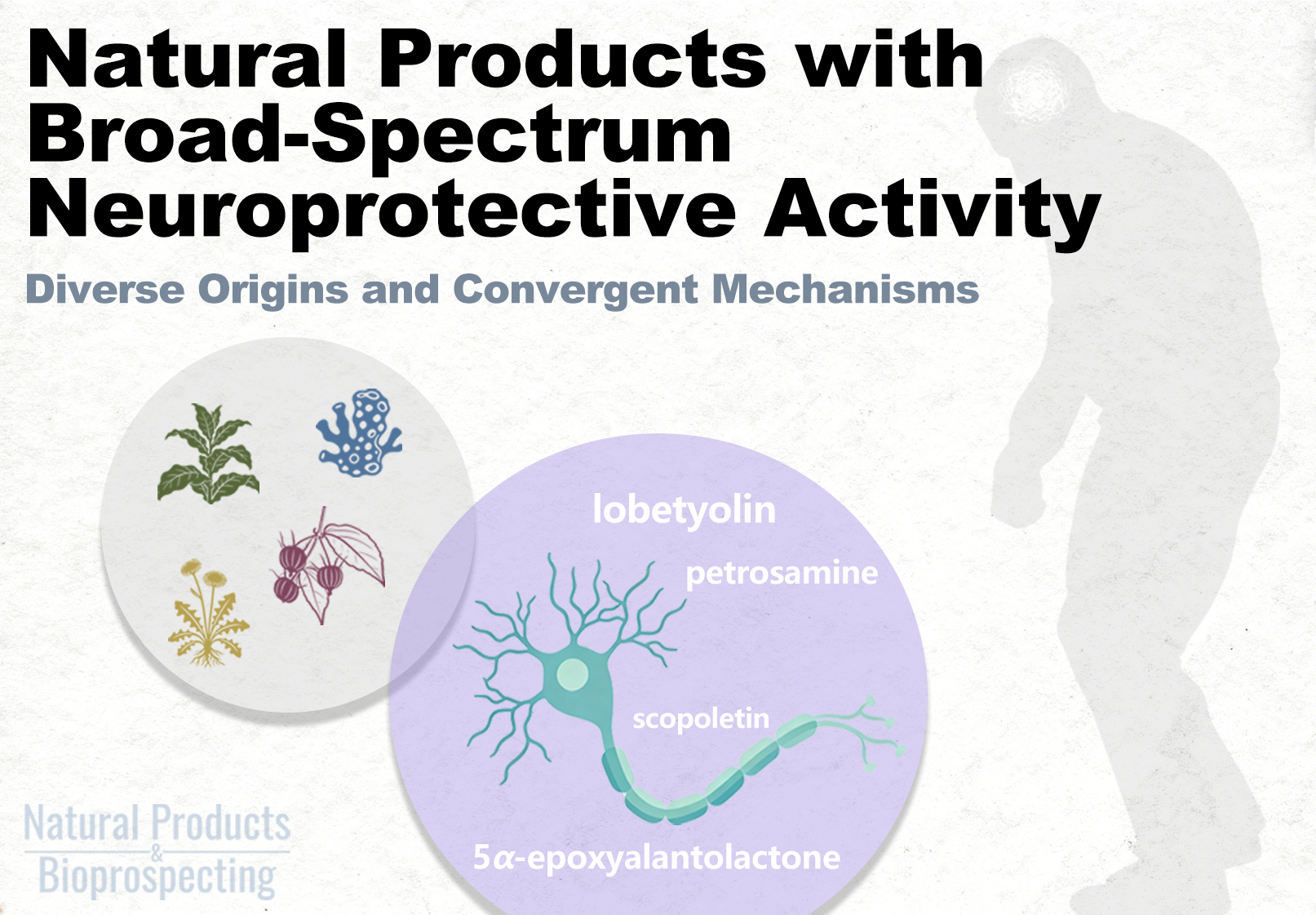
Natural products hold immense potential as a therapeutic frontier in neuroprotection. This potential is evidenced by recent research published in Natural Products and Bioprospecting, which has explored a variety of compounds with potential against neurodegenerative diseases such as Alzheimer's disease (AD) and Parkinson's disease (PD). This collection synthesizes key findings from that work. The selected articles are organized around three interrelated themes that highlight their promise for broad-spectrum application: the diversity of natural sources, the convergence of protective mechanisms, and their efficacy across disease models.
I. Diverse Origins: Expanding the Chemical Space for Neuroprotection
Neuroprotective agents featured in these studies are derived from an impressive range of biological origins, reflecting the vast chemical diversity of nature:
Terrestrial Plants: Traditional sources such as Inula macrophylla and Nicotiana tabacum continue to yield novel lead compounds.
Marine Organisms: The marine sponge Petrosia sp. contributes unique alkaloids like petrosamine, highlighting the untapped potential of marine biodiversity.
Edible Medicinal Plants: Compounds like lobetyolin from the Campanulaceae family highlights the concept of medicinal and edible homology
II. Convergent Mechanisms: Multi-Target Action Against Neurodegeneration
Despite their structural diversity, these natural products frequently exert their neuroprotective effects through a set of shared, fundamental mechanisms:
Antioxidant Effects: Primarily achieved through activation of the Nrf2/ARE pathway to mitigate oxidative stress.
Anti-inflammatory Activity: Mediated by inhibition of the NF-κB pathway and modulation of microglial polarization.
Mitochondrial Protection: Involving the preservation of mitochondrial membrane potential and the promotion of mitochondrial biogenesis.
Modulation of Synaptic Plasticity: Characterized by the enhancement of BDNF signaling and the consequent improvement of cognitive function.
III. Broad-Spectrum Potential: From Specific Diseases to General Neuroprotection
The studies demonstrate that the utility of these compounds extends beyond single disease models, indicating both specific and broad applications:
Targeted Activity in Alzheimer’s Disease Models: Compounds such as 5α-epoxyalantolactone and lobetyolin show specific efficacy.
Targeted Activity in Parkinson’s Disease Models: Specific chemical constituents from Nicotiana tabacum are active.
Broad-Spectrum Neuroprotective Activity: Agents like petrosamine exhibit activity against varied neurotoxic insults, supporting their classification as promising broad-spectrum neuroprotective agents.
Collectively, these studies reinforce the value of natural products in identifying multi-target, mechanism-based therapies for neurodegenerative conditions. They not only reveal inhibitory effects on neurotoxicity but also underscore the potential for cognitive improvement. Continued investigation into their precise modes of action will be essential for translating these findings into clinically viable treatments.
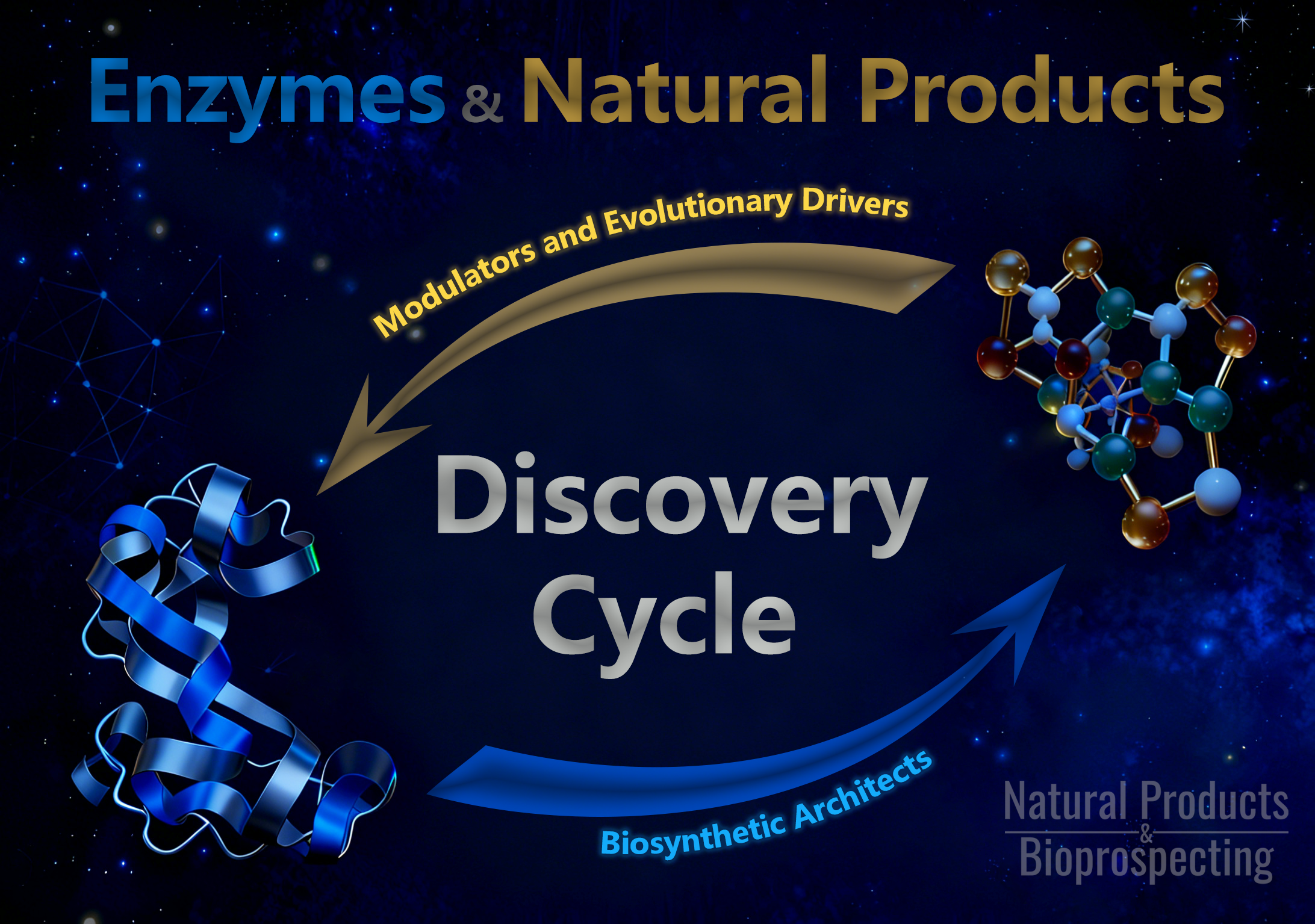
The relationship between enzymes and natural products is profoundly synergistic, operating through three key dimensions:
I. Enzymes as Biosynthetic Architects of Natural Products
The structural diversity of natural products arises from dedicated enzyme systems—such as polyketide synthases and terpene cyclases—that assemble, diversify, and tailor their molecular scaffolds.
II. Natural Products as Modulators and Evolutionary Drivers
Beyond being end-products, many natural products regulate enzyme activity through feedback or allosteric mechanisms. Their ecological roles also drive the evolution of novel catalytic functions in producing and competing organisms.
III. The Discovery Cycle
This synergy fuels an innovation loop: novel natural products lead to the discovery of their biosynthetic enzymes, which in turn enable the engineering of new derivatives with enhanced bioactivity—a continuous “molecule–catalyst–new molecule” cycle that generates leads for pharmaceuticals and agrochemicals. Current research is accelerating this cycle, bridging mechanism, molecule, and application through novel enzymatic reactions, advanced enzyme engineering, and mechanistic target studies.
This collection of recent articles from Natural Products and Bioprospecting illustrates this dynamic interplay across the three dimensions outlined above.

Cancer remains a global health challenge, yet natural products continue to serve as an invaluable source of structural diversity for anticancer drug discovery. This special feature, presenting nine recent studies from Natural Products and Bioprospecting, showcases the latest advances in the field, systematically highlighting this potential.